
My #1 Secret to Improve Your Riding

Do you ever find yourself getting frustrated because you just can’t seem to communicate with your horse? You wonder “How does my trainer do it!”? Is there a secret to training horses? How do you teach your horse to go forward, load in the trailer, or do a flying change?

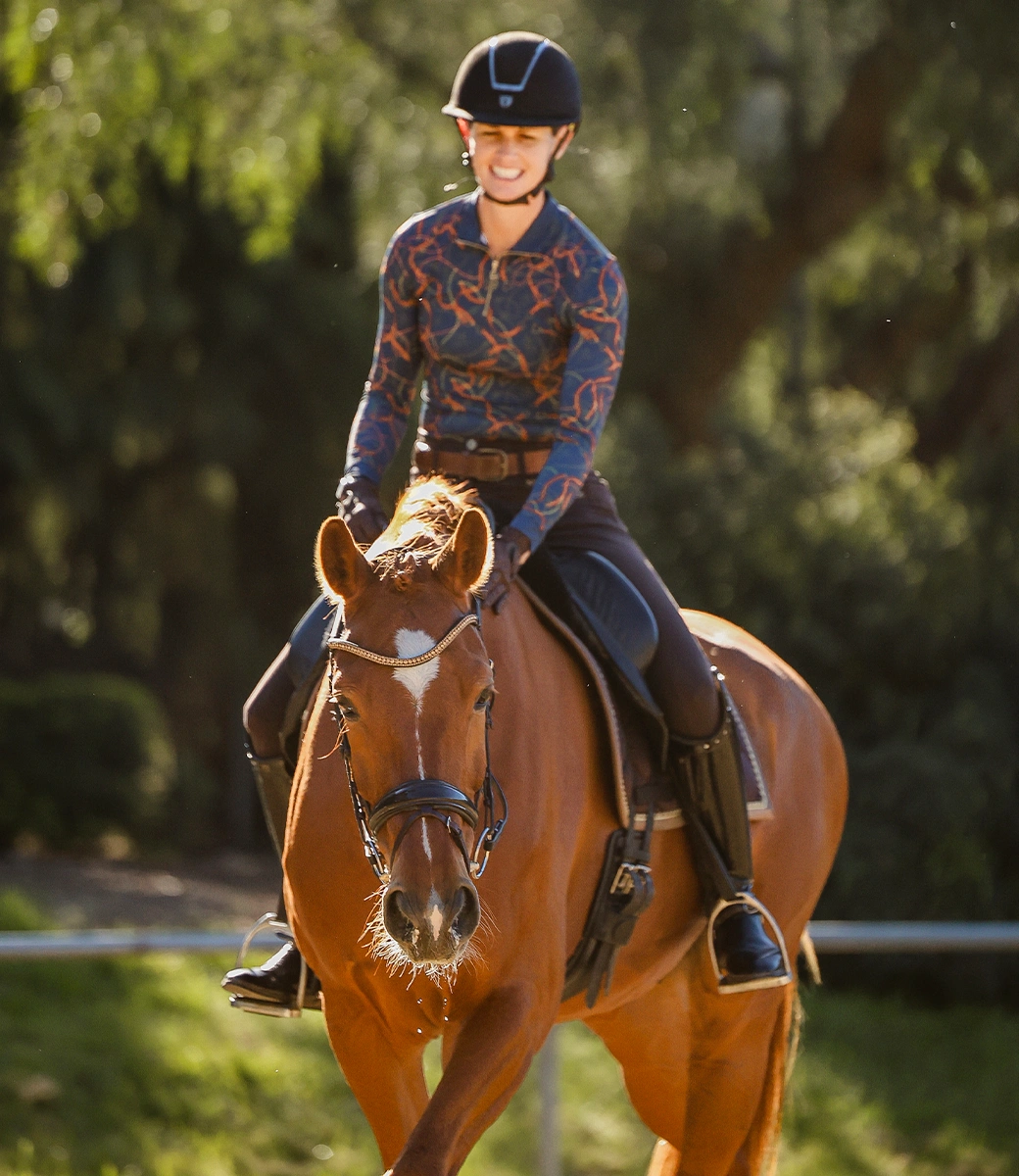
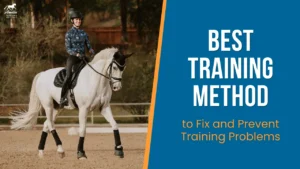
In this week’s video, I will be talking about how to train your horse. Because we can’t speak to our horses verbally through sentences and paragraphs, we have to communicate with our aids through pressure and release. The formula that I use to train all my horses is: aid, reaction, release, and repeat.

This may seem like a simple concept, but when something goes wrong in your training, it usually has to do with how you’re communicating with your horse. Horses are incredibly honest and kind. If they are not doing what you want, it’s almost always because they don’t understand.

  • The aid. You ask the horse a question. Will you move forward when I close my leg? Will you bend your neck and move your head towards me?You start with the lightest aid possible. Apply as little pressure as it takes to get a response but as much as needed. On a continuum from 1 – 10,

    I ask with a 2 (about the pressure of holding a small child’s hand). If there is NO response, then I increase the pressure to an 8. I do what it takes to get a response. Then I repeat with the lightest aid possible. It is the repeat of the lightest aid again that promotes good reactivity, otherwise you’re just training your horse to respond only to a loud aid.

  • The horse’s reaction. When we give an aid we want our horse to respond. This could mean bending from a rein aid or moving forward from the leg. You need to do what it takes to get your horse to hear you. Often we make our horses dull and unresponsive. You must do what it takes to get a reaction and then reward immediately. The response can be subtle, it can be the flick of an ear or the horse shifting their weight. This is something that you can build on to get what you want. You do this by repeating the aid. Getting a response and releasing. Really observe your horse. Is he paying attention to you? Is he thinking?
  • The release. The release is the second half of the aid; it is just as important as the question part of the aid! The release is the exact moment where you tell the horse “this is what I want!” The timing of the release is essential. Release immediately when you get the response you want! The release is the reward. The better you time your release the faster your horse will learn. If you release too late and you reward the wrong thing, you are teaching the wrong thing. Timing the release is the essence of your communication with your horse. For example, if you are trying to get your horse round and they finally lower their head, that is the moment of the release and when you should soften the pressure on the bit. If you miss this moment and the horse raises their head again, then you release, then you’ve taught them the wrong thing – that they get a release when their head goes up! When you are riding and you apply a leg aid, you release the pressure of your leg when the horse goes forward. When I am frustrated that my horse is never going to learn, I am often forgetting the release!
  • Repeat. Your horse will get good at these exercises through repetition. When I am teaching my horse, I am looking for 3-5 repetitions where I give an aid, get the reaction, and release. It is by doing the movement over and over again that teaches your horse what he is expected to do. I know I am ready to move on to the next step and ask for more when my horse consistently gives me the same correct response to my aid over and over again.

The tricky thing about this is that the aid, reaction, and release all have to happen within seconds, and getting your timing correct so that your horse understands what you are asking can be tricky! I commonly see riders have trouble in their communication with their horse when they:

  • Aren’t giving a clear aid
  • The timing for the release is given at the incorrect moment
  • The release isn’t given


But don’t worry, with practice, you can improve the timing of your aids and the communication with your horse! If you are having trouble communicating with your horse, slow down, and make sure that you are giving clear aids. Imagine exactly how you will give the aid and the reaction that you desire. If needed, go back to a simpler exercise that is easy for you and your horse, and then when you have done that well, come back to the exercise you were having trouble with a clear plan.

Watch the video where I demonstrate aid, reaction, release, and repeat with various exercises and talk more about communicating clearly with your horse!

Happy Riding!

Amelia

ACERCA DE TU PROFESOR
Una mujer sonriente, con casco y ropa de montar, está de pie junto a un caballo castaño con brida negra y mantilla blanca, sujetándole las riendas al aire libre, en un entorno verde y soleado.
Hola.
Soy Amelia Newcomb
En Amelia Newcomb Dressage, trabajo para desarrollar una relación de confianza y seguridad entre el caballo y el jinete. Me baso en teorías tanto de la equitación natural como de la doma clásica, creando un enfoque de entrenamiento holístico que se adapta a las necesidades específicas de cada caballo y cada jinete.
Facebook
Twitter
Pinterest
WhatsApp
PUBLICACIONES RELACIONADAS
¿Te han gustado este artículo y este vídeo?

¡Hay cientos más! Echa un vistazo a toda la biblioteca aquí.

A woman wearing riding gear and a helmet is riding a chestnut horse with white markings on its legs. The horse is trotting in an outdoor arena, demonstrating the Training Scale, with trees in the background for this 2024 Sale Page.
CURSO DESTACADO
Engagement Workshop
When your horse engages their hind end, they rotate their pelvis under a little, their whole back lifts, and their abdominals engage. This is what this workshop on engagement is all about so your horse can take more weight behind and connect back to front. When our horses engage their hind end, they can carry themselves better and perform what you ask with ease.
Una persona que lleva casco y una camiseta azul estampada está de pie al aire libre, sujetando las riendas de dos caballos marrones, uno a cada lado, con árboles y arbustos al fondo: parece la imagen perfecta para una plantilla de página de ventas.
Amelia Newcomb
ÚLTIMAS PUBLICACIONES
ÚLTIMO VÍDEO DE YOUTUBE
Valorado con 5 de 5
BOLETÍN INFORMATIVO

¡Regístrate ahora para recibir formación y consejos gratuitos en tu bandeja de entrada!

🔥 LO MÁS POPULAR AHORA MISMO 🔥
Descubre más con nuestros cursos y talleres destacados

Hemos seleccionado una serie de cursos, talleres y clases magistrales diseñados para ayudarte a perfeccionar tus habilidades y alcanzar tus objetivos como ciclista. Tanto si acabas de empezar como si quieres mejorar, estas propuestas están pensadas para acompañarte en tu evolución. ¡Descúbrelas y lleva tu formación ciclista al siguiente nivel!

When your horse engages their hind end, they rotate their pelvis under a little, their whole back lifts, and their abdominals engage. This is what this workshop on engagement is all about so your horse can take more weight behind and connect back to front. When our horses engage their hind end, they can carry themselves better and perform what you ask with ease.
Learn to ride fluid and smooth transitions with this workshop. Transitions are a test of your communication and connection with your horse. They are also a test of your horse’s balance and suppleness. Learn the theory and a number of new exercises to improve your transitions!
Dressage is full of figures, patterns, and exercises that we use to train our horses, improve suppleness, and as tools to help them learn what we are asking of them. When you ride figures accurately, your horse becomes on the aids and becomes more supple, connected, and responsive. In this workshop, you will learn about some of my favorite figures and how to use them to help your horse.

¿Te ha gustado este artículo? 

¡Prepárate y busca tu próxima lectura!
Una persona que lleva casco y una camiseta estampada sonríe mientras monta un caballo marrón al aire libre en un día soleado, con árboles verdes difuminados al fondo.
Recursos gratuitos
¡Descubre todo tu potencial como jinete de doma clásica con nuestros recursos gratuitos!

¿Te apasiona la doma clásica y estás deseando mejorar tus habilidades? Nuestra sección de recursos gratuitos está aquí para acompañarte en tu trayectoria, ofreciéndote una amplia variedad de cursos, guías y herramientas diseñadas para ayudarte a convertirte en el jinete que siempre has querido ser.

¡Accede ahora!
Un sencillo icono de un sobre blanco sobre un fondo claro, delineado con líneas gruesas para representar un sobre cerrado.
¡Formación y consejos gratuitos en tu bandeja de entrada!

Despídete de las tonterías y da la bienvenida al valor real. Nuestro boletín te ofrece información práctica, consejos de expertos y el tipo de motivación que te impulsará al siguiente nivel en tu trayectoria en la doma clásica. ¿Listo para dar un gran salto en tu práctica ecuestre? Vamos a ello: directamente a tu bandeja de entrada. ¿Te apuntas?

Únete a la comunidad

Recibe consejos de entrenamiento cada semana en tu bandeja de entrada

Introduce tu nombre y tu correo electrónico a continuación y te añadiré a mi lista para que recibas vídeos de entrenamiento cada semana. ¡Además, serás el primero en enterarte de todas mis novedades, cursos y ofertas! ¡Puedes darte de baja en cualquier momento!

P.D.: Se avecinan cosas buenas. ¡Ten paciencia con este formulario, a veces tarda un momento en enviar tus datos!

PDF gratuito:

10 términos de doma clásica

Todo ciclista debería saberlo

Comprender el lenguaje de la doma clásica es la clave para un progreso real

¡Ten un poco de paciencia con este formulario, a veces tarda un momento en enviar tus datos!