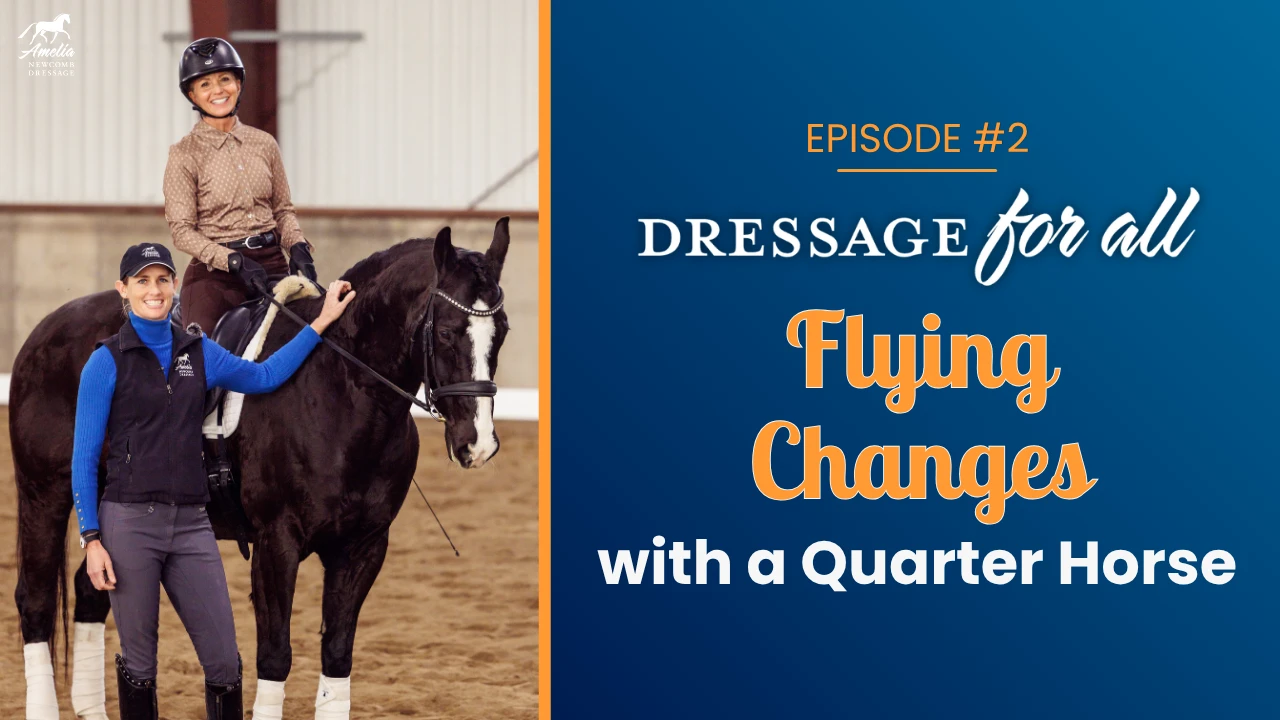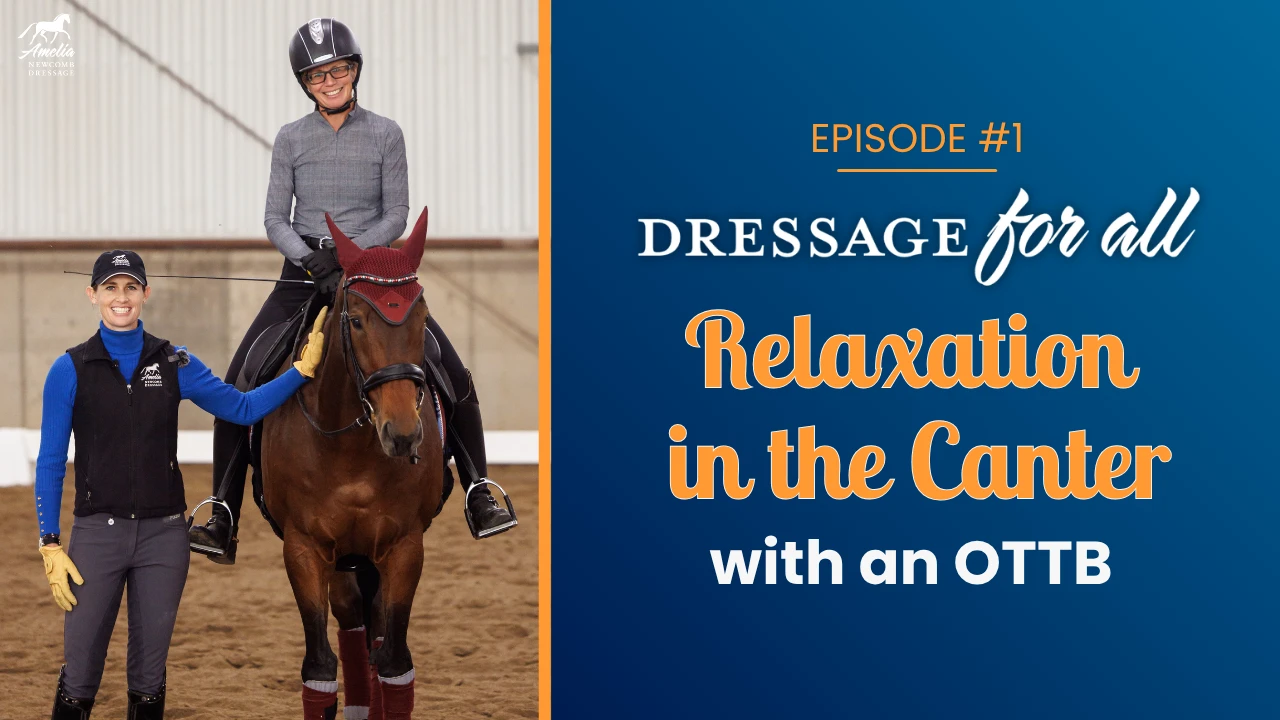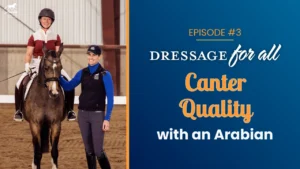






Welcome back to Episode 3 of my Dressage For All series!
This month, I’m featuring riders and horses from different breeds to go along with my mission of “Dressage for All” and making Dressage accessible to everyone who wants to learn. These aren’t professional riders on Grand Prix horses. They’re real riders working through real training challenges with horses they love.
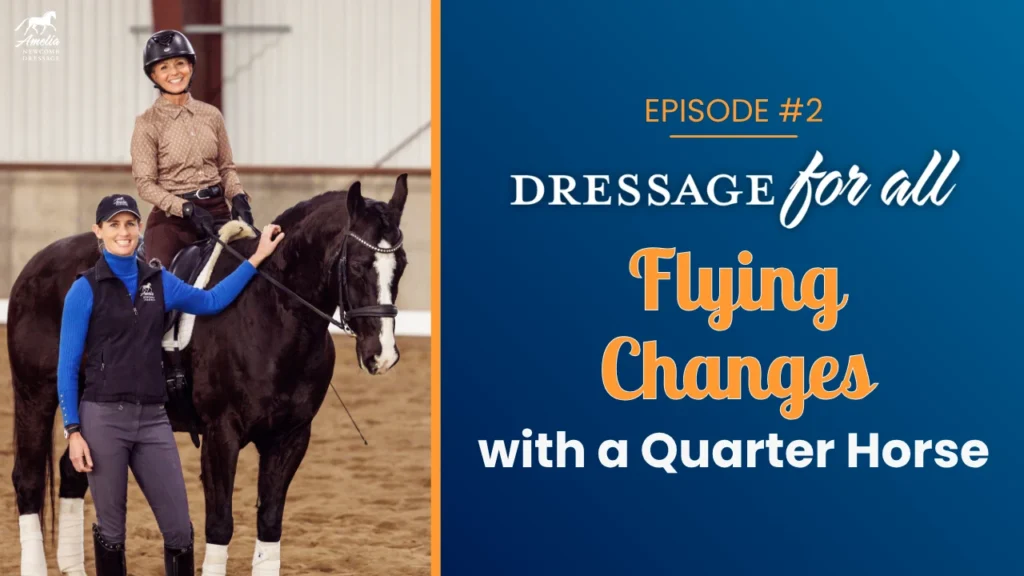
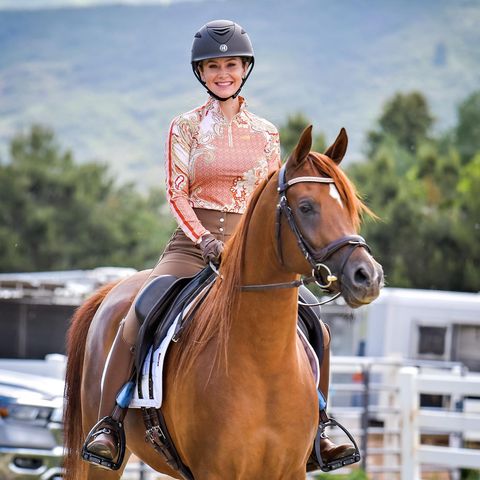
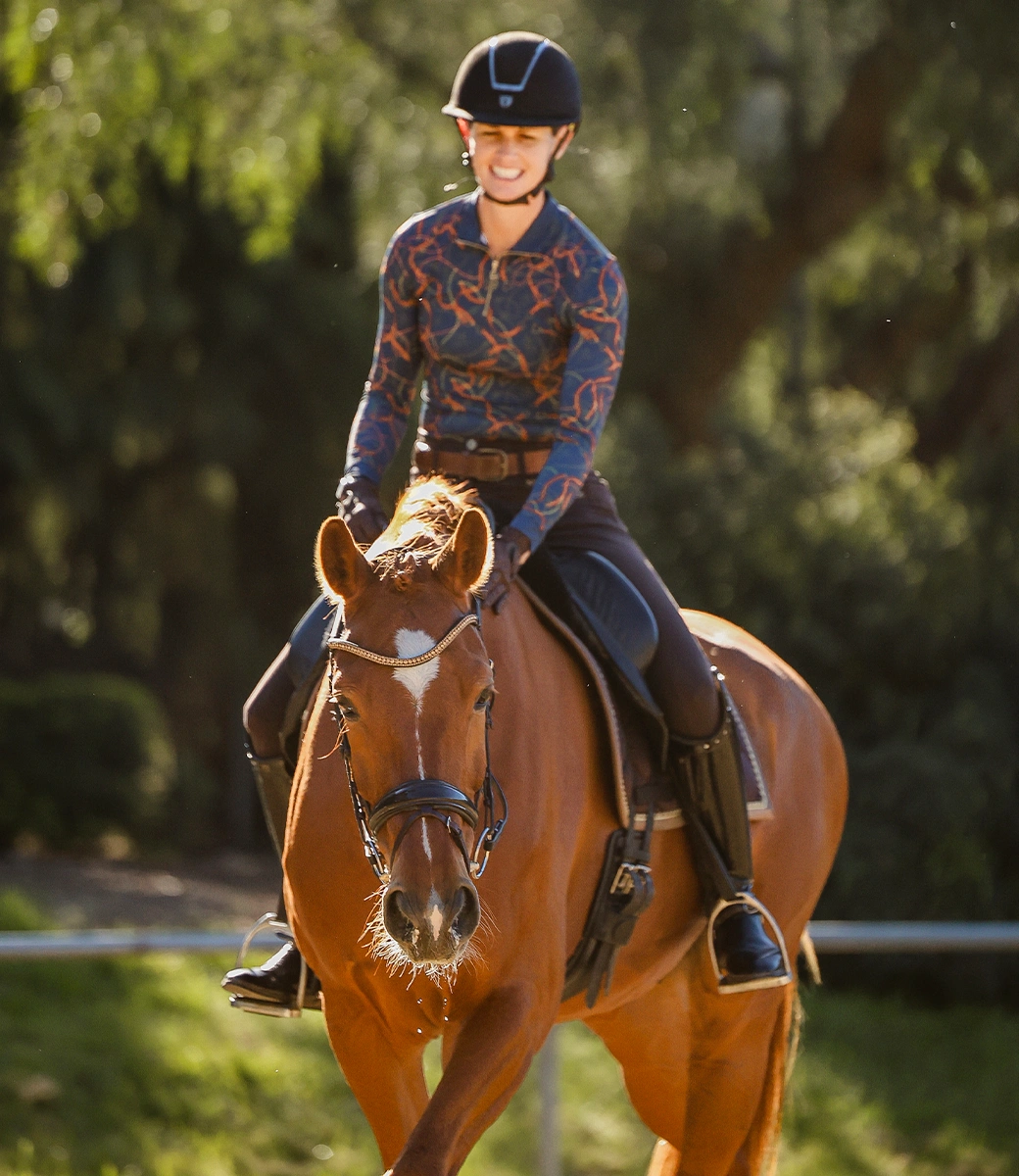
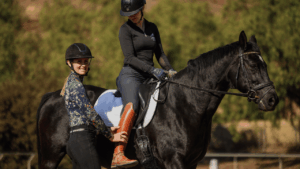
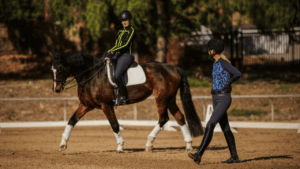
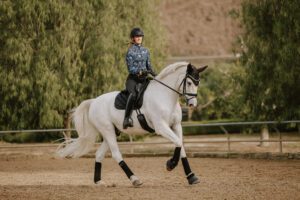
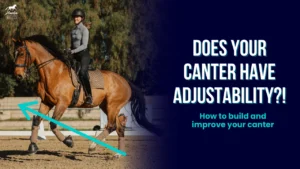
In this episode, I’m working with Jenny and her Half Arabian mare, Lil. If you have a horse that tends to get behind the leg, break out of the canter, or require constant encouragement to stay forward, you’ll find a lot of helpful lessons in this ride. We start by improving Lil’s responsiveness and finish by working on flying changes.
Before we dive in, be sure to download my Free 10 Dressage Terms PDF. It’s a simple guide to help you better understand concepts like bend, contact, connection, and being in front of the leg so you can get more out of your training.
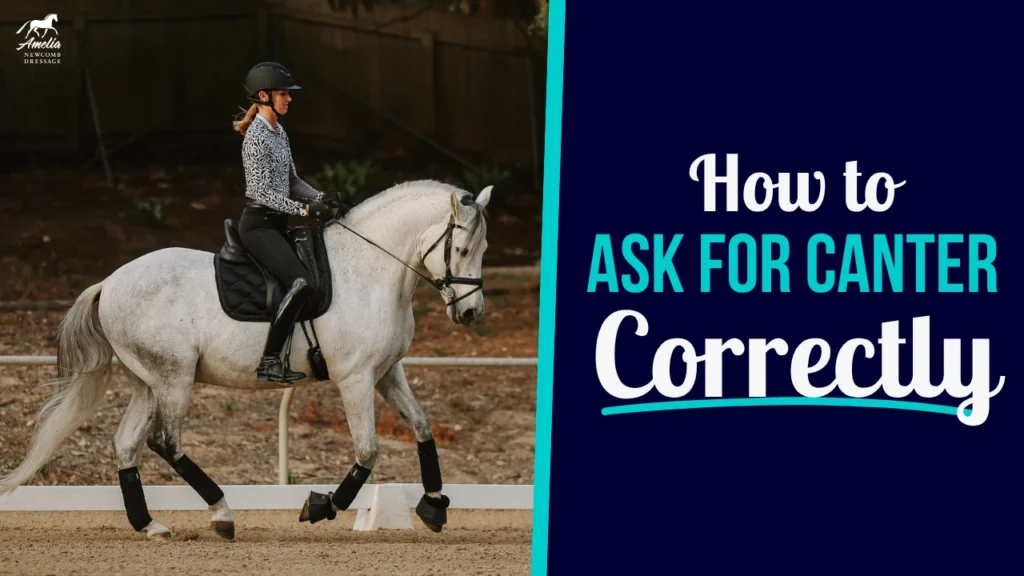
How to Improve the Canter Through Better Response to the Aids
One of the biggest themes of this lesson was teaching Lil to react more promptly to the aids. Before you can improve collection, flying changes, or any upper-level movement, your horse must be in front of the leg.
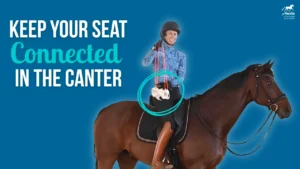
Throughout the ride, we focused on asking with a light aid first and then following up if needed. The goal is always to teach the horse to respond to the softest possible aid. As Lil became more responsive, the quality of the canter improved. She stayed more balanced, more connected, and much more attentive to Jenny’s aids.
A big takeaway from this lesson is that it’s easier to shape energy than it is to create it. Sometimes riders are afraid of getting too much reaction, but a horse that is thinking forward gives you something to work with.
Preparing for Flying Changes
Once we had Lil responsive and in front of the leg, we worked on her flying changes. One of the most common reasons horses struggle with flying changes in Dressage is that they aren’t properly prepared beforehand.
We focused on improving Lil’s positioning, making her more supple, and helping Jenny organize the canter before asking for the change. Flying changes aren’t just about the aid itself. They’re about creating the balance, straightness, and alignment that allow the horse to change cleanly.
This is why so much of upper-level Dressage still comes back to the basics. Better responsiveness leads to a better canter, and a better canter leads to better flying changes.
One of the reasons I love this series is that it highlights horses of all breeds. Arabians are athletic, intelligent, and incredibly fun to train, and Lil was a wonderful example of that throughout this lesson. No matter what horse you ride, Dressage gives you a system for building better communication, confidence, and partnership. That’s what Dressage For All is all about.
Happy Riding!
Amelia
P.S. Don’t forget to download my Free 10 Dressage Terms PDF. It’s a great resource to help you better understand the language of Dressage and get more out of every lesson.