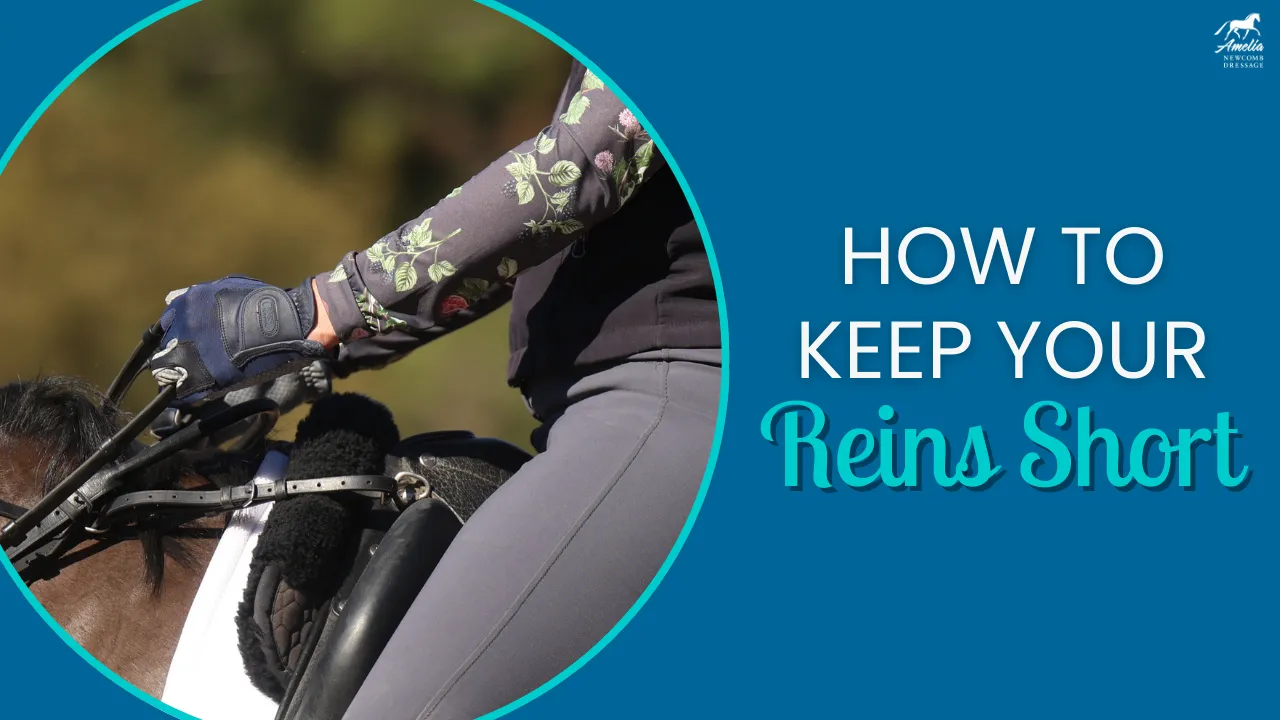

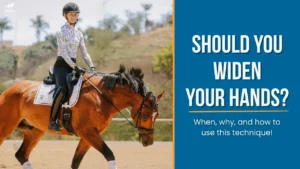



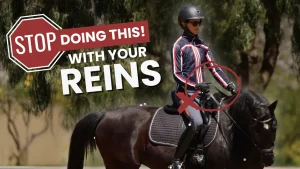

We’ve all been told not to widen our hands while riding—but is it always wrong?
In this video, I explain when widening your hands can actually be a helpful tool. If your horse is above the bit or you’re struggling to encourage them to stretch down and seek the contact, you might need to make this subtle adjustment—without falling into common pitfalls like leaning forward or locking your elbows.
And here’s the thing: widening your hands only works if your position is correct and you truly have an independent seat. That’s why I always say: before you fix your horse, you need to fix your position.
If you haven’t already, check out my Free Independent Seat Webinar. In this free online training, I will share with you my three rider position secrets so that you can ride in harmony with your horse. Click here to sign up.
Why Widening Your Hands Has a Bad Reputation
Widening your hands has developed a negative reputation for good reason: many riders use it incorrectly. If you lock your elbows or lean forward, you’re going to create tension and confusion for your horse.
But that doesn’t mean you should never widen your hands. It’s not about whether it’s “good” or “bad”—it’s about how and when to use it correctly.
The Right Way vs. the Wrong Way
Let’s break it down with an example.
You’re trotting, and your horse is above the bit. You’ve tried bending and moving your fingers, but nothing’s changing. Here’s what often happens next (and what not to do):
- You lean forward.
- Straighten your arms.
- Lock your elbows.
- and pull with your reins.
This creates more resistance—not a lower, rounder, softer neck.
Instead, try this approach:
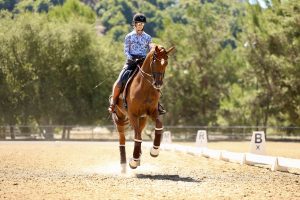
- Check your posture first. Sit back, open your chest, and make sure your elbows are softly bent.
- Coordinate your aids. Add leg to encourage your horse to step forward into the contact.
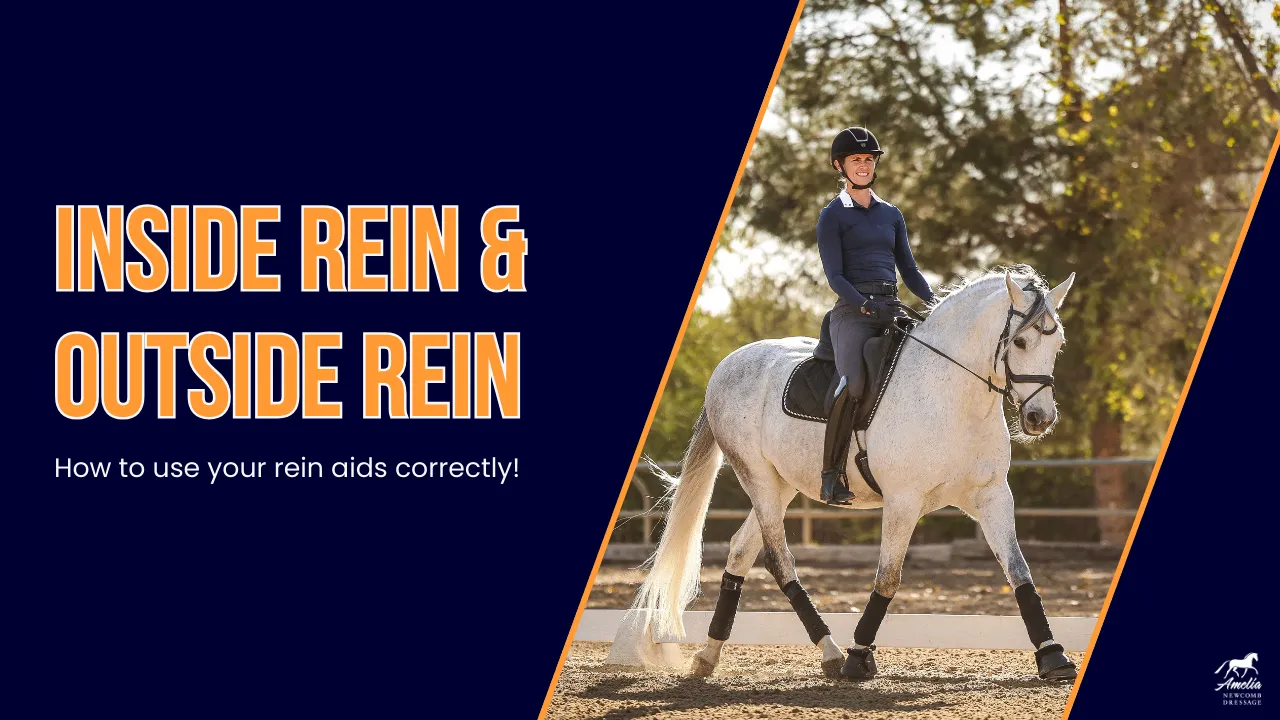
- Widen your hands intentionally. Use your inside rein slightly away from the neck to guide the bend and support the stretch.
- Encourage the neck to go down. As your horse begins to soften and reach, allow your hands to return to neutral, close together in front of the withers.
Use It as a Tool—Not a Habit
Think of widening your hands as a correction, not a position to live in. It’s something you apply for a few moments to guide your horse, and then return to neutral once your horse responds.
If your horse pops back up? Repeat the process—without pulling, without tension, and always with the leg sending your horse forward.
Don’t be afraid to widen your hands—but do it intentionally.
Happy riding!
Amelia
P.S. Need more help with your position? RSVP for my Free Independent Seat Webinar, where I will be sharing my three rider position secrets that will help you ride more effectively and clearly, so your horse understands you better.