Five Exercises to do Before You Canter

You ask for a transition, and your horse’s head immediately flies up. The transition feels unbalanced and uncoordinated, and you just aren’t sure what to do. And the truth is, you just aren’t sure about cantering…if your transitions are disconnected, chances are your canter will feel the same way, but you want to canter so badly! Before you canter, consider the prerequisites to set you up for success.

In this video, I’m sharing five key exercises to prepare you for a smooth, confident canter. Whether you’re new to cantering or your horse gets tense and stiff during transitions, these exercises will set you up for success. Plus, you can download my NEW Free PDF guide to track your progress and score yourself from 0-5 on each exercise. Get your PDF here.

1. Trot-Walk-Trot Transitions before you canter

Your horse should respond immediately and smoothly when you ask for the trot—without you needing to kick repeatedly or use excessive aids. Similarly, your trot-walk transitions should be soft and responsive, without your horse throwing their head up or hollowing their back.

Try this exercise in a circle, focusing on using your seat and inside leg for transitions. If your horse resists or ignores your aids, it’s a sign that your transitions need improvement before moving to the canter.

2. Small Circles for Bend and Control before you canter

A common struggle when cantering is turning—some horses lean, resist bending, or lose their balance. To fix this, practice 12-meter circles at the trot, ensuring that your horse stays soft, maintains rhythm, and bends evenly on both sides.

This helps develop proper bend and balance, making your canter smoother and more controlled, while also improving your ability to pick up the correct lead.

3. Adjusting Trot Speed before you canter

Many riders feel intimidated by the speed of the canter, especially if they are used to trotting slowly and in control. To build confidence, practice gradually increasing your trot speed until you reach a pace similar to the canter.

Go from a comfortable working trot, then increase speed slightly, then relax, and then repeat. This gets both you and your horse accustomed to faster movement, so the transition to canter feels more natural.
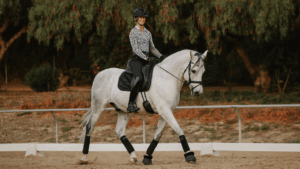
Before you canter, work on your trot

4. Posting Trot to Sitting Trot before you canter

The ability to sit the trot comfortably is crucial for a controlled canter transition. Work on alternating between posting and sitting trot, keeping your horse’s rhythm steady without your horse speeding up, slowing down, or changing their feel in the contact. If you want some advice and help to sit the trot, check out this article. 

If your horse stays relaxed and balanced while you sit the trot, it’s a good sign that your position and core stability are strong enough to handle the canter transition.

5. Lunging for Canter Readiness before you canter

Before asking for canter under saddle, make sure your horse can canter calmly and rhythmically on the lunge line. This helps build their confidence and allows you to observe how they move without rider influence.

If your horse is tense, rushes, or struggles to maintain a steady canter on the lunge, it’s likely they’ll have the same issues under saddle. Work on relaxed, balanced canter sessions on the lunge to prepare them properly.

Before you Canter: Are You Ready to Canter?

Once you’ve mastered these five exercises, you’re ready to canter! Score yourself using the Free PDF—if you’re consistently hitting 4s and 5s across the board, you’re in great shape!

And if you want to take your canter skills even further, stay tuned for my 30-Day Canter Challenge coming soon! It’s designed to help you build confidence, improve transitions, and refine your canter work—whether you’re just starting or looking to fine-tune your riding.

Happy Riding!

Amelia

ABOUT YOUR INSTRUCTOR
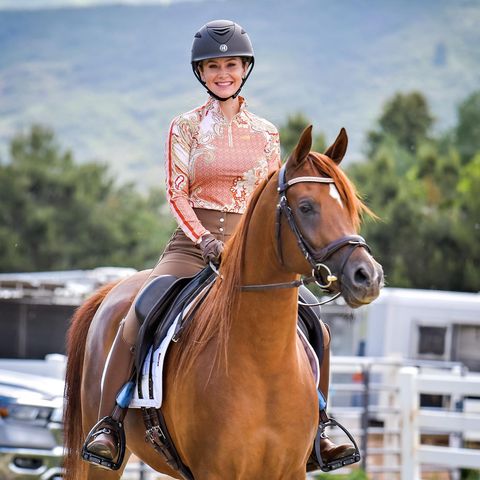
A smiling woman wearing a helmet and riding gear stands beside a chestnut horse with a black bridle and white saddle pad, holding its reins outdoors in a sunlit, green setting.
Hey there.
I'm Amelia Newcomb
At Amelia Newcomb Dressage, I work to develop a trusting and confident relationship between horse and rider. I draw on theories from both natural horsemanship and classical dressage, creating a holistic training approach that adapts to the unique needs of each horse and rider.
Facebook
Twitter
Pinterest
WhatsApp
RELATED POSTS
Like this article & video?

There are hundreds more! View the entire library here.

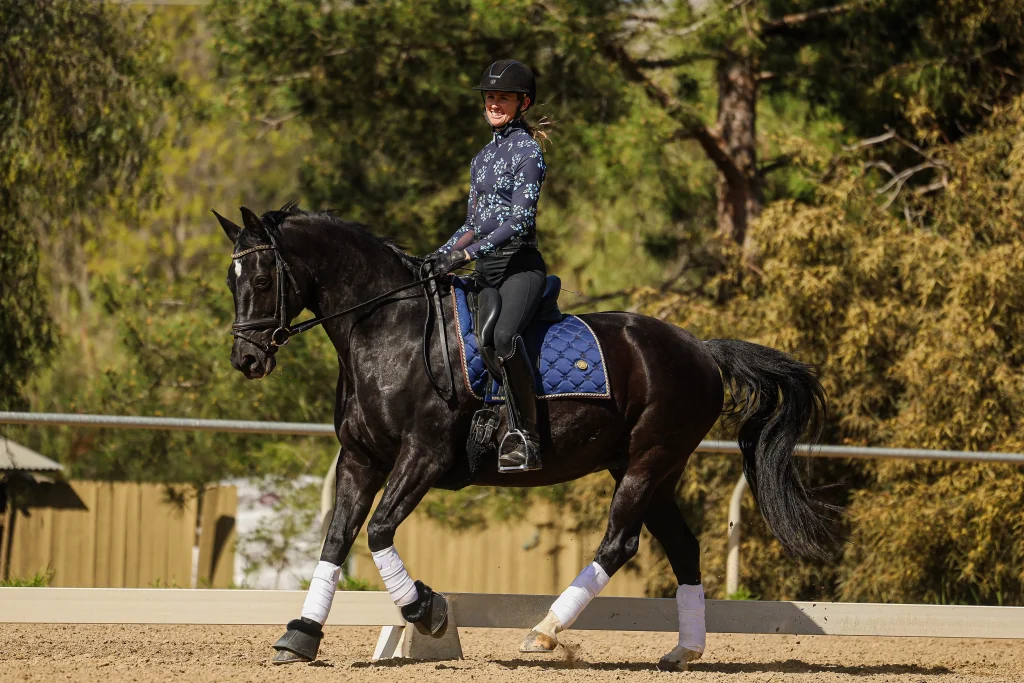
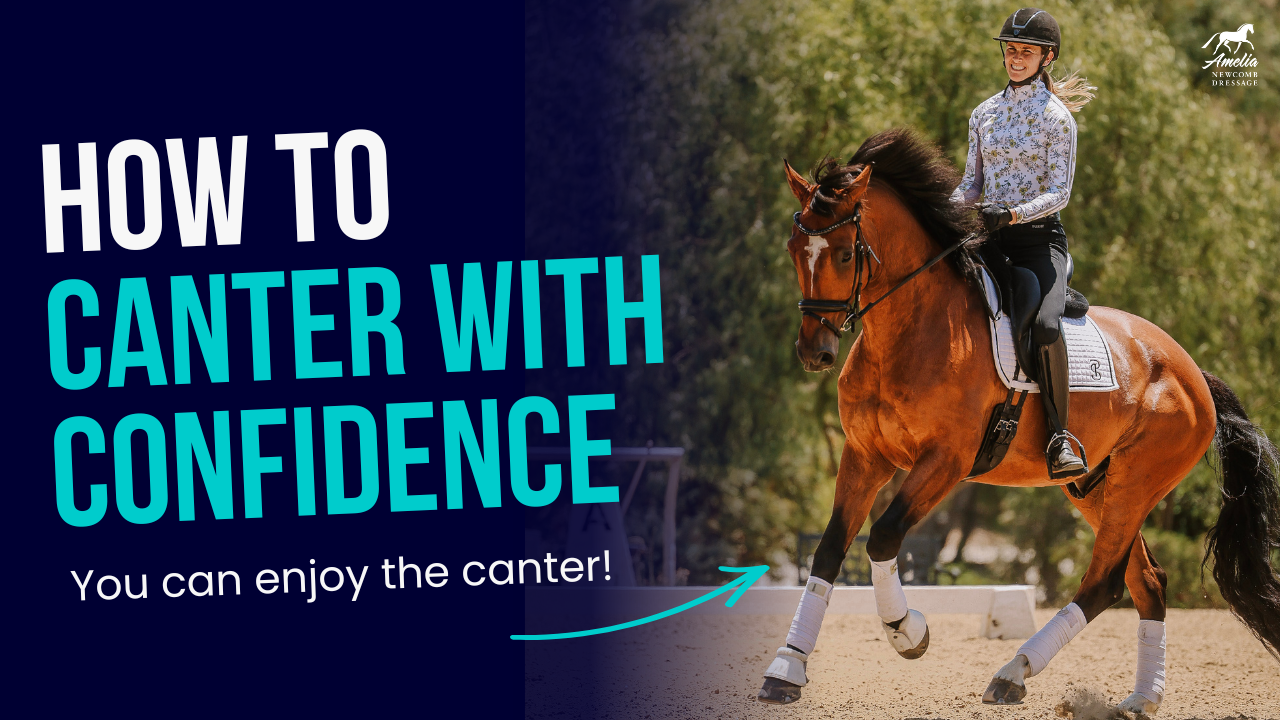
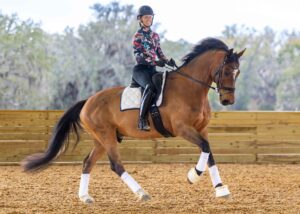
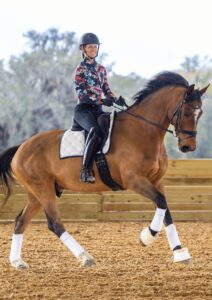
A person wearing a helmet and floral-patterned shirt rides a black horse with white leg wraps and a blue saddle pad on a sandy arena, surrounded by trees and a wooden fence—perfect for the Canter Challenge. Join now!.
FEATURED COURSE
The Canter Challenge
A structured 30-day program designed to take the stress and uncertainty out of cantering. You’ll follow a clear, step-by-step system covering groundwork, trot preparation, rider position, and canter exercises so you can build confidence, balance, and control. With guided training, live support, and proven exercises, you’ll go from tense and unsure to riding a relaxed, forward, and enjoyable canter.
A person wearing a helmet and blue patterned shirt stands outdoors holding the reins of two brown horses, one on each side, with trees and bushes in the background—like a perfect image for a Sales Page Template.
Amelia Newcomb
LATEST POSTS
LATEST YOUTUBE VIDEO
Rated 5 out of 5
NEWSLETTER

Sign Up Now To Get Free Training & Tips In Your Inbox!

🔥 HOT RIGHT NOW 🔥
Explore More with Our Featured Courses and Workshops

We’ve curated a selection of courses, workshops, and masterclasses designed to help you refine your skills and achieve your riding goals. Whether you’re just starting out or looking to advance, these offerings are here to support your growth. Explore and take your riding education to the next level!

A structured 30-day program designed to take the stress and uncertainty out of cantering. You’ll follow a clear, step-by-step system covering groundwork, trot preparation, rider position, and canter exercises so you can build confidence, balance, and control. With guided training, live support, and proven exercises, you’ll go from tense and unsure to riding a relaxed, forward, and enjoyable canter.

Enjoyed this article? 

Saddle Up and Search for Your Next Read!
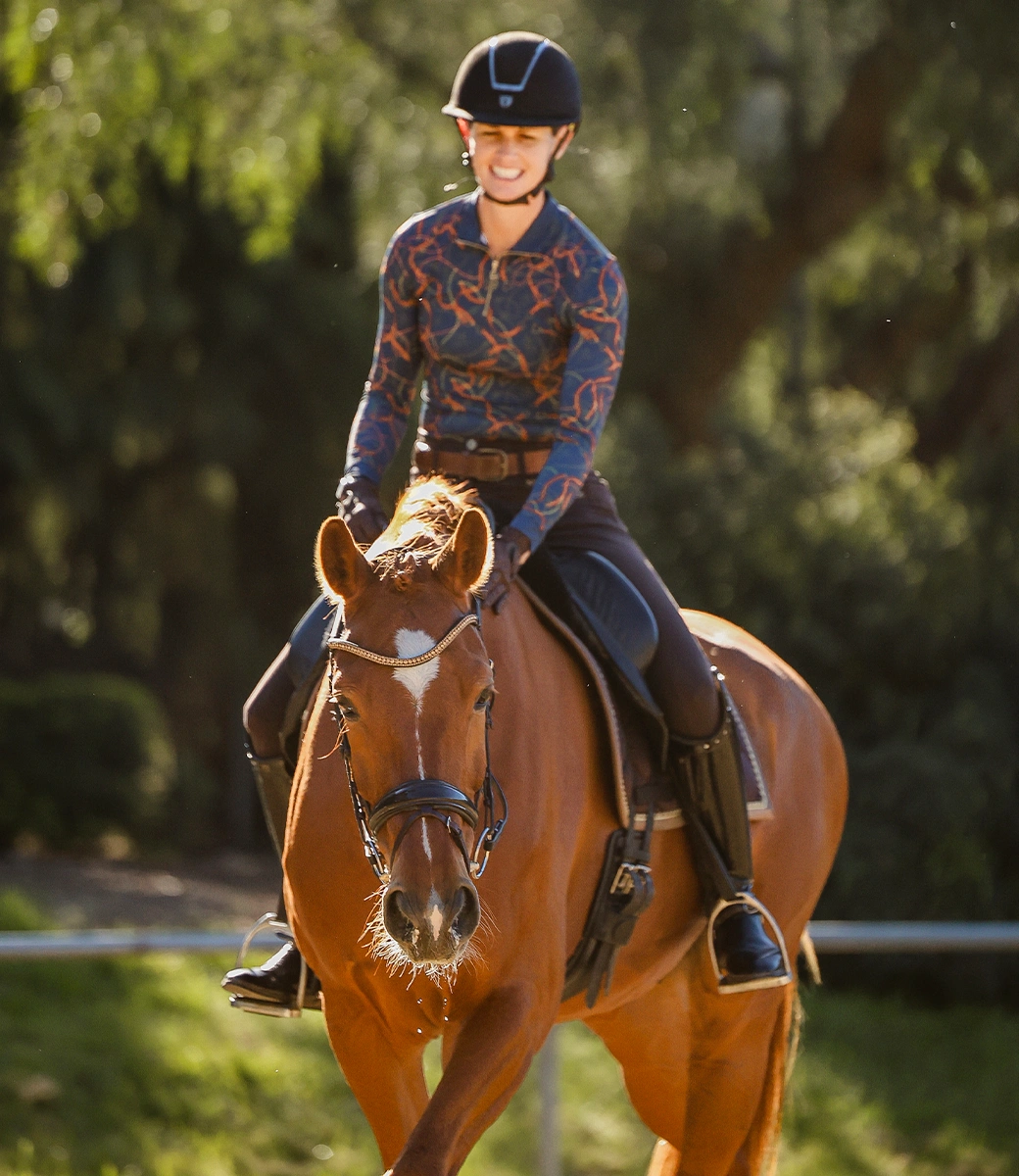
A person wearing a helmet and patterned shirt smiles while riding a brown horse outdoors on a sunny day, with green trees in the blurred background.
Free Resources
Unlock Your Potential as a Dressage Rider with Our Free Resources!

Are you passionate about dressage and eager to enhance your skills? Our Free Resources section is here to support your journey, offering a wide range of courses, guides, and tools designed to help you become the rider you’ve always wanted to be.

Access Now!
A simple white envelope icon on a light background, outlined with bold lines to represent a closed envelope.
Free Training & Tips In Your Inbox!

Say goodbye to the fluff and hello to real value. Our newsletter delivers actionable insights, expert tips, and the kind of motivation that pushes you to the next level in your dressage journey. Ready to make strides in your riding? Let’s do this—straight to your inbox. You in?

Join the community

Get weekly training to your Inbox

Enter your name and email below and you’ll be added to my list to get weekly training videos each week. You’ll also be the first to hear about all my news, courses and offers! You can unsubscribe at any time!

PS-Good things are coming. Please be patient with this form, it sometimes takes a moment to submit your details!

Free Training scale webinar

Tuesday, May 19th, 4pm PT

Please be patient with this form, it sometimes takes a moment to submit your details!