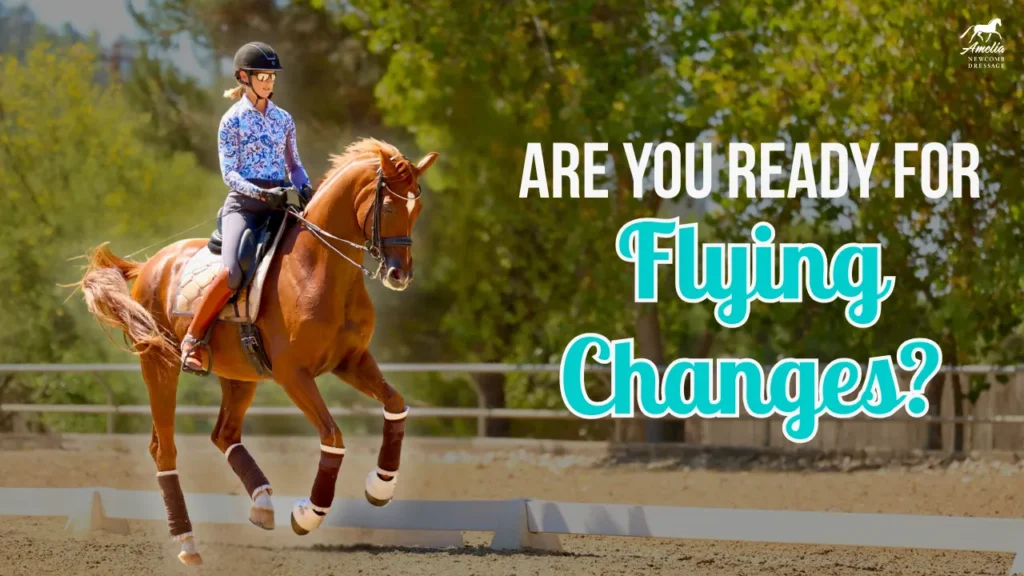
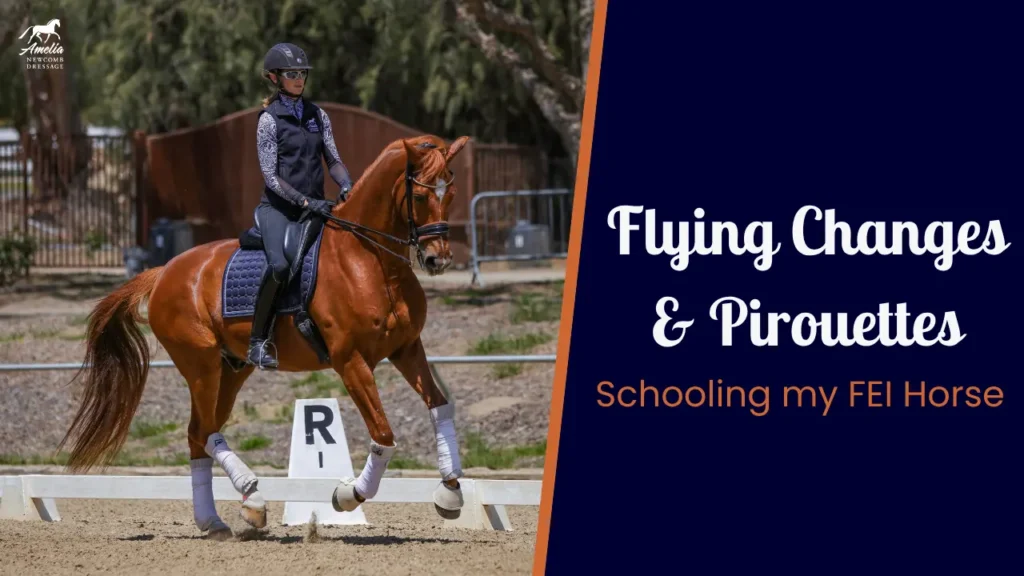
Prepare for Flying Changes with These Five Exercises

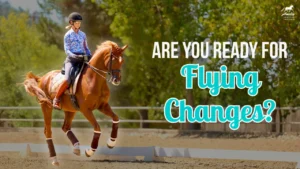
Struggling with late, crooked, or panicked flying changes? You’re not alone—and often, the issue starts before you ever ask for the change. Without proper preparation, teaching flying changes can become a complete disaster.

In this video, I’m sharing five essential exercises you should practice before introducing flying changes to your horse. Perfect these exercises first, and teaching the changes will be a lot easier!

Before we get into the video, I wanted to remind you that my Free Flying Changes Webinar is coming up. Inside, I will be sharing my three secrets to riding clean flying changes! If you would like to learn more about teaching and troubleshooting the flying changes, then this webinar is for you. Click here to save your spot!

Ok, now on to the tips! Here’s how to set your horse up for success in the flying changes from the beginning:

1. Clean, Responsive Trot–Canter Transitions

Flying changes are, at their core, a canter transition that happens in the air. That means your horse needs to be soft, round, and responsive to your canter aid from the trot. If it takes five tries, a few kicks, and a cluck to get the canter, your horse isn’t ready. These transitions should feel easy, prompt, and balanced. The horse’s frame should stay connected, and the transition should happen from a light aid without hollowing or resistance. This exercise lays the foundation for the quality and clarity you’ll need when you introduce the actual flying change.

2. Balanced, Relaxed Counter Canter

Counter canter is one of the best tests of your horse’s straightness, balance, and understanding. It also helps prevent anticipation. If your horse gets tense, loses balance, or throws in a change on their own when you change direction, they’re not yet ready for flying changes. Counter canter develops balance, straightness, and strength. You want to be able to canter a full short side, in counter canter without your horse panicking or switching leads.

3. Rubber Band Canter (Medium to Collected)

To create a clean, uphill flying change, you need jump and adjustability in the canter. One of my favorite exercises for this is what I call the Rubber Band Exercise. You ask for medium canter—really letting your horse move forward—then bring them back into a collected canter using half-halts. This back-and-forth helps you build the ability to stretch and compress the stride while staying in balance. If your horse hollows or pops their head up when you collect, you need to keep working on the connection and responsiveness to your seat and half-halt.

4. Leg-Yield Hopscotch

Quick reactions to your leg aid are critical for flying changes. To test this, I like to do walk leg-yields with a little “hopscotch” rhythm: two steps over, two straight, two steps back over. The key is that your horse responds immediately when your leg goes on. If there’s a delay or a drift instead of a clear sideways step, it’ll show up in the change later. These small, precise reactions help create the communication you’ll rely on during the millisecond timing of the flying change aid.

5. Simple Changes and Walk–Canter–Walk

Many riders jump straight into flying changes without establishing reliable, simple changes. But the aid for a flying change is essentially the same as for canter. If your walk–canter and canter–walk transitions are smooth, then your horse is starting to understand what your body and leg aids mean. Don’t just repeat flying changes and hope for the best—use simple changes to build clarity. This teaches your horse to stay calm and attentive through transitions while also strengthening the canter itself.

Final Tips

Flying changes are one of the most rewarding movements to ride—but only when they’re built on a solid foundation. If your horse learns them crooked, delayed, or with fear, those habits can be really hard to fix. That’s why I always recommend taking the time to master these prerequisites first. The more your horse understands and trusts the aids, the easier it will be to introduce flying changes without tension or confusion. Hopefully, this helps you and your horse on your flying change journey!

Happy riding,

Amelia

P.S. Need more help with your flying changes? Don’t forget to RSVP for my Free Flying Webinar coming up on Sunday, Oct 5th at 12:00 noon PT. Save your seat here.

ABOUT YOUR INSTRUCTOR
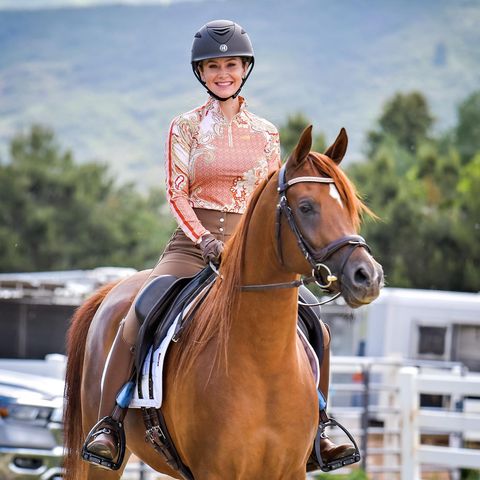
A smiling woman wearing a helmet and riding gear stands beside a chestnut horse with a black bridle and white saddle pad, holding its reins outdoors in a sunlit, green setting.
Hey there.
I'm Amelia Newcomb
At Amelia Newcomb Dressage, I work to develop a trusting and confident relationship between horse and rider. I draw on theories from both natural horsemanship and classical dressage, creating a holistic training approach that adapts to the unique needs of each horse and rider.
Facebook
Twitter
Pinterest
WhatsApp
RELATED POSTS
Like this article & video?

There are hundreds more! View the entire library here.

A person in riding gear sits atop a black horse with white leg wraps, as if on an equestrian course. Hand-drawn wings give the horse a mythical, Pegasus-like look, evoking the magic of flying changes. The background is blurred.
FEATURED COURSE
Flying Changes Course
Teaching the Changes doesn’t need to be stressful and complicated. You’re frustrated, your horse won’t change, and you might even be a little scared of asking for a flying change. Follow my formula and confirm your changes to move up the levels!
A person wearing a helmet and blue patterned shirt stands outdoors holding the reins of two brown horses, one on each side, with trees and bushes in the background—like a perfect image for a Sales Page Template.
Amelia Newcomb
LATEST POSTS
LATEST YOUTUBE VIDEO
Rated 5 out of 5
NEWSLETTER

Sign Up Now To Get Free Training & Tips In Your Inbox!

🔥 HOT RIGHT NOW 🔥
Explore More with Our Featured Courses and Workshops

We’ve curated a selection of courses, workshops, and masterclasses designed to help you refine your skills and achieve your riding goals. Whether you’re just starting out or looking to advance, these offerings are here to support your growth. Explore and take your riding education to the next level!

Teaching the Changes doesn’t need to be stressful and complicated. You’re frustrated, your horse won’t change, and you might even be a little scared of asking for a flying change. Follow my formula and confirm your changes to move up the levels!
My Blue Ribbon Course: Second Level, is a proven competition preparation system for mastering USDF Second Level. You’ll learn what the judge is looking for, how to present your strengths and how to handle hiccups. Your confidence will increase and your dreams will be coming true in the show ring.
Everyone knows the phrase- but do you know how to use it to take your riding to the next level? Learn the theory and exercises to utilize 'Inside Leg and into the Outside Rein' to make your horse more ridable with this workshop. When you get your horse connected from inside leg to outside rein it will improve their focus & attention, suppleness, engagement of the hind end, and more!

Enjoyed this article? 

Saddle Up and Search for Your Next Read!
A person wearing a helmet and patterned shirt smiles while riding a brown horse outdoors on a sunny day, with green trees in the blurred background.
Free Resources
Unlock Your Potential as a Dressage Rider with Our Free Resources!

Are you passionate about dressage and eager to enhance your skills? Our Free Resources section is here to support your journey, offering a wide range of courses, guides, and tools designed to help you become the rider you’ve always wanted to be.

Access Now!
A simple white envelope icon on a light background, outlined with bold lines to represent a closed envelope.
Free Training & Tips In Your Inbox!

Say goodbye to the fluff and hello to real value. Our newsletter delivers actionable insights, expert tips, and the kind of motivation that pushes you to the next level in your dressage journey. Ready to make strides in your riding? Let’s do this—straight to your inbox. You in?

Join the community

Get weekly training to your Inbox

Enter your name and email below and you’ll be added to my list to get weekly training videos each week. You’ll also be the first to hear about all my news, courses and offers! You can unsubscribe at any time!

PS-Good things are coming. Please be patient with this form, it sometimes takes a moment to submit your details!

Free PDF:

10 Dressage Terms

Every Rider Should Know

Understanding the Language of Dressage is the Key to Real Progress

Please be patient with this form, it sometimes takes a moment to submit your details!