



















Last updated: 19th May 2026
Why the Change of Rein Exercise Is Important
The change of rein through the circle is one of my favorite exercises because it helps your horse become more supple, bend evenly in both directions, and stay balanced from inside leg to outside rein. It is also an excellent exercise for improving connection, responsiveness, and straightness while helping riders develop better timing with their aids.
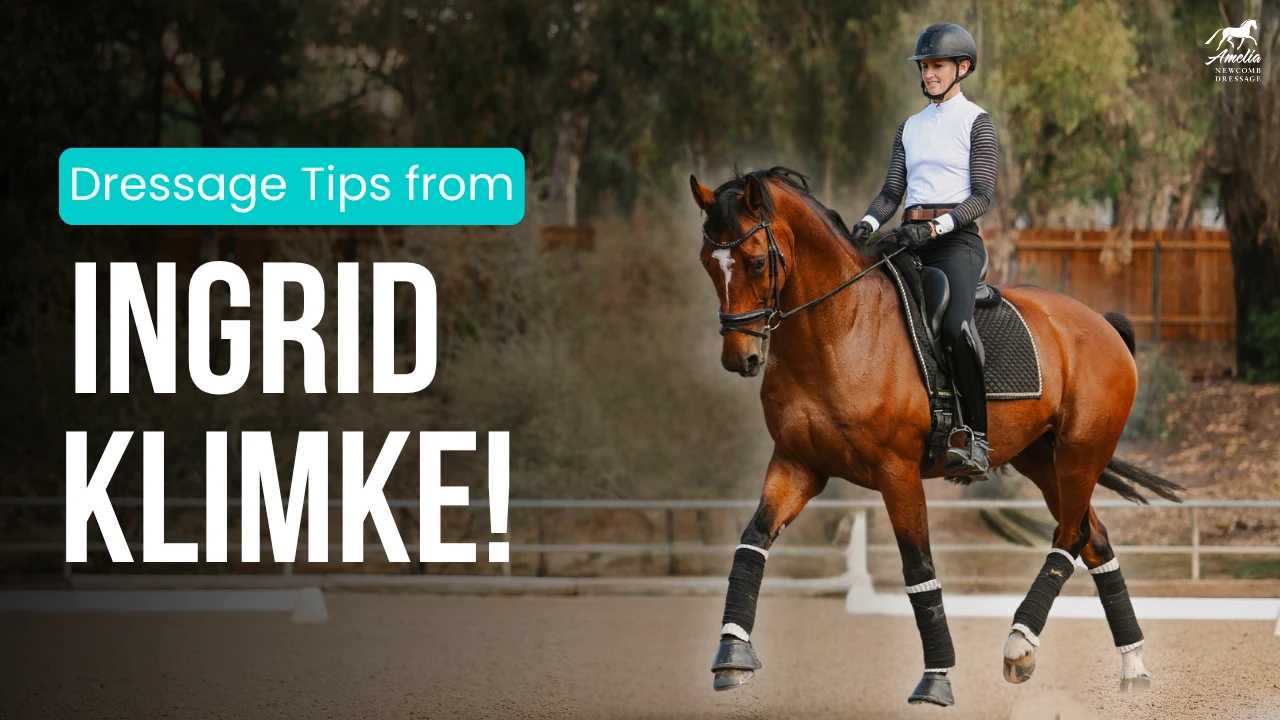
In this video, I walk you through how to ride the exercise correctly and explain how it can improve your horse’s overall way of going.
Start With an Accurate Circle
Begin by riding an accurate 20-meter circle. Keep your eyes up, stay centered in your position, and focus on riding to the correct touchpoints. Accuracy matters because a properly shaped circle helps your horse stay balanced and organized throughout the exercise.
As you cross the centerline, ride through the middle of the circle, essentially cutting the circle in half to create the change of rein. I like to think of the shape as a yin and yang symbol, where one arc flows smoothly into the next. The goal is to maintain rhythm and balance while gradually changing the bend in your horse’s body.
How to Ride the Correct Bend
The key to a successful change of rein is correctly changing the bend. Many riders instinctively pull on the inside rein when changing direction, but this often causes the horse to fall inward, lose balance, or twist through the neck instead of bending evenly through the body.
Instead, think about using your entire set of aids together. Your inside leg at the girth creates the bend and encourages your horse to stay supple through the ribcage. Your outside leg slightly behind the girth prevents the haunches from swinging out during the turn. At the same time, the outside rein stays steady near the withers to support the shoulder and help maintain balance. The inside rein should stay soft, simply asking for a slight flexion and rewarding your horse when the bend is correct.
When these aids work together correctly, your horse’s entire spine, from poll to tail, follows the curve of the circle evenly.
Common Mistakes Riders Make
One of the most common mistakes riders make during the change of rein is relying too heavily on the inside rein while forgetting to use the legs and outside rein for support. When this happens, the horse’s head may turn, but the body falls inward and the shoulder drops. Instead of staying balanced on the circle line, the horse cuts through the turn and loses alignment.
You can often see this clearly from the saddle or even from a drone view. A correctly bent horse will stay evenly curved throughout the body, while an incorrect bend creates stiffness, twisting, or unevenness through the neck and shoulders.
Why Correct Bend Matters
Correct bend is essential for creating softness, roundness, and throughness in your horse. It forms the foundation for straightness and balance, and without it, it becomes much harder to develop collection, lateral work, or self-carriage later in your training.
This is why I love incorporating the change of rein exercise into warm-ups and everyday schooling rides. It is simple, effective, and can be ridden in almost any arena size while helping your horse become more supple and attentive to your aids.
Want More Help With Bend?
If you need more help teaching your horse to bend correctly, check out my Bend Workshop. Inside this workshop, I walk you through how to teach bend from the ground up, fix common turning and resistance issues, and apply the correct bending aids in the saddle so your horse becomes more balanced, supple, and responsive.
Happy Riding, Amelia