




Ever wish you could sit ringside at a Carl Hester clinic? I recently had that chance during his masterclass in Temecula—and it was full of gold. In this video, I’m sharing ten of my favorite takeaways that you can start applying in your own riding today.
And if you’re ready to set clear goals for your riding, don’t forget to RSVP for my free 5-Day Riding Bootcamp that starts December 31st! It’s perfect for getting clarity, structure, and motivation for the year ahead. Click here to RSVP.
Now, on to the tips!
1 & 2. Balance Before Forward & Swing Speed
Carl’s foundation principle: before you add power, impulsion, or expression—find balance.
For young horses, especially, balance must come before forward. Only then can you develop true connection.
In the stretch, especially, find the swing speed—not too fast, and not too slow.
3. Stretching
Carl worked with every single horse to get them stretching forward and downward at both the beginning and end of the ride.
This is a vital part of developing the topline and lifting the withers. A good stretch encourages relaxation, engagement, and suppleness.
4. All Horses Are Crooked
Every horse has a hollow side and a stiff side—most are hollow to the left and stiff to the right.
When tracking left, use more outside (right) rein to control the shoulder.
When tracking right, use more flexion to the inside to keep even contact and alignment.
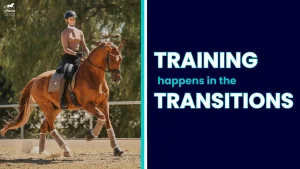
5. Corners Create Collection
Carl uses corners as mini training opportunities.
Ride trot–walk–trot transitions in the corners, push the haunches out slightly, and keep the neck soft and mobile.
Corners are where balance, bend, and suppleness meet.
6. Leg-Yields, Leg-Yields, and More Leg-Yields
In all three gaits, Carl used leg-yields to develop suppleness, straightness, and expression.
Focus on keeping the shoulders slightly leading and a soft flexion in the jaw—without overbending the neck.
This exercise creates elasticity and engagement through the body.
7. Collection Without Pressure
True collection comes from engagement, not holding.
“Canter on the spot” teaches self-carriage without restriction.
Use your heels, not your hands—collection should feel light, not compressed.
Remember: collection isn’t about slowing down.
To make your horse more uphill, make them quicker behind, not slower in front.
8. Shoulder-In on the Circle
This is one of Carl’s go-to exercises to make the horse more supple and engaged.
It’s especially useful for hot horses that resist the leg, encouraging acceptance of the inside leg and improving relaxation through the body.
9. Reward the Try
Carl repeatedly stresses the importance of the release.
The reward is the give, especially in contact and half halts.
Ride forward, feel, and release; the horse learns in the release, not the hold.
Regularly practice giving and retaking to test your horse’s self-carriage.
10. Train the Horse You Can Afford
Carl doesn’t buy expensive horses—he buys two-year-olds and trains them up himself.
His message: do the best you can with what you have, and enjoy the process and journey of developing your horse.
Progress, not perfection, is the goal.
I hope these insights from Carl help you feel more inspired and confident in your riding!
Happy Riding!
Amelia
P.S. If you’re ready to take the next step in your training journey, be sure to sign up for my Free Online 5-Day Riding Bootcamp. It’s free, fun, and packed with actionable steps to help you clarify your goals, overcome fear, and start the year strong.