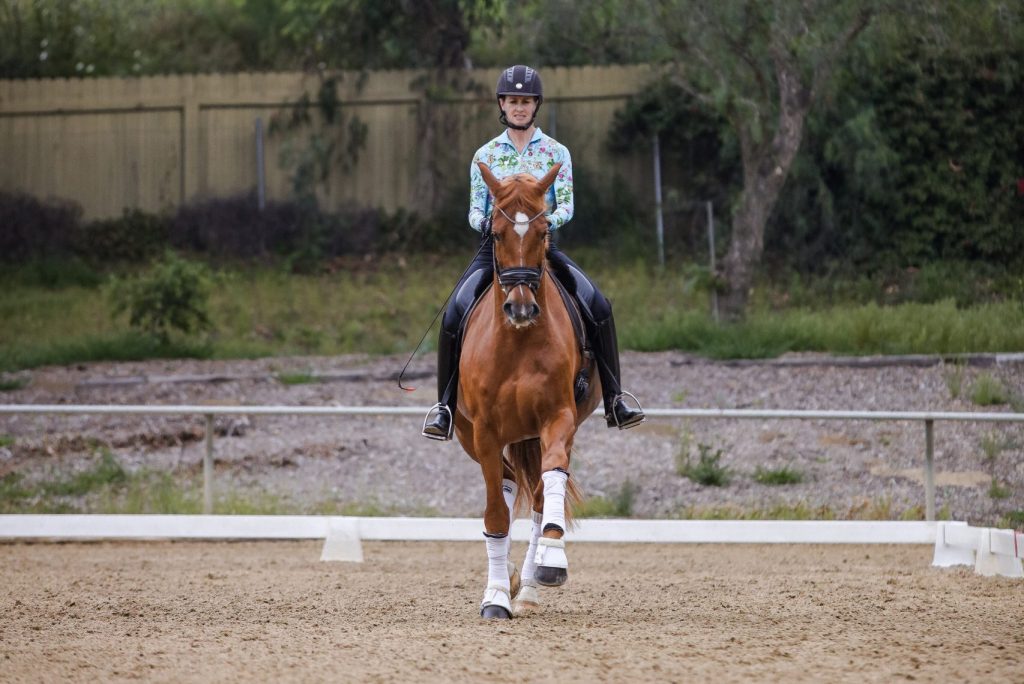




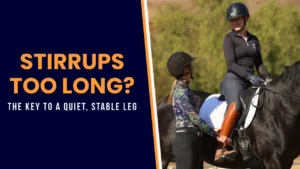






Do you lose your stirrups? Feel unbalanced or like your lower legs swing back and forth? Have trouble giving an effective leg aid? Your stirrup length and placement might be the issue.
Before we dive in, don’t forget to save your seat for my Free Independent Seat Webinar! I’ve designed this free online training to help you feel more secure, aligned, and confident in the saddle. It’s helped thousands of riders, and I would love to help you, too. Though it is a free event, an RSVP is required to save your spot. RSVP for the free training here.
Ok, now on to the tips!
Do You Have The Right Stirrup Length
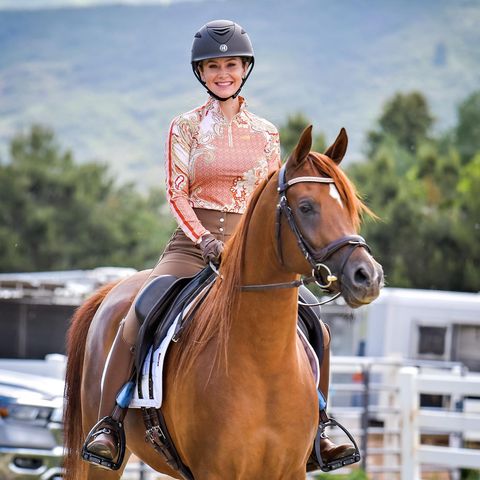
Start by checking your stirrups: with your feet out of them, the bottom of the iron should reach around your ankle bone. Too long, and you’ll be reaching. Too short, and your leg may jam upward.
In Dressage, we aim for a longer leg to encourage depth and connection in the seat. Your thigh should be at about a 45-degree angle so that you can ride with a deep seat and stay balanced.
Positioning the Iron on Your Foot
The stirrup iron should sit perpendicular across the ball of your foot—not too far back into the arch or up on your toes. Common mistakes include:
- Letting the stirrup slide into your arch (often caused by gripping)
- Riding too much on your toes (easy to lose your stirrups and jam your legs forward)
Instead, you want even weight from your big toe to your pinky toe across the ball of your foot. That’s your balance point.
Weight Distribution and Motion
Think of your body in two parts:
- Upper body weight (head to pelvis) goes into your seat bones
- Lower body weight (hip down) flows into your stirrups
You’re not standing in the stirrups—just allowing the weight of your leg to drop into them. When giving leg aids, especially at trot or canter, keep your leg long and your ankle flexible like a hinge. This shock absorption helps you stay connected without gripping or losing your stirrups.
Ride with Awareness
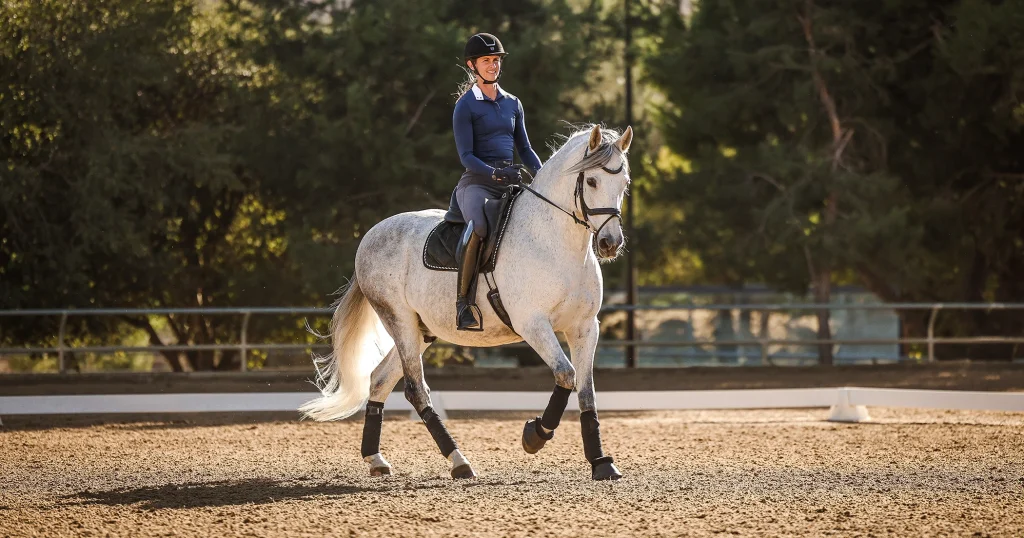
In motion, your leg should drape gently around your horse like a wet washcloth. Your toes point forward, and you initiate aids from your calf without tightening up or drawing your leg upward.
If your ankles or knees stiffen, you may lose the stirrups or block the horse’s movement. Keep your ankles supple and remember: even weight, correct placement, and relaxed alignment make all the difference.
On your next ride, check your stirrup length, your foot placement, and how you’re distributing your weight. Small adjustments here can dramatically improve your confidence, stability, and communication with your horse.
Happy Riding!
Amelia
P.S. Need more help with your rider position? Don’t forget to save your seat for my Free Independent Seat Webinar—it’s the perfect next step to build a more secure, effective seat. Save your seat here.