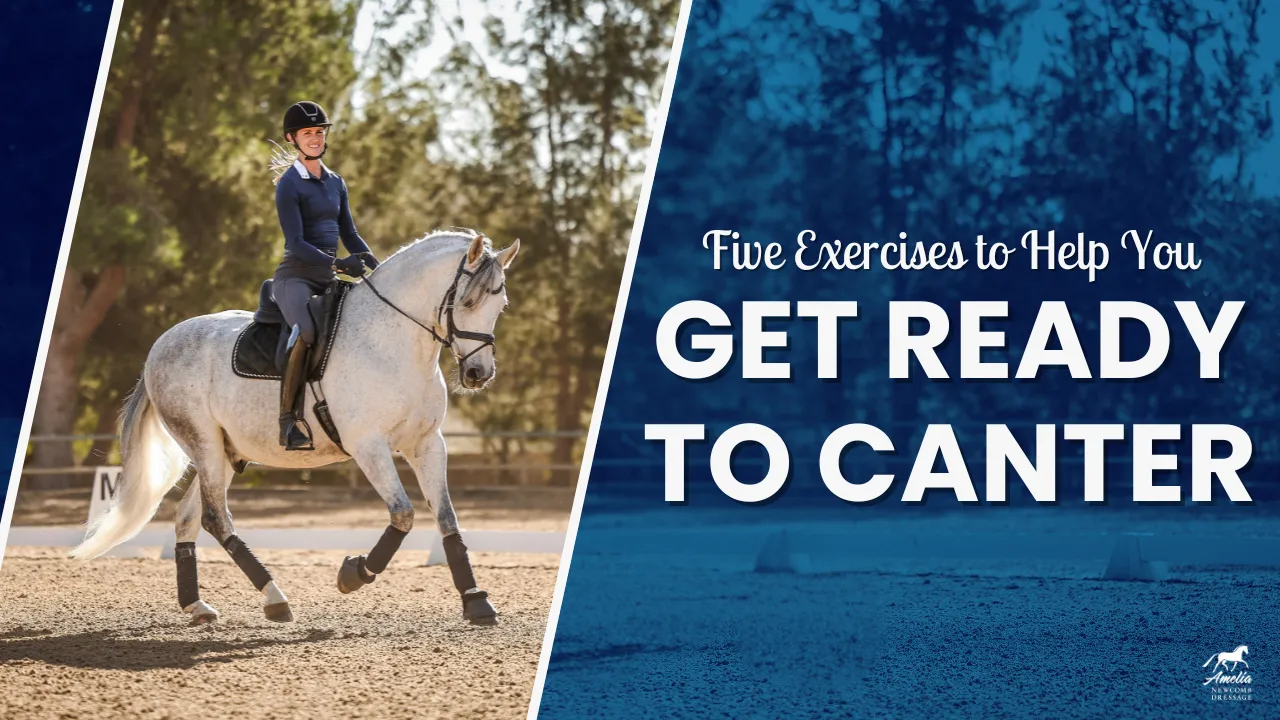


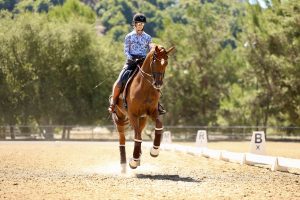



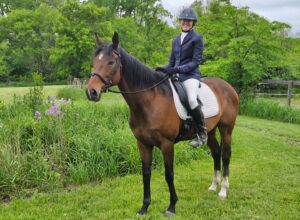


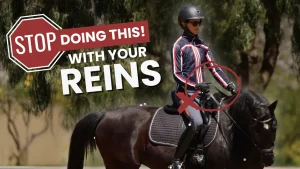


Transitions into the canter can be challenging for most riders and horses. Achieving a smooth, balanced transition requires a careful balance of aids and timing to keep your horse round and connected. I teach clinics all over the country, and I love working with new horses and riders. In a recent clinic, I worked with a student and her young Friesian to improve his canter transitions.
During the clinic, her horse, a six-year-old, had difficulty maintaining a connected frame during canter transitions. At times, he would either curl behind the bit or raise his head above the contact, losing balance and connection. This is common in young horses who are still developing strength and coordination in their hindquarters. It’s also normal to experience a mix of good and bad transitions as your horse learns. The key is consistency and understanding how to adjust your approach based on your horse’s needs in the moment.
If your horse struggles to maintain a steady frame or feels unbalanced during transitions, don’t worry—this is common and something you can improve with practice. Here are a few tips to help you maintain the connection through your canter transition:
- Set Up the Frame – Before asking for the canter, ensure your horse is in a balanced and connected trot. Maintain soft, elastic contact and focus on finding a steady tempo and frame that supports balance.
- Use Shoulder-Fore Positioning – To prevent rushing or falling onto the forehand, ride with a slight shoulder-fore positioning. This engages the inside hind leg and helps keep your horse balanced during the transition.
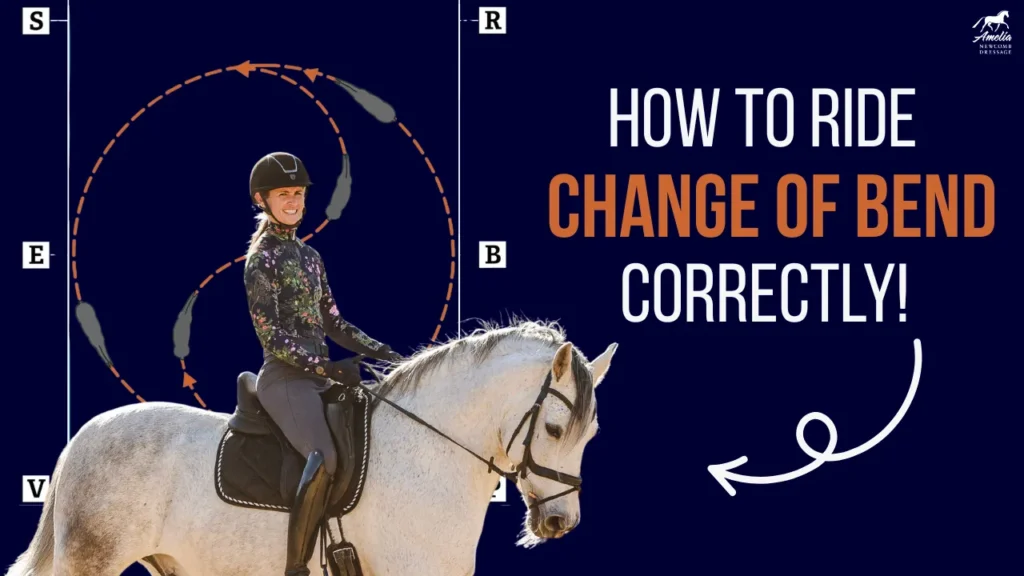
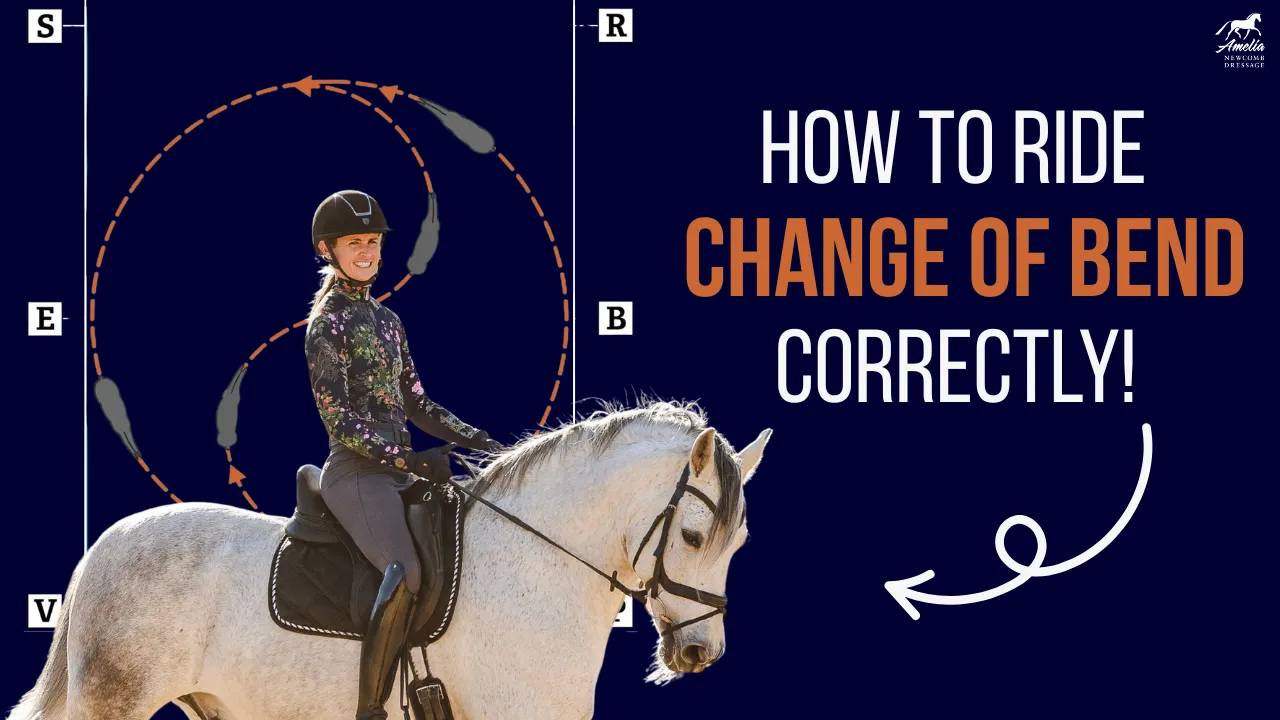
- Repeat the Transitions – Repetition is key to building strength and improving connection. Focus on practicing trot-canter transitions on a circle or pattern like the Snowman, as each repetition are what builds the understanding and strength to push from behind and stay round.
Transitions take time to perfect, especially with young horses still developing their strength and balance. It’s normal to have a mix of good and bad transitions during training. Consistency and patience will help your horse gain confidence and understanding.
Improving the canter transition is a journey, but with consistent work and the right exercises, you’ll help your horse build strength, balance, and connection.
Happy Riding!
Amelia
P.S. Want to take your canter transitions to the next level? My Round in Canter Workshop includes over 12 pre-recorded exercises, detailed explanations of the aids, and strategies for keeping your horse round and balanced. It’s perfect for riders who want to refine their canter work and feel more confident in the saddle. Click here to learn more about this workshop.