














The 2027 dressage tests have arrived, bringing meaningful updates from Intro Level through the FEI tests. Whether you compete regularly or are simply following the levels at home, knowing what has changed will help you prepare with clarity and confidence. In this video, I’m joined by Nicole Berthelot, an Equine Canada-licensed B dressage judge, to walk through the updates level by level, offering both a trainer’s and a judge’s perspective on what’s new and why it matters.
Before we dive in, I recently filmed all of the new tests, complete with drone footage that shows the geometry and accuracy of each movement. That footage is the foundation of my new Bronze Medal Course, covering Introductory to Third Level and created to help you train your horse up the levels with confidence.
Why Every Rider Should Learn the Tests
Even if you have no plans to show, the tests are well worth studying. They serve as a roadmap for your training, with each level building systematically on the last. Understanding that structure shows you the path toward movements such as shoulder-in, haunches-in, and eventually flying changes.
What’s New at Intro and Training Level
The most significant change at Intro Level is in Intro C. Previously, riders picked up the canter in the first quarter of a 20-meter circle and returned to trot in the last quarter. Now, the canter begins on the short side, continues through a full circle, and carries down the long side before the trot transition. This adds considerably more canter, which should ease the transition to Training Level, though it does make the step from Intro B to Intro C slightly larger.
Training Level patterns remain unchanged. Some directives and the stated purpose of the level have been refined, but riders do not need to adjust how they prepare.
First and Second Level Dressage Test Changes
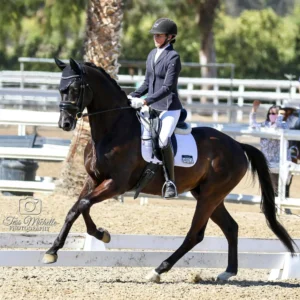
In First Level Test 1, the stretch circle has moved from near the beginning of the test to near the end, just before the final centerline, and to a new location in the arena. Nicole suggests horses may be more forward and connected after the canter work, while I believe they are simply more relaxed by that point.
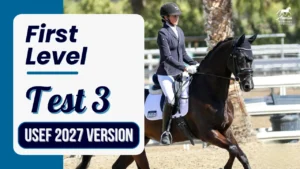
First Level Test 3 retains its movements, including the leg yield from the wall, lengthening, and counter canter, but in a new, shorter order. Previously, many horses lost momentum, connection, and suppleness before the test was complete because they were simply running out of stamina.
At Second Level, Tests 1 and 2 are unchanged. Second Level Test 3 replaces the three-loop serpentine with a new counter canter pattern: 10m half circle reverse back to the rail, then a half 20-meter circle in counter canter. Reviewing and practicing this pattern in advance will make a real difference in your accuracy. The turn on the haunches directive has also changed from “collect the walk” to “shorten the steps in the walk,” likely because riders were slowing the walk rather than asking the horse to get more active, higher steps.
Third Level, Fourth Level, and the FEI Update
Third & Fourth Levels remain largely the same, although there have been slight purpose refinements and 4-3 has a slight pattern change. The update I’m most excited about is in the FEI tests, where stretch circles have been included. The stretch circle is a meaningful test of elasticity and suppleness, and it highlights the true art of dressage. I stretch my Grand Prix horse at the beginning and end of every ride, and I encourage you to make it part of your routine as well.
If you’re new to showing, a great first step is printing out an Intro Level test and studying its structure.
Happy Riding!
Amelia
P.S. To see each test ridden with drone footage and expert guidance, explore my Bronze Medal Course, covering Introductory to Third Level.