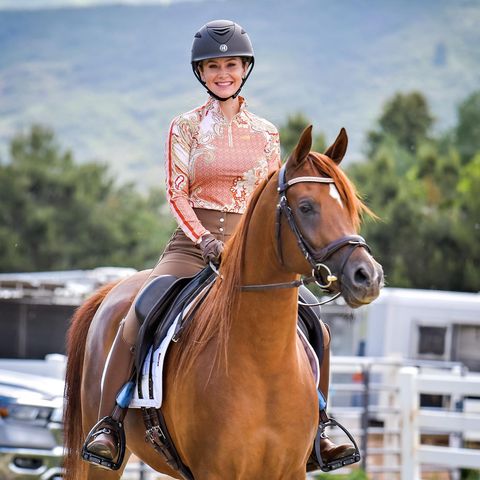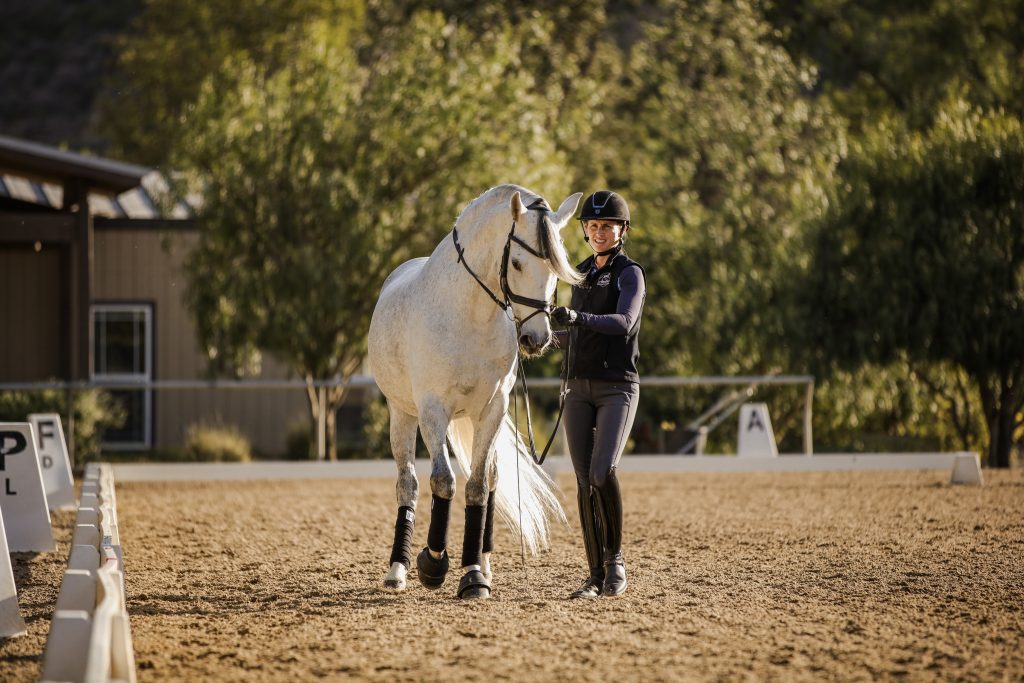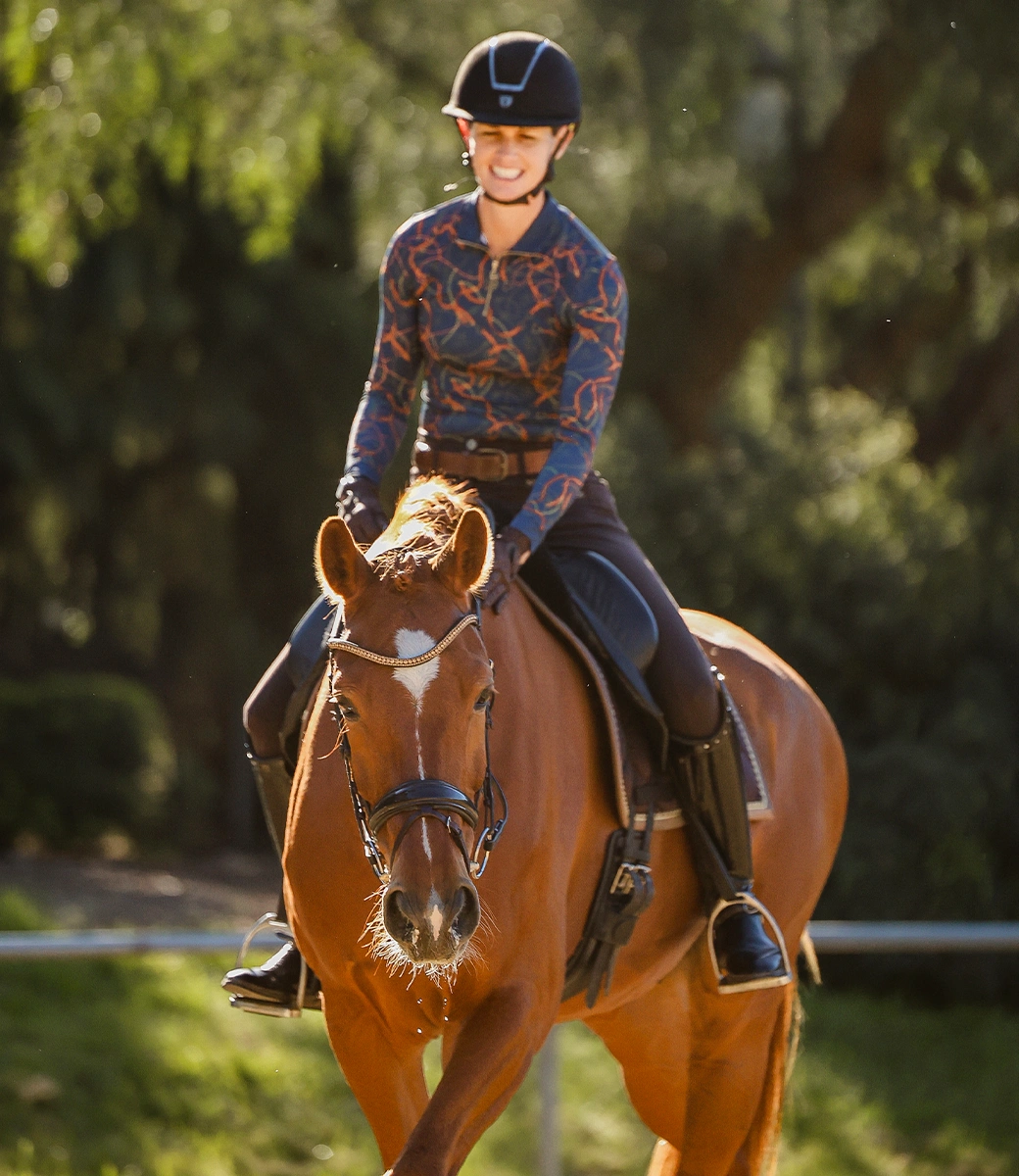







Watching a video of yourself riding can be both eye-opening and transformative- it’s the top way that I maximize my rides.
While it may initially feel discouraging to see flaws in your position or your horse’s movement, these insights are invaluable for improvement. I’ll never forget watching a video of myself riding five or six years ago. I found myself asking, “What are my hands doing?” It was discouraging and frustrating to see aspects of my riding that needed work, but it was also a turning point. The ability to see my position and my horse’s way of going allowed me to address and correct those issues. While feedback from a trainer is crucial, there’s nothing quite like seeing it for yourself to truly understand what’s happening.
Filming your rides is an incredibly effective way to maximize your time in the saddle.
The PIVO is my favorite tool that I use to video my riding. It is easy to set up and it tracks me automatically so that I don’t have to bother my husband to video me! Reviewing your riding footage lets you experience your ride a second or even third time, making it feel like you’re getting multiple rides out of one. Whether you’re working alone or with a trainer, video analysis provides a clear visual of your progress and areas for improvement.
The PIVO is my go-to for capturing rides.
It’s easy to set up—just attach it to a tripod, connect your phone, and let it lock onto your horse. It follows your movements, ensuring you stay in the frame. For the best results, place the PIVO in the middle of the arena or along the edge, depending on what you want to capture. Don’t forget to ride in both directions to assess your horse’s symmetry and bend. Learn more about PIVO here.
Follow the framework for maximizing rides with video.
Transitions are also valuable to film. Whether it’s trot-to-canter transitions, walk-to-canter, or even flying changes, these moments reveal a lot about your position, timing, and your horse’s response. It’s easy to feel critical when watching your videos, but following a structured framework can make the process more productive and positive. Start with these steps:
- Give Yourself a Compliment: Begin by focusing on what you’re doing well. Maybe your posture has improved, or your horse is moving more rhythmically. Celebrate your progress!
- Evaluate Your Position: Check your alignment: are your ear, shoulder, hip, and heel in line? A solid position is the foundation of effective riding. If your position isn’t correct, work on that before addressing your horse.
- Assess the Gaits: Is your horse moving forward with energy? Often, what feels forward while riding looks slower on video. Take note of your horse’s tempo and rhythm.
- Analyze Bend and Symmetry: Observe how your horse moves in both directions. Is the bend consistent? Does one direction feel or look stiffer?
- Evaluate the Frame: Look at your horse’s head and neck position. Are they round, curled, or above the bit? Remember to address the basics—your position, forwardness, and bend—before focusing on the frame.
Reviewing your rides through video provides insights you may miss in the moment, allowing you to connect the dots between your position and your horse’s movement. By following the step-by-step framework above, you can focus on actionable improvements without feeling overwhelmed. Start with just three to five minutes of footage, analyze it using the framework, and keep track of your progress over time. Let me know in the comments if you’re going to start filming your rides!
P.S. Don’t have anyone to film your riding? Using a PIVO makes filming your rides easy – all you need is your smartphone and PIVO essentials pack.