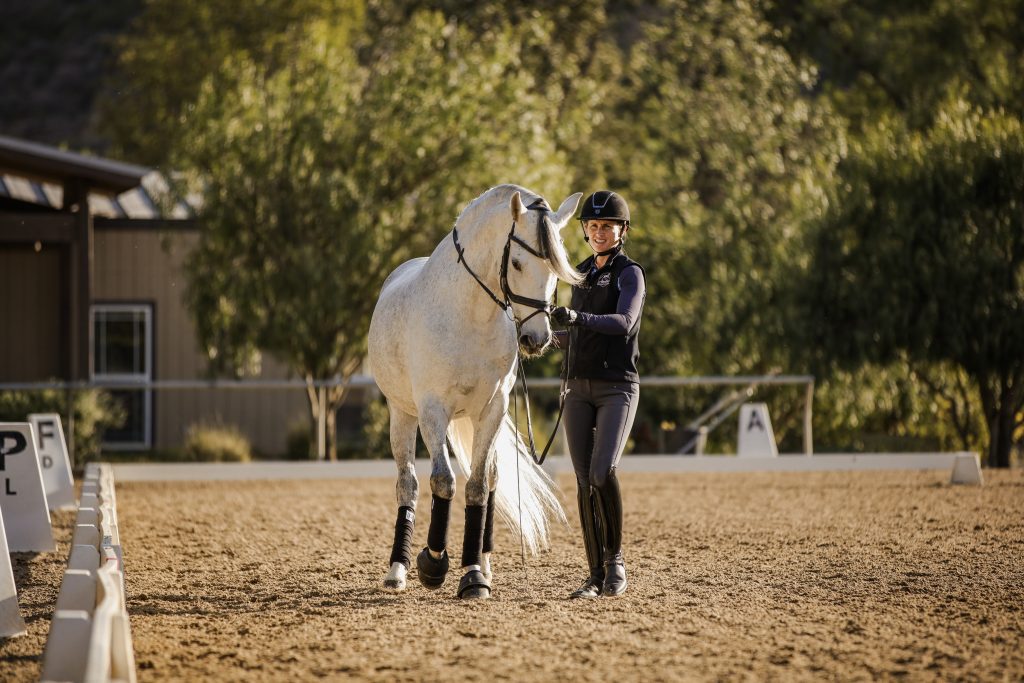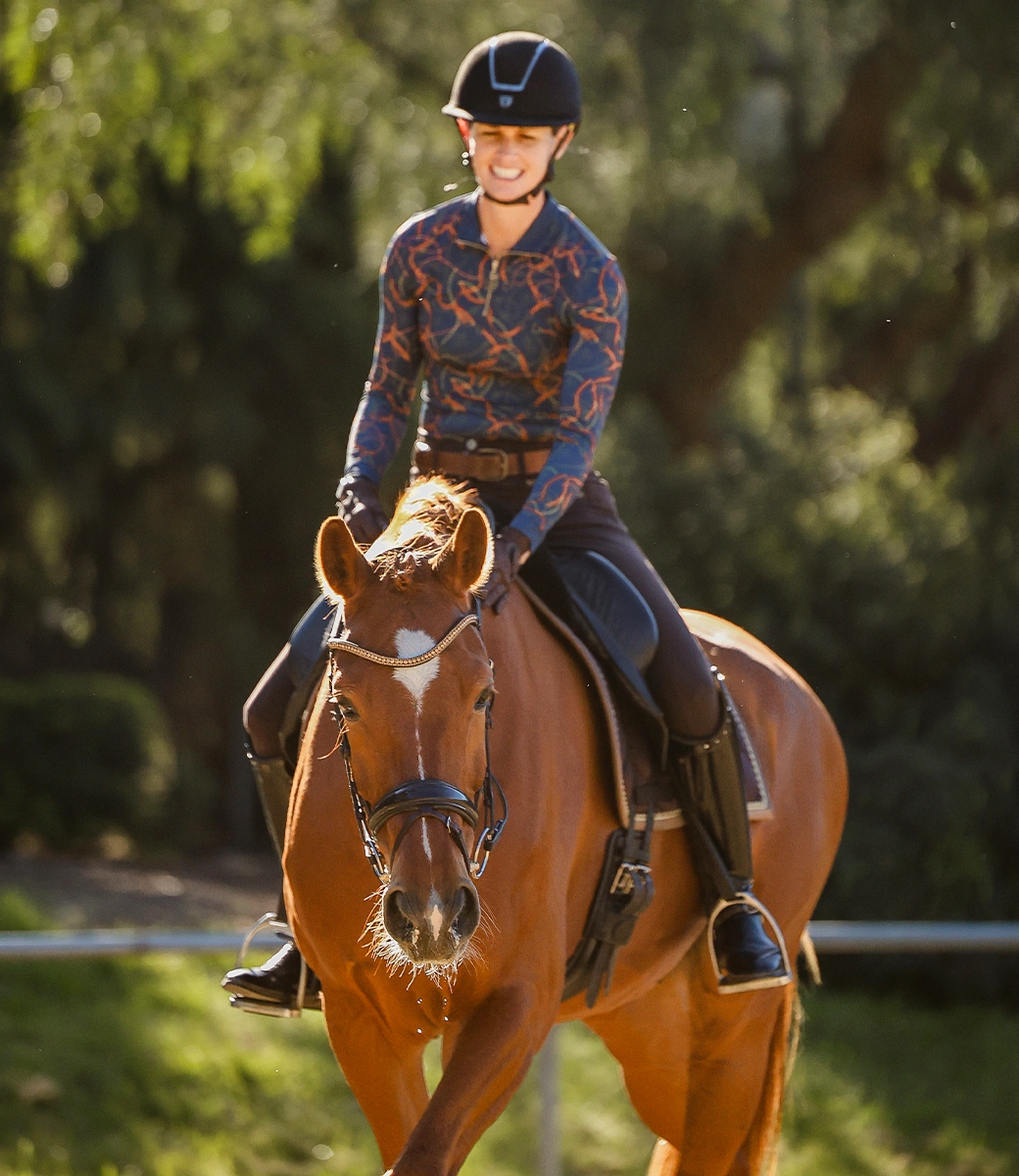







The walk is one of the most overlooked gaits in dressage, yet it deserves far more attention than it typically receives. The walk is essential for longevity, particularly with an older horse, because it has the least concussion on your horse’s legs. It’s also worth remembering that the walk counts double in your dressage test score, so investing focus here can genuinely improve your results. Here are three walk exercises that support both suppleness and longevity and can easily be incorporated into the start of any ride.
Tune into my Through the Levels webinar for a comprehensive look at developing the walk to serve your horse as a foundation through their entire career!
Follow the Rhythm of the Walk
Begin with 10 to 15 minutes of walking to warm up tendons and lubricate joints. While walking, check in with your own position. Take a few deep breaths and let your hips follow the natural swing of the walk, moving your elbows like you’re rowing a boat as your horse’s front legs move forward with each stride. Avoid locking your seat and hands, which can bring your horse to an unintended halt without you realizing you caused it. Your horse should walk through the entire body, swinging through the hips and neck, not just moving the legs while staying tense elsewhere.
Tip: If you tend to tip forward, hook your outside hand over the saddle and gently pull your shoulders back while sinking your seat bones down. Dropping your stirrups and letting your legs hang long can also help if you tend to grip.
Try the Follow the Nose Serpentine
This exercise is especially valuable for young or easily distracted horses, and it’s essentially horsey yoga. The steps are simple:
- Shorten your inside rein
- Use your inside rein and leg to tip your horse’s nose slightly to one side, asking their body to curve around that same line
- Release, walk straight, then repeat to the other side
This simple movement supples your horse while helping you notice which side they’re stiffer on. It also builds the foundation for a one-rein stop, a genuinely useful emergency tool should your horse ever bolt or become startled.
Tip: Pay attention to which direction feels stiffer. That information is valuable for the rest of your ride, not just this exercise.
Practice the Free Walk for True Relaxation
The free walk appears in training level through second level tests, and it’s excellent for longevity because of what it does for your horse’s topline. In a proper free walk, look for two key signs of true relaxation:
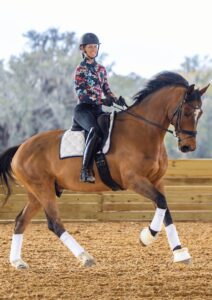
- The hind feet should overtrack, landing beyond the footprint of the front feet, a clear sign the topline is supple rather than tense
- Ridden on a long or loose rein, your horse’s neck should stretch down as low as possible, reaching toward the contact
When the neck lowers, the back lifts and stretches, which supports a healthy, sound horse over the long term.
Tip: Watch your own position here as well. It’s easy to tip forward as your horse stretches down, so continue checking your alignment throughout.
Happy Riding!
Amelia
Join me in my Through the Levels webinar, where I dive deeper into the movements of each level and how important a true, solid walk is the building block of everything else to follow!