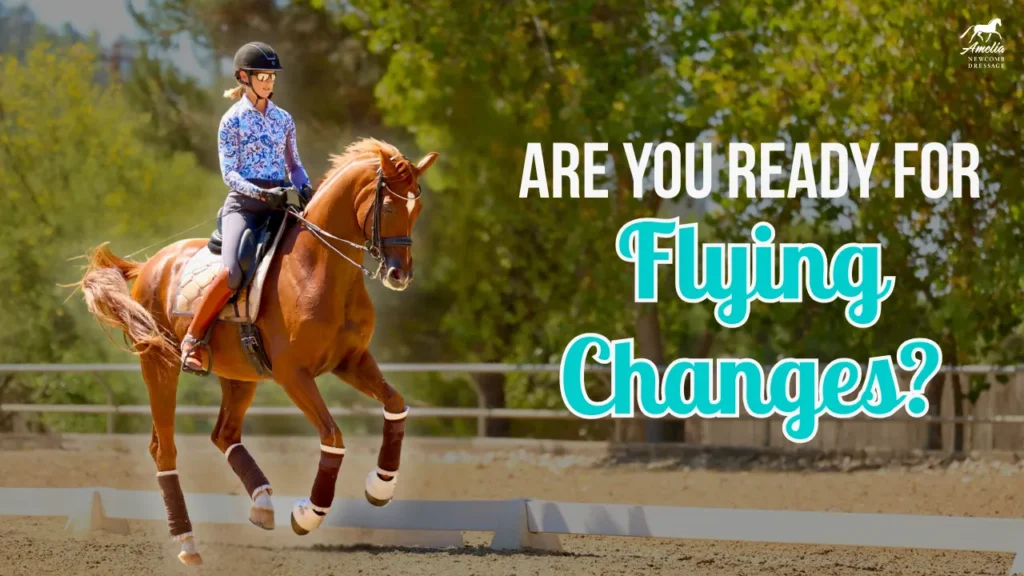
Schooling for the Dressage Show Ring: Flying Changes, Pirouettes & More

Getting ready for a show isn’t just about running through your test over and over. It’s about refining the basics, checking in with how your horse feels that day, and strategically preparing the movements that you know will be tricky in the ring. In this video, I take you behind the scenes of a schooling session with Kensington, my nine-year-old horse whom I’ve had since he was five.

We’re getting ready to show the I-1 this weekend, so I wanted to share a real look at how I ride him at home leading up to a competition. You’ll see how I mix in the test movements with basic exercises, how I troubleshoot moments that go wrong, and what I focus on to help Kensington feel confident and prepared. From the dressage basics that support flying changes to the collection needed for pirouette work, it all starts with the quality of the basic gaits.

Building the Canter for Dressage Flying Changes

We started this ride with a long walk warm-up and stretching before moving into walk–canter–walk transitions. This is one of my go-to exercises for show prep because when the canter quality is good, balanced, forward, and in front of the leg, everything else becomes easier, including flying changes and more collected work.

Kensington has a big canter, and one of our challenges has been teaching him to collect and find a quicker, more active step behind. These transitions are the perfect tool for that. I also use moments like moving him slightly off the inside leg to reinforce that he’s reaching into the outside rein.

Building Activity for Pirouette Dressage Work

From there, we moved into half-pass, where I always like to prepare with shoulder-in first. I also played around with half steps, which aren’t required at I-1 but are helpful for building strength and increasing activity behind. This kind of strength and engagement is also important as you progress toward more advanced movements like pirouette work.

For Kensington, these exercises help improve his trot quality overall. His trot is naturally more balanced and uphill than the canter, so I use it as a place to build confidence and add variety to the session.

Next, I practiced shoulder-in on the centerline, which is one of the trickier movements in the I-1 test. It’s hard to maintain the line and angle without the rail to guide you, so I make sure to include it regularly in our schooling.

We also practiced medium trot, though I don’t overdo it in training since it can be taxing on the horse’s body. Closer to the end of the ride, I attempted a canter half-pass zigzag, but the canter didn’t feel quite right on the turn up the centerline. I repeated it, and that’s something I always tell my students: if something doesn’t go well, fix it. Don’t just ride on and hope it works next time.

Preparing for Flying Changes and Advanced Dressage Work

Although we’re not showing Grand Prix yet, I like to play with piaffe and passage at home. These movements take years to develop, so I want them to be part of the program early. Not only does this help Kensington’s strength and balance long-term, but it also improves the engagement and quality of his trot in the present.

In dressage, the same principle applies when developing movements like flying changes and pirouettes. The finished movement doesn’t happen overnight. It comes from gradually developing the strength, balance, responsiveness, and understanding your horse needs.

As you’ll see in the video, it’s still a work in progress, but that’s part of the fun. It’s exciting to see it starting to come together and to celebrate the small improvements.
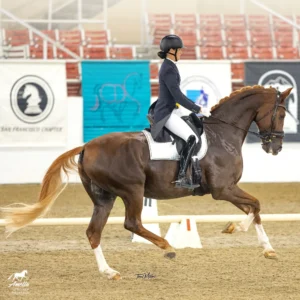
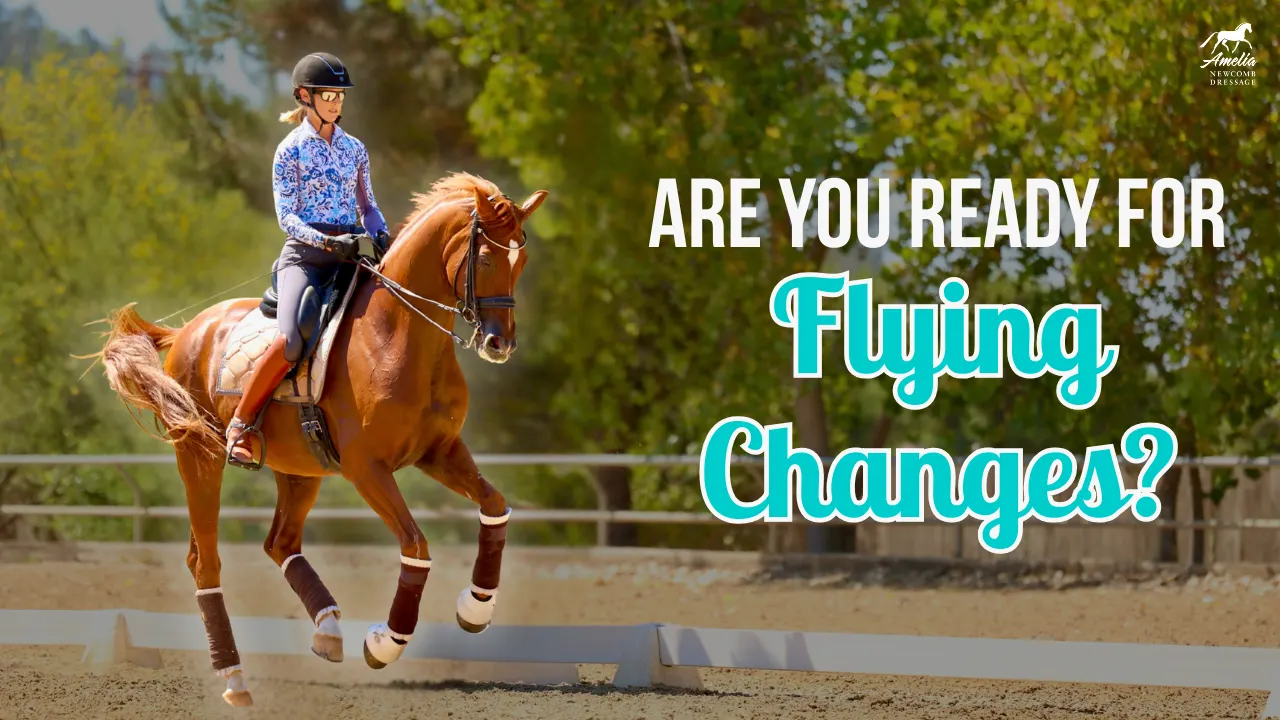
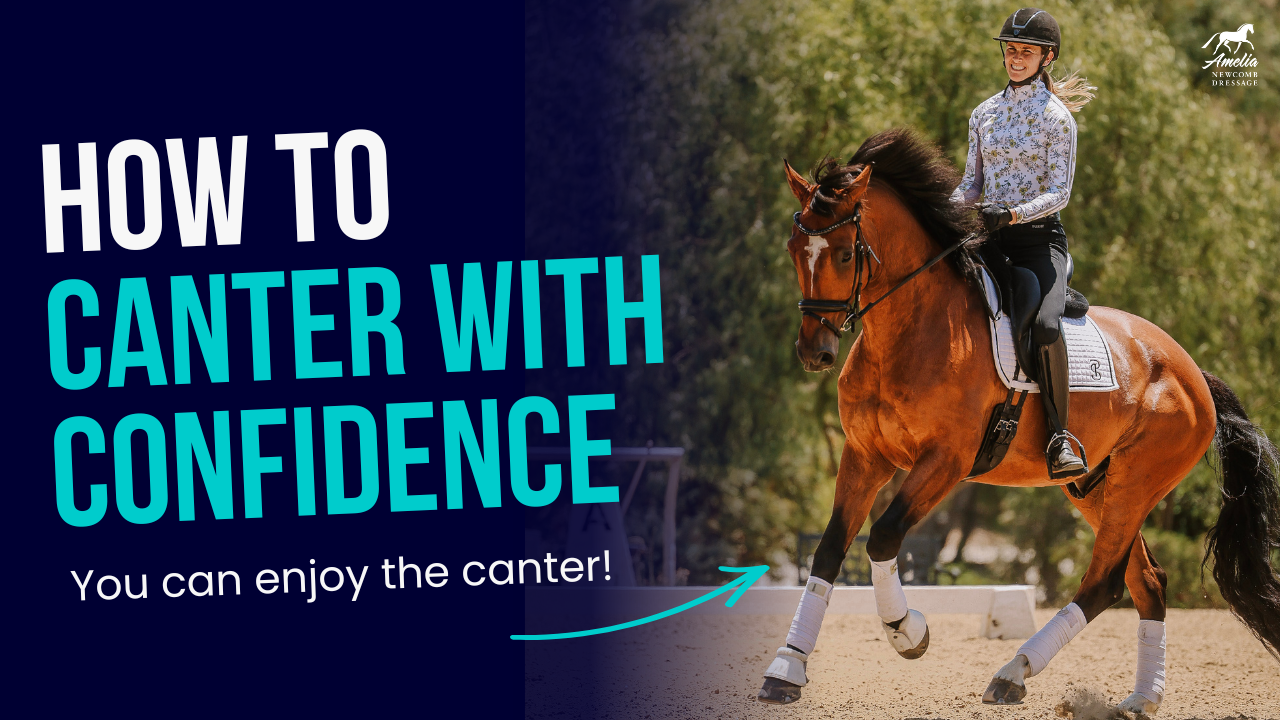
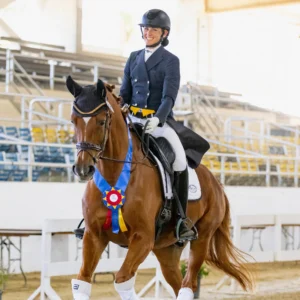
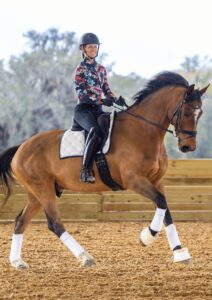
Amelia Newcomb executes an extended canter with dressage precision on a chestnut horse with a braided mane in the arena.

Training with Purpose for Flying Changes and Pirouettes in Dressage

Kensington is a super talented horse, but not always the easiest to train. That’s what makes it so rewarding. I’m proud of the progress he’s made, and I’m grateful for the opportunity to develop him over the years. As we head into the show this weekend, I’m reminded that good test riding comes from good training at home.

I hope this gave you ideas for how to structure your own schooling sessions, especially when you’re preparing for a show. Whether you’re working on the basics, flying changes, or pirouette exercises, mixing test movements with strong foundational work is the best way to build both confidence and quality.

Happy Riding,

Amelia

P.S. If you’re working on flying changes, be sure to check out my Flying Changes Masterclass. I walk you through each movement step-by-step so you can feel confident teaching and riding them. Click here to check out this Masterclass.

ABOUT YOUR INSTRUCTOR
A smiling woman wearing a helmet and riding gear stands beside a chestnut horse with a black bridle and white saddle pad, holding its reins outdoors in a sunlit, green setting.
Hey there.
I'm Amelia Newcomb
At Amelia Newcomb Dressage, I work to develop a trusting and confident relationship between horse and rider. I draw on theories from both natural horsemanship and classical dressage, creating a holistic training approach that adapts to the unique needs of each horse and rider.
Facebook
Twitter
Pinterest
WhatsApp
RELATED POSTS
Like this article & video?

There are hundreds more! View the entire library here.

A person in riding gear sits atop a black horse with white leg wraps, as if on an equestrian course. Hand-drawn wings give the horse a mythical, Pegasus-like look, evoking the magic of flying changes. The background is blurred.
FEATURED COURSE
Flying Changes Made Simple
A clear, step-by-step program to help you confidently train and ride flying changes without stress or guesswork. You’ll learn the correct aids, build the right canter quality, and follow proven exercises and patterns to develop clean, balanced changes. Whether your horse struggles, anticipates, or you’re unsure where to start, this course gives you a simple, structured system to progress all the way to confirmed and more advanced changes.
A person wearing a helmet and blue patterned shirt stands outdoors holding the reins of two brown horses, one on each side, with trees and bushes in the background—like a perfect image for a Sales Page Template.
Amelia Newcomb
LATEST POSTS
LATEST YOUTUBE VIDEO
Rated 5 out of 5
NEWSLETTER

Sign Up Now To Get Free Training & Tips In Your Inbox!

🔥 HOT RIGHT NOW 🔥
Explore More with Our Featured Courses and Workshops

We’ve curated a selection of courses, workshops, and masterclasses designed to help you refine your skills and achieve your riding goals. Whether you’re just starting out or looking to advance, these offerings are here to support your growth. Explore and take your riding education to the next level!

A clear, step-by-step program to help you confidently train and ride flying changes without stress or guesswork. You’ll learn the correct aids, build the right canter quality, and follow proven exercises and patterns to develop clean, balanced changes. Whether your horse struggles, anticipates, or you’re unsure where to start, this course gives you a simple, structured system to progress all the way to confirmed and more advanced changes.
With this course you'll learn how to get a round and confident canter. If you're not sure how to sit the canter, if you're afraid to canter, if you want to keep your horse round and supple this is the course for you. With this guide, you'll get the canter you have been dreaming of.
When your horse engages their hind end, they rotate their pelvis under a little, their whole back lifts, and their abdominals engage. This is what this workshop on engagement is all about so your horse can take more weight behind and connect back to front. When our horses engage their hind end, they can carry themselves better and perform what you ask with ease.

Enjoyed this article? 

Saddle Up and Search for Your Next Read!
A person wearing a helmet and patterned shirt smiles while riding a brown horse outdoors on a sunny day, with green trees in the blurred background.
Free Resources
Unlock Your Potential as a Dressage Rider with Our Free Resources!

Are you passionate about dressage and eager to enhance your skills? Our Free Resources section is here to support your journey, offering a wide range of courses, guides, and tools designed to help you become the rider you’ve always wanted to be.

Access Now!
A simple white envelope icon on a light background, outlined with bold lines to represent a closed envelope.
Free Training & Tips In Your Inbox!

Say goodbye to the fluff and hello to real value. Our newsletter delivers actionable insights, expert tips, and the kind of motivation that pushes you to the next level in your dressage journey. Ready to make strides in your riding? Let’s do this—straight to your inbox. You in?

Join the community

Get weekly training to your Inbox

Enter your name and email below and you’ll be added to my list to get weekly training videos each week. You’ll also be the first to hear about all my news, courses and offers! You can unsubscribe at any time!

PS-Good things are coming. Please be patient with this form, it sometimes takes a moment to submit your details!

Attention Riders:
fREE webinar:
The Independent Seat

Your Key to Balance, Connection, and Invisible Aids