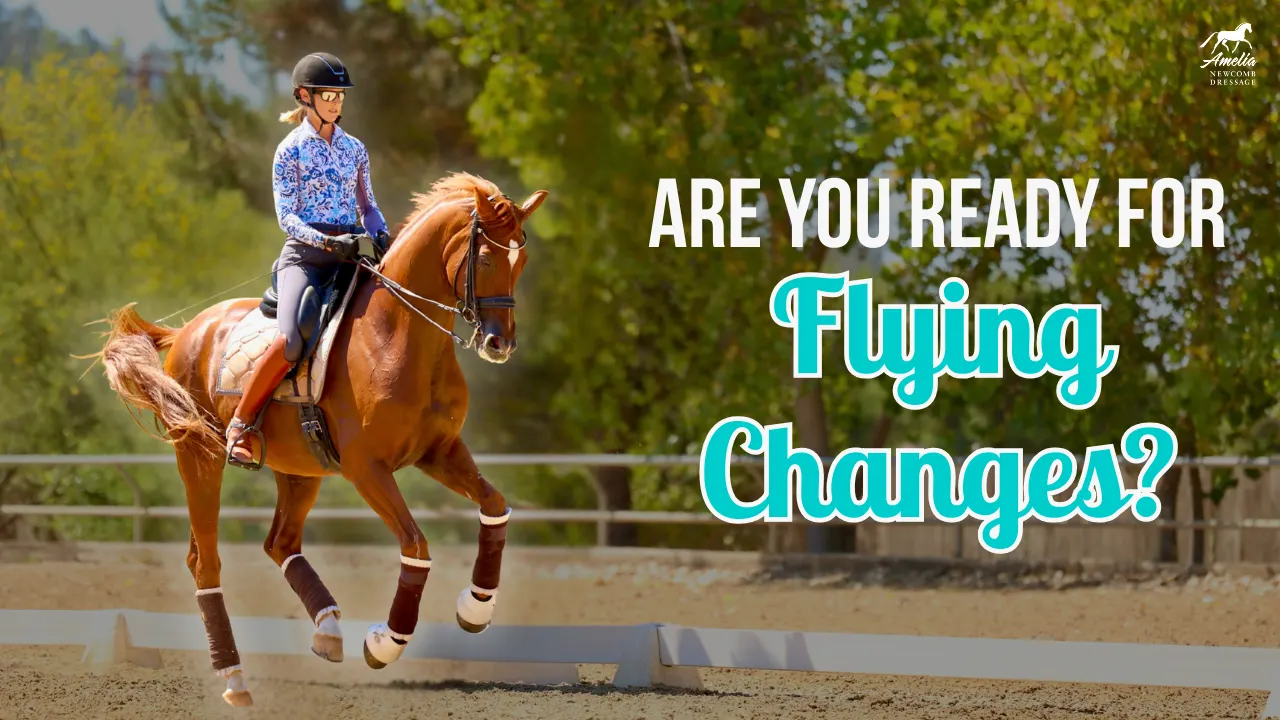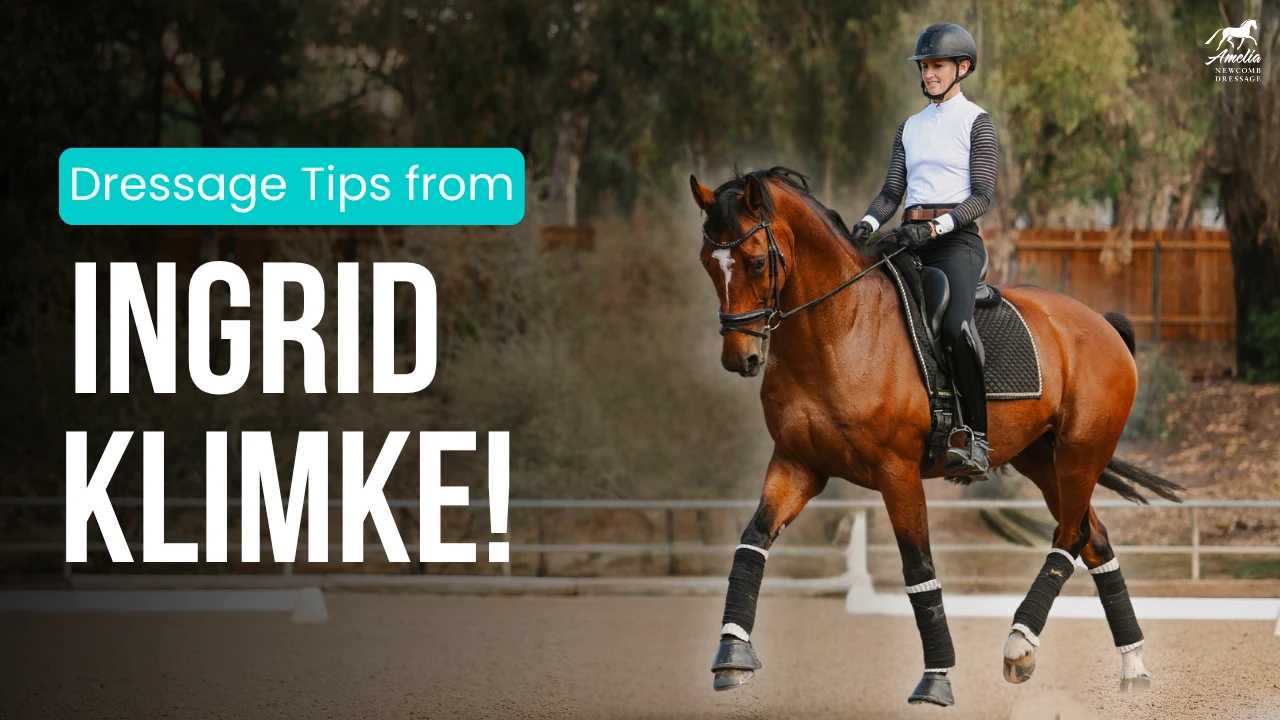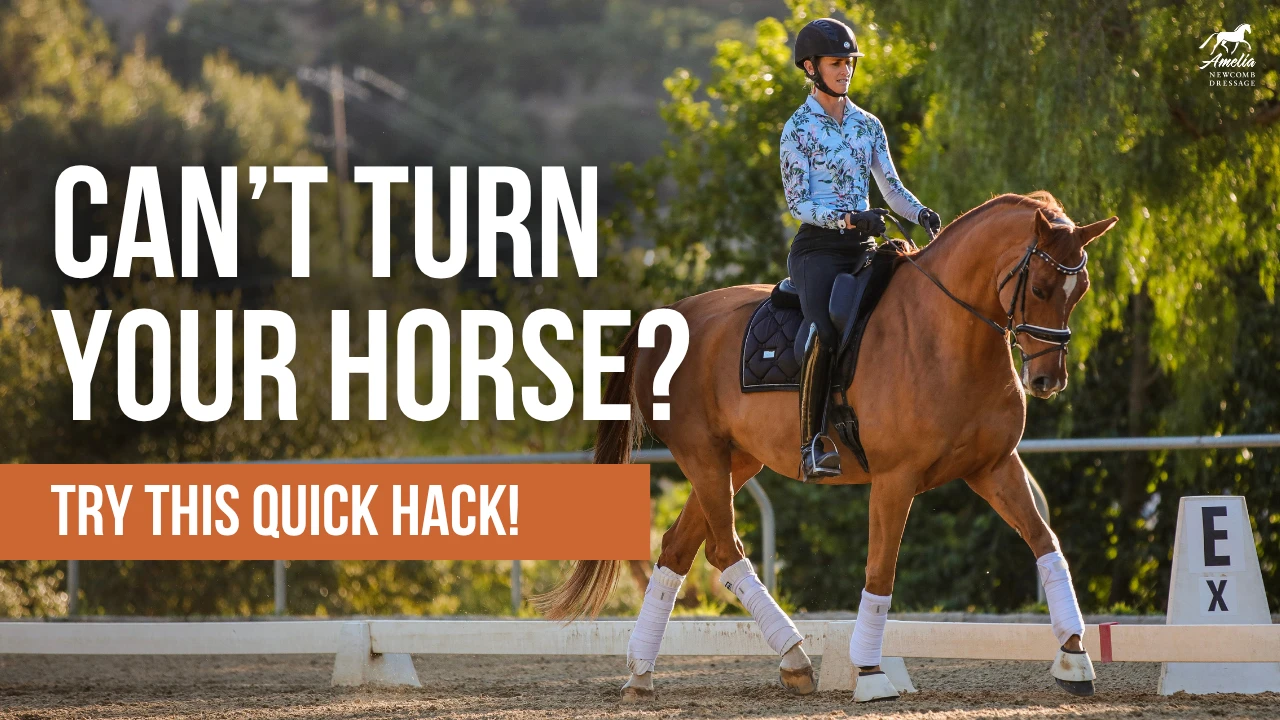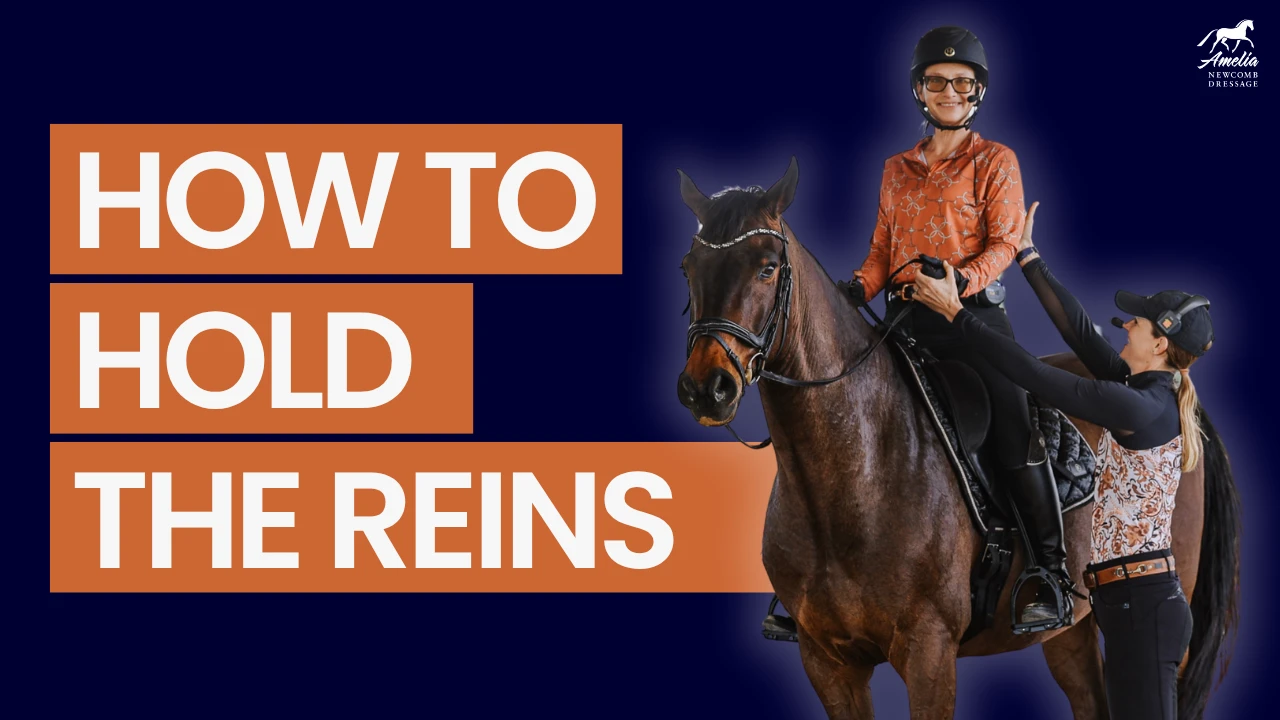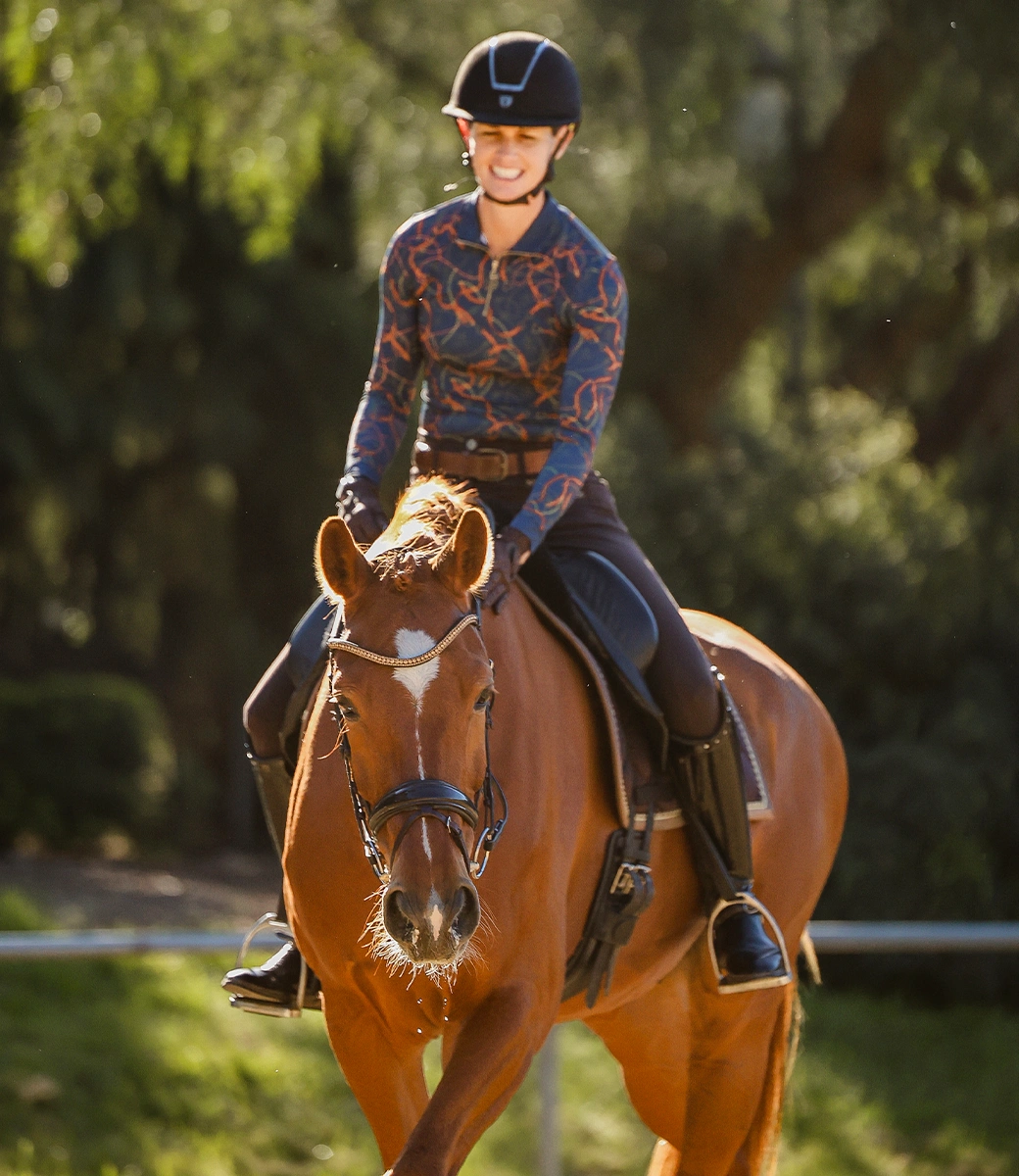
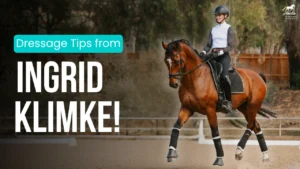
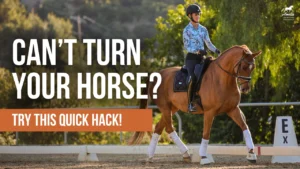






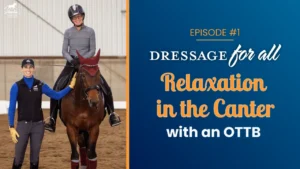
If your horse shoots their head up, braces, or drops behind when you ask for the canter, you are not alone. The good news is that most of those scary, hollow canter transitions come from a lack of preparation in the trot. In this video, I show the simple adjustments I used with Elior, an ex-jumper, so his canter transitions stayed calm, connected, and round.
If you want more help to implement these tips into your riding, you can get additional step-by-step details, exercises, and more to improve your canter in my online course: Round in the Canter.
In it, you will learn: How to ask for the canter
- How to sit the canter
- What to do if you’re afraid to canter
- Patterns and figures to improve your transition
- How to keep your horse round, supple and soft in canter
Ok, now on to the video!
Why Your Canter Needs to be Round
A hollow, braced canter means the horse is not lifting through the withers or using their topline. That makes the canter feel hard and out of control for you, and it prevents the horse from becoming balanced or using their muscles correctly. When we prepare correctly in the trot, the horse can lift the back, soften the neck, and step under with the hind legs — which produces a better, safer canter.
How To Prepare for the Canter
The key to a good canter transition is preparation. Before you ask, make sure your horse is soft, responsive, and moving from your inside leg to the outside rein. In the video you’ll see me check that connection by yielding the horse away from my inside leg into the outside rein. I keep asking for the trot forward while widening my inside hand slightly so the horse drops the neck and really connects to the outside rein.
Why this works: Yielding away from the inside leg prevents the horse from anticipating the canter and throwing the head up. It encourages lateral suppleness and balance, which makes it easier for the hind legs to come underneath. When the hind legs step under, the withers can lift, and the horse can round through the back. That is the physical setup for a sustainable, quality canter.
What do I do When…? If the horse starts to anticipate the canter, hollow their back or throw their head up, I do not rush the canter transition. I overbend slightly and push the horse sideways until they wait for the aid. Then I keep trotting forward, insisting the horse stays off my inside leg and connected to the outside rein. Only when that connection is reliable do I ask for the canter.
Riding the canter itself: When I pick up the canter, I sit connected, keep my hands down, and maintain a steady outside hand. If the horse lifts the head or braces, I open my hands a bit and keep riding the canter, asking for forward and softness rather than grabbing or collapsing the contact. The goals are to keep the rhythm, keep the horse bending to the inside, and keep him stepping forward and uphill.
Downward transitions: A common fault is letting the horse collapse on the forehand in the downward transition. That pancake feeling is exactly what we do not want. Be particular about your downward transitions and insist the horse stays forward and uphill through the last few steps before you give a break. Those last steps are what the horse remembers as the balance.
If You’re Nervous to Canter
Don’t worry! Start by staying patient in the trot and insisting on connection. Yield away from the inside leg, keep forward trot energy, and only ask for the canter when the horse is bending around your inside leg and stepping under. That preparation makes the canter feel safer, rounder, and much easier to ride.
Happy Riding!
Amelia
P.S. If you want more help with your Canter, check out my Round in Canter Course. It’s designed specifically to help you improve your canter’s ridability and your harmony with your horse.