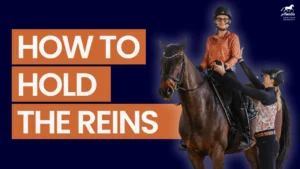







If you’ve ever wondered whether you’re holding your reins correctly, you’re not alone. In this video, Germán plays the role of my horse so we can demonstrate exactly how rein contact should feel, starting with your rider position and working through the correct hand and finger placement. This is simple, but it makes a massive difference in your riding.
Why Rider Position Comes Before Your Hands
The biggest mistake riders make with reins isn’t actually about their hands at all. It’s about position. Before you even think about your reins, you need what I call rider position stance: ear, shoulder, hip, and heel alignment, a soft bend in your elbow, and an engaged core.
We demonstrated this by having Germán pull on me as a horse would. When I was even slightly forward without an engaged core, I had no way to resist the pull. But once I sank into my heels and engaged my core, I could absorb far more pressure without losing my balance or getting pulled forward. That’s the real secret to effective rein use. It’s not about grip strength; it’s about your foundation.
The Correct Way to Hold the Reins
Once your position is solid, it’s time to talk hand mechanics. The rein should feed between your pinky and ring finger and up through your hand. From there, your thumb makes a “rooftop” shape, with the knuckle bent and pressing down between your thumb and pointer finger. This is what actually keeps the rein from slipping through your hand.
Your ring finger plays a specific role too. It acts as your shock absorber and is the finger you use to supple and give small releases. A lot of riders default to gripping hard with a full fist, letting their thumbs point up, or letting the rein slide through their hand entirely. None of these give you the subtle control you’re after.
Following the Motion Without Locking Your Arms
Once your horse is moving, your elbows need to follow that motion rather than staying fixed. You want a straight line from your elbow to the horse’s mouth. If your arms lock, you end up bumping your horse in the mouth with every stride, which creates tension rather than communication.
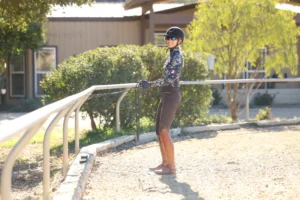
If you don’t have a horse or a partner to practice with, you can still work on this at home. Try holding a set of reins tied to something sturdy, like a banister, and practice small squats while keeping your hands level. As you squat, your elbows bend more, and as you stand, they straighten, mimicking the motion your arms need to follow in the saddle. You can even practice suppling through your fingers while doing this.
Happy Riding!
Amelia