

















“Should I change my posting diagonal here?” It’s one of the questions my students ask me most, especially once they start riding serpentines, leg yields, and lengthenings. Knowing when to change and when to stay put is part of developing an independent seat, because your rising and sitting should work with your horse’s balance, not against it.
Before we dive in, if you want to feel more balanced and effective in the saddle, check out my free Independent Seat webinar. It pairs perfectly with this video and is a resource my students love.
What the Posting Diagonal Actually Does
The rule to remember is simple: rise and fall with the shoulder on the wall. I have another video all about the basics of the posting diagonal if you’d like a refresher.
Posting on the correct diagonal matters because it helps your horse turn a little more easily, and it puts your balance over your horse’s inside hind leg. Interestingly, a judge won’t mark you down for being on the wrong posting diagonal. But being on the correct one helps your horse balance and turn effectively, which is why it’s worth paying attention to.
Changing Your Posting Diagonal in Serpentines
The shallow-loop serpentine, where you go from K out to X and back to H, shows up in Training Level Test 3. As a general rule of thumb, I do not change my posting diagonal here. Yes, the bend changes, but you’re not traveling much of a distance. When you’re only changing the bend slightly, changing your diagonal can actually throw your horse off balance. If you did want to change, the place to do it is at the quarterline, where the bend changes direction, and then again as you bend back.
The three-loop serpentine is a different story. It’s made up of three half 20-meter circles that go the width of the arena. Because each loop is a full half 20-meter circle, I do change my posting diagonal here. For my horse’s balance, it simply works better.
Leg Yields, Lengthenings, and Your Independent Seat
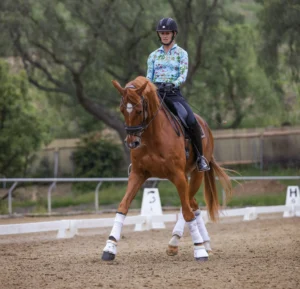
In a leg yield at the posting trot, I usually change my posting diagonal because it’s much easier to put your leg on as your seat comes into the saddle. When you’re out of the saddle, it’s really difficult to use your leg effectively. Changing your diagonal lets you time your leg aid with your sit, so you can more effectively ask your horse’s inside hind leg to swing over. It’s a great example of how your seat and leg work together.
Trot lengthenings, like the ones in First Level, are the exception where timing matters most. In posting trot, I usually wait until the end of the diagonal to change. If you change right at X in the middle of the lengthening, it can cause a rhythm fault or a little bobble, and you’ll lose the quality trot you worked to build.
The big takeaway is that your posting diagonal is a tool for balance. Change it for full bends and leg yields, skip it for slight changes of bend, and be thoughtful about timing in your lengthenings.
Happy Riding!
Amelia
P.S. If you want to feel more secure and balanced through the posting trot and beyond, don’t forget to grab my free Independent Seat webinar. It’s the perfect next step after this video.