









No matter what discipline you ride, good Dressage training always starts with the basics. Whether you ride Dressage, western, eventing, jumping, or simply enjoy trail riding, the fundamentals are what help you build better communication, balance, and confidence with your horse.
In this video, I explain why going back to the basics is often the fastest way to solve training challenges. What may feel like a setback is actually an opportunity to strengthen the foundation that every horse and rider needs.
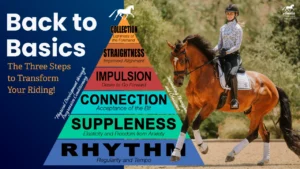
Before we dive in, if you want to better understand the system behind Dressage, I’d love to invite you to join the Training Scale Masterclass. Inside the course, I break down the Training Scale step-by-step and show you how to use it to create a clear plan for your rides so that you can ride with confidence and harmony.
Dressage Training Starts with the Basics
Whenever I’m helping a student or working through a challenge with one of my own horses, I always begin by checking three things: rider position, rhythm, and accurate circles. These simple fundamentals are the building blocks for every movement, regardless of your horse’s level of training.
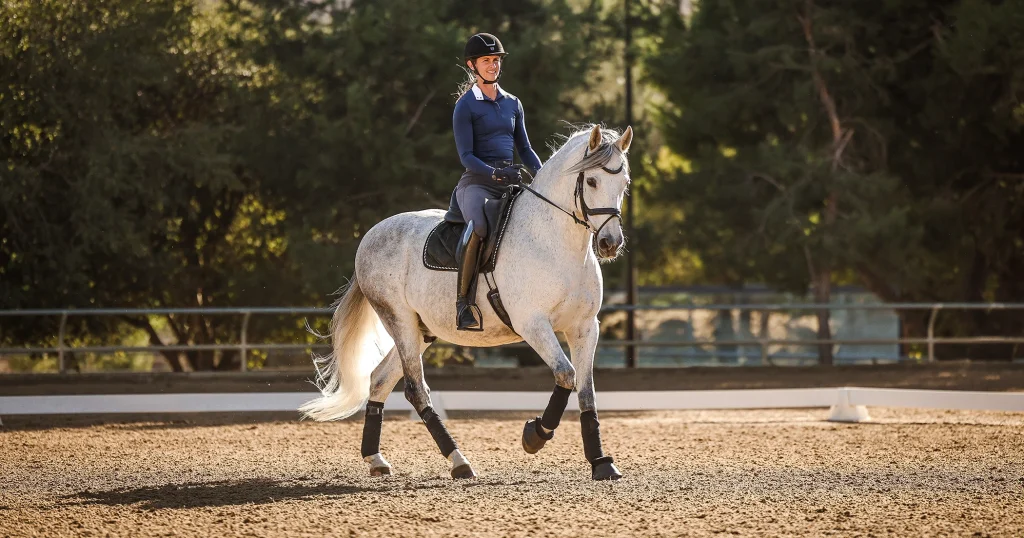
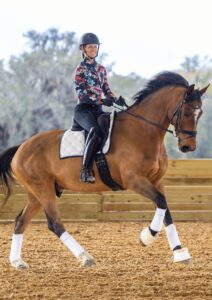
Your rider position creates the foundation for every aid you give. A correct ear-shoulder-hip-heel alignment allows you to influence your horse without getting in the way. From there, rhythm becomes the priority. Counting your horse’s footfalls helps you stay connected to the movement, encourages relaxation, and creates the consistency needed for good training.
Accurate circles are the third piece of the puzzle. Although they seem simple, circles develop bend, suppleness, and balance while helping your horse become more relaxed both physically and mentally. Riding an accurate 20-meter circle is much harder than it looks, but it’s one of the best exercises you can practice.
Classical Dressage Is Built on Strong Fundamentals
One of the things I love most about classical Dressage is that the fundamentals never change. No matter what movement you’re struggling with, the answer is almost always found by improving the basics first.
Whether you’re working on canter transitions, shoulder-in, leg yield, or any other movement, returning to rider position, rhythm, and balance will help you make steady progress. These timeless principles have helped riders for generations because they create a horse that is balanced, supple, and confident in its work.
Happy Riding!
Amelia
P.S. If you’d like to learn more about the Training Scale and how to apply it in your own rides, be sure to check out the Training Scale Masterclass — this is the LAST chance to join in 2026. Don’t miss your chance to learn the system I use every day to develop happy, confident, and athletic horses.