







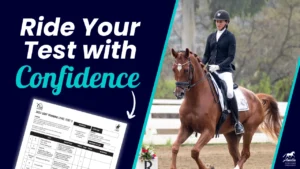
The canter can feel especially challenging when you have a horse that gets tense, anticipates transitions, or struggles to relax in the work. Instead of flowing into a balanced, rhythmic canter, the transition can quickly become hurried, tight, and stressful for both horse and rider.
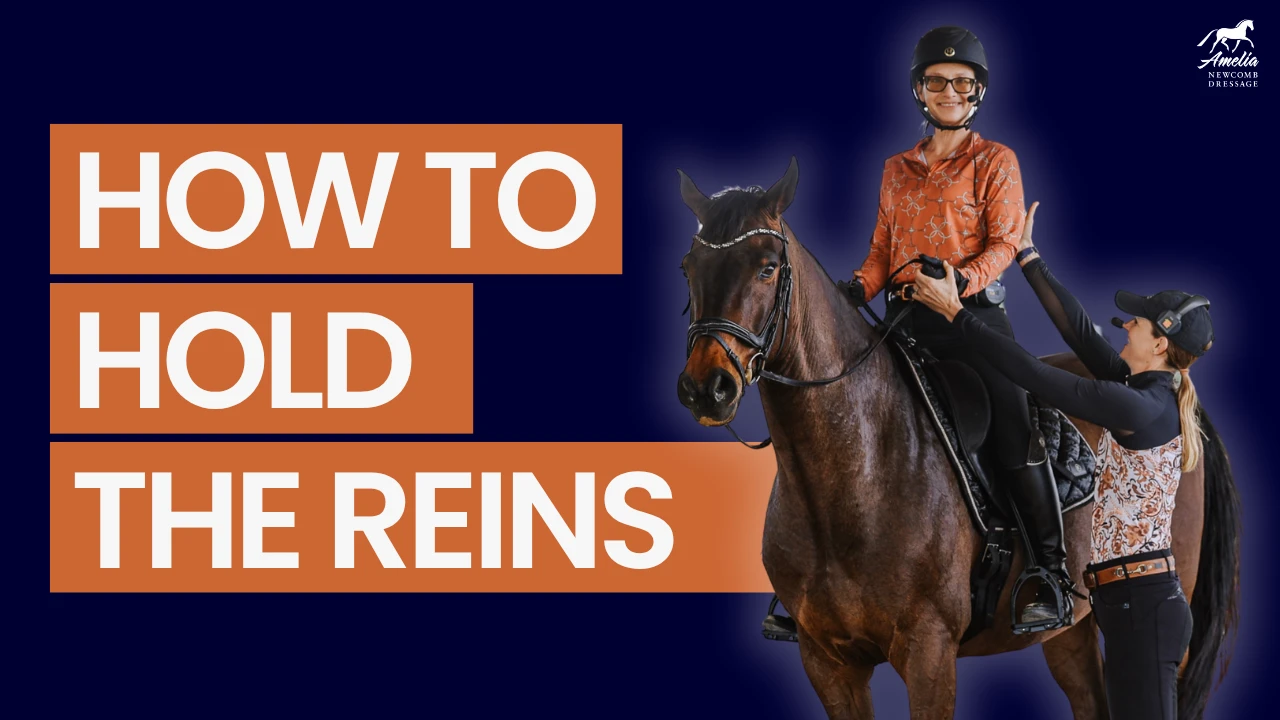
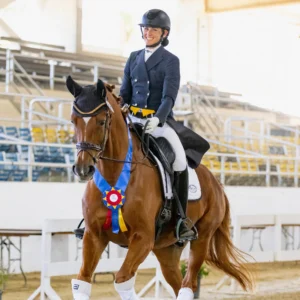
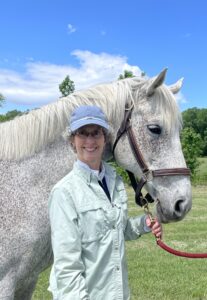
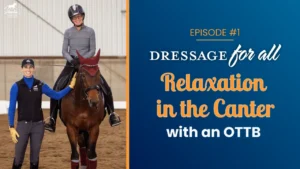
In this video, I’m working with Jenny and her 12-year-old off-the-track Thoroughbred, Burt, using one of my favorite dressage patterns: The Ice Cream Cone Exercise. This exercise is incredibly helpful for improving bend, relaxation, and acceptance of the leg—especially for sensitive horses learning to stay relaxed through the canter transition.
One of the things I love most about Dressage is that it truly is for every horse. Thoroughbreds, Warmbloods, Quarter Horses, Arabians—every breed can benefit from Dressage training and the structure that good Dressage patterns provide.
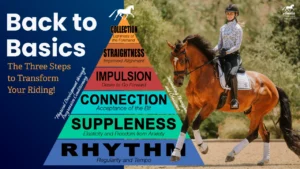
Before we dive in, if you’re newer to Dressage or sometimes find yourself confused by terms like connection, suppleness, impulsion, or throughness, be sure to download my Free 10 Dressage Terms PDF. Understanding the language of Dressage makes it so much easier to apply the exercises and concepts in your riding.
Using Dressage Patterns to Improve the Canter
The Ice Cream Cone Exercise combines 10m half circles, changes of direction, and transitions to help the horse stay balanced and attentive without becoming rigid or anticipatory. With a horse like Burt, who can become tense in the canter transition, the goal isn’t to force the transition to happen perfectly every time. Instead, the focus is on helping him stay relaxed, supple, and connected throughout the exercise.
One of the biggest takeaways from this lesson is the importance of adjusting the pattern to support your horse. If your horse gets tense, stay on the 20-meter circle longer. If they anticipate the canter, wait until they soften before asking again. Good riding is never about rigidly sticking to the pattern—it’s about listening to your horse and making thoughtful adjustments.
Relaxation and Bend in the Canter
A huge focus throughout this lesson was creating more bend and better acceptance of the inside leg into the outside rein connection. With sensitive horses, tension often shows up through the neck and back first. That’s why exercises like circles, shoulder-fore, and gentle bending work are so effective.
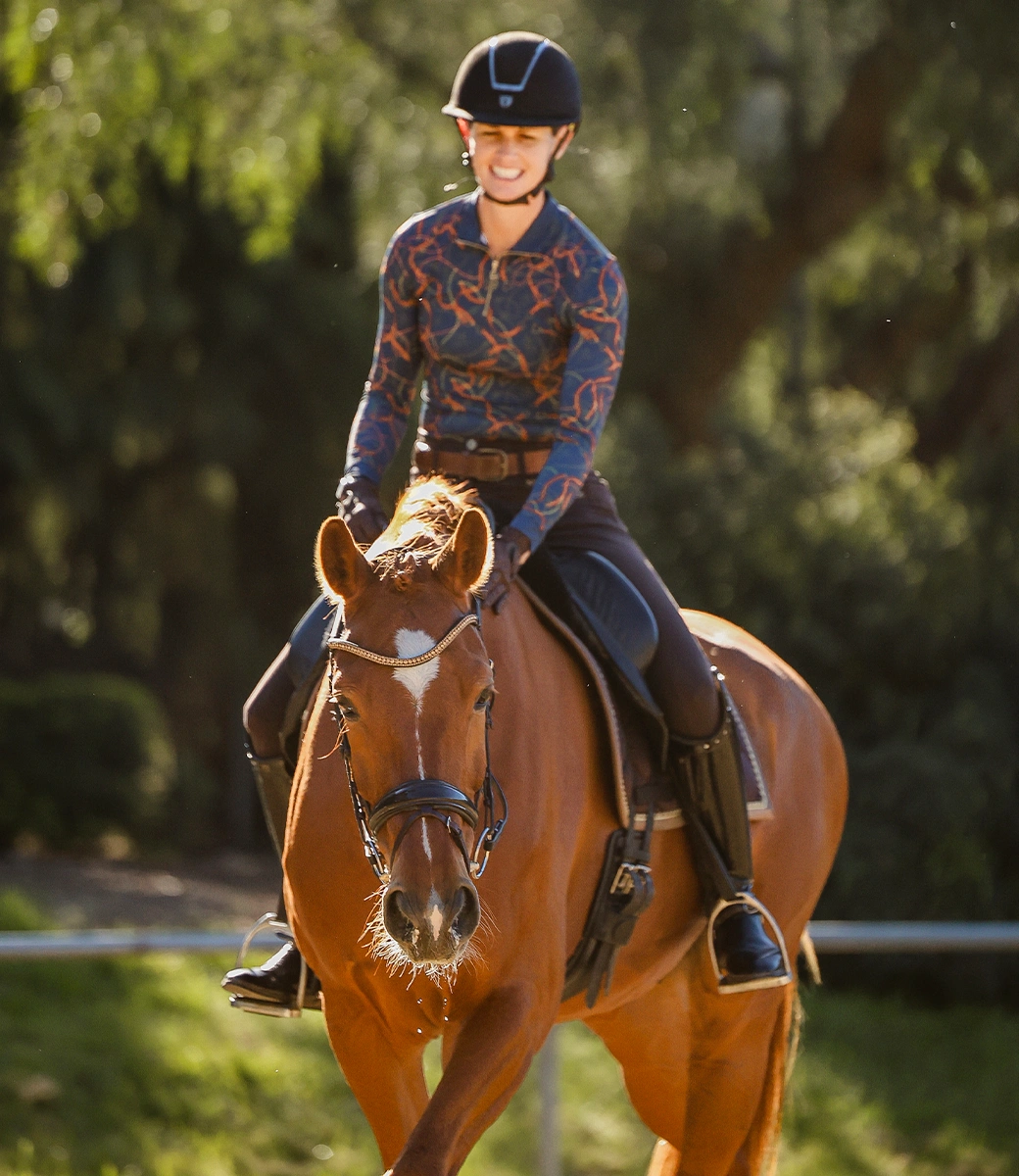
As Burt relaxed, you could clearly see the difference in his frame, rhythm, and overall balance in the canter. Jenny did a wonderful job staying patient, keeping her hands quiet, and allowing him the time he needed to settle.
For horses that become anxious in transitions, consistency and repetition are key. Staying calm, keeping a steady aid, and avoiding overcorrection helps build confidence over time.
Dressage Patterns Build Confidence for Horse and Rider
One of the best things about structured Dressage patterns is that they give both horse and rider a clear plan. Instead of simply “hoping” for a good transition, you create exercises that improve balance, relaxation, and communication step by step.
The canter becomes much easier when the horse learns to trust the aids and the rider learns to stay patient and adaptable.
And that’s really what Dressage is all about—developing a better partnership with your horse, one ride at a time.
Happy Riding!
Amelia
P.S. If you haven’t already downloaded my Free 10 Dressage Terms PDF, be sure to grab it! It’s a simple guide to some of the most important Dressage concepts and will help you better understand the exercises, feedback, and training principles that come up in your rides every day.