





A Simple Horse Training Method to Solve Common Riding Problems
If you’ve been struggling to make progress with your horse, you’re not alone. Having a clear horse training method can completely change the way you ride.
One of the hardest parts of riding is knowing what to focus on when something isn’t going well in your horse training. It’s easy to become frustrated and fixated on the issue, whether that’s your horse going above the bit, losing balance, or feeling disconnected. But usually, hyper-focusing on what is going on specifically doesn’t actually solve the problem.
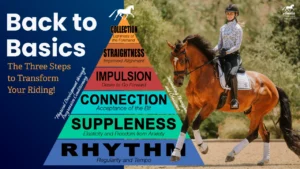
That’s why having a clear horse training method is so important. In this video, I’m sharing the same foundational system I use with all of my horses and students: the Dressage Training Scale. The Dressage Training Scale is a progressive horse training method designed to help riders develop balance, relaxation, connection, and correct movement step by step. It gives you a clear framework so that instead of reacting emotionally to problems, you can systematically work through them in a productive way.
Even if your goals are not competitive Dressage, the principles behind Dressage training are incredibly valuable for any horse and rider partnership. They help create a horse that is relaxed, balanced, responsive, and confident under saddle.
By the way, I’m also hosting a free training on the Dressage Training Scale on May 19th. If you want to better understand how Dressage training works step by step, make sure to RSVP for this free training! This webinar is specifically designed to help riders over the age of 55 apply the Training Scale to their daily riding.
OK, let’s dive into the tips!
Why Rhythm Is the Foundation of This Horse Training Method
The first step in this horse training method is rhythm. Everything we do with horses is based on movement, and horses naturally relax through steady, organized movement. That’s why I always begin every ride by checking the rhythm of the gait.
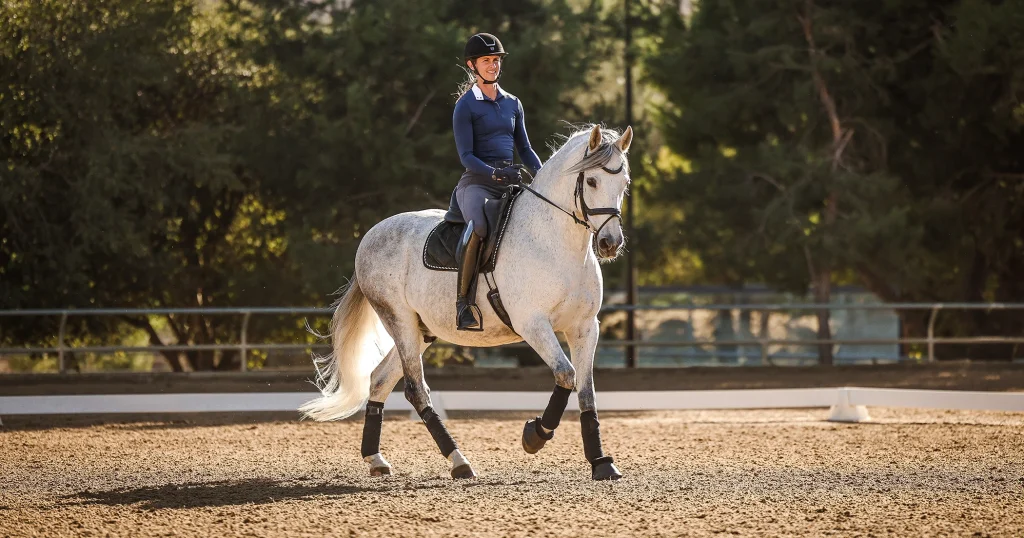
At the walk, I think about the four-beat rhythm flowing through my seat. At the trot, I focus on the steady two-beat rhythm, and sometimes I even count out loud because it helps both me and my horse stay connected to the movement.
One of the reasons rhythm is so important in Dressage training is because it helps horses find the correct energy level. Horses that feel tense or reactive often benefit from a slightly slower rhythm, while lazy horses usually need a more active rhythm and clearer energy forward.
Before worrying about getting your horse round or improving contact, it’s important to first establish a steady, balanced rhythm.
How Suppleness Improves Dressage Training
The second step in this horse training method is suppleness. Suppleness is both physical and mental relaxation, and one of the best ways to improve it is through circles and bending exercises.
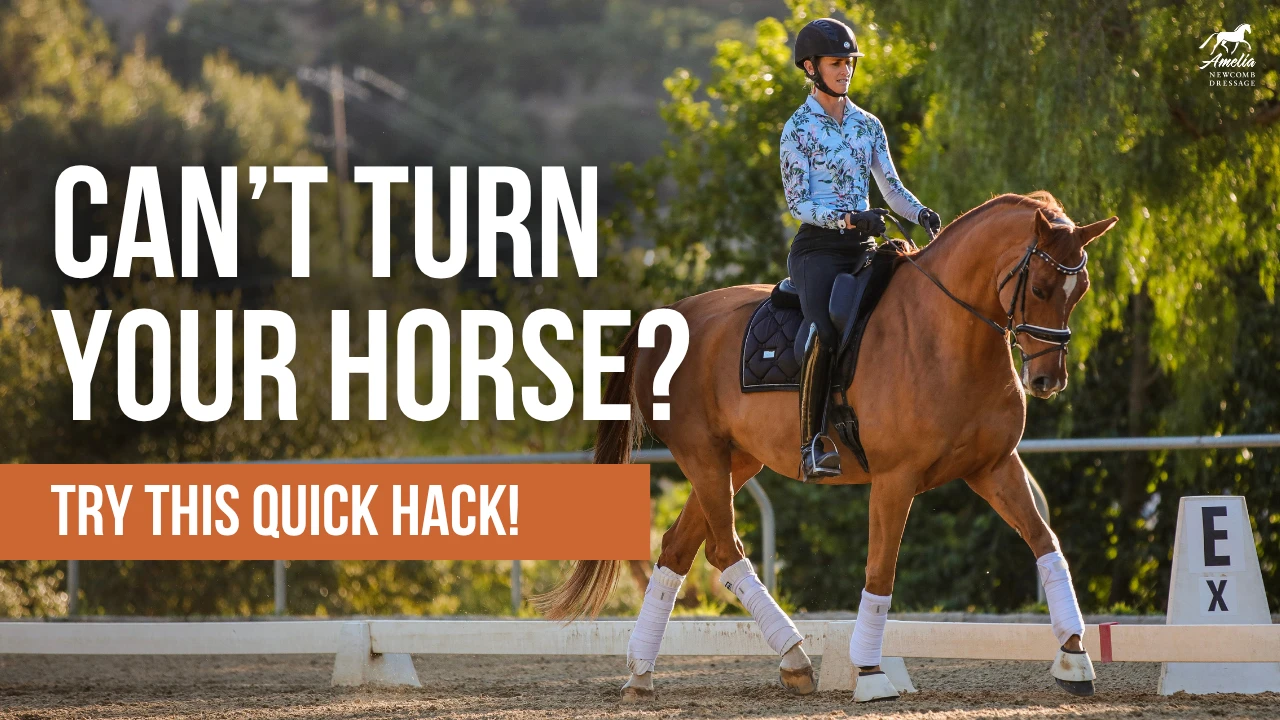
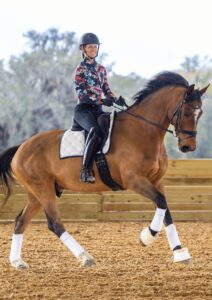
In this video, I demonstrate riding a 20-meter circle with correct bend. Your horse should bend evenly through the whole body, not just flex at the neck. You should be able to see the inside eyelashes slightly while maintaining balance and alignment throughout the turn.
The inside leg creates the bend and encourages the horse to stay soft through the ribcage, while the outside rein helps support balance and direction. One of the best lessons I learned through dressage training is that bending is your friend. Correct bend helps horses relax, release tension, and become much more rideable.
Without suppleness, it becomes very difficult to create true connection and harmony with your horse because they’re so stiff in their body.
Building Connection Through Correct Dressage Training
The final step in this horse training method is connection. A lot of riders think connection simply means getting the horse round, but true connection starts with the rider’s seat and body position.
Your seat is your main connection point with your horse, and your pelvis should naturally follow your horse’s movement. Your alignment should stay balanced with your ear, shoulder, hip, and heel in line. One of the most common mistakes riders make is tipping forward, which disconnects the seat and blocks the horse’s movement.
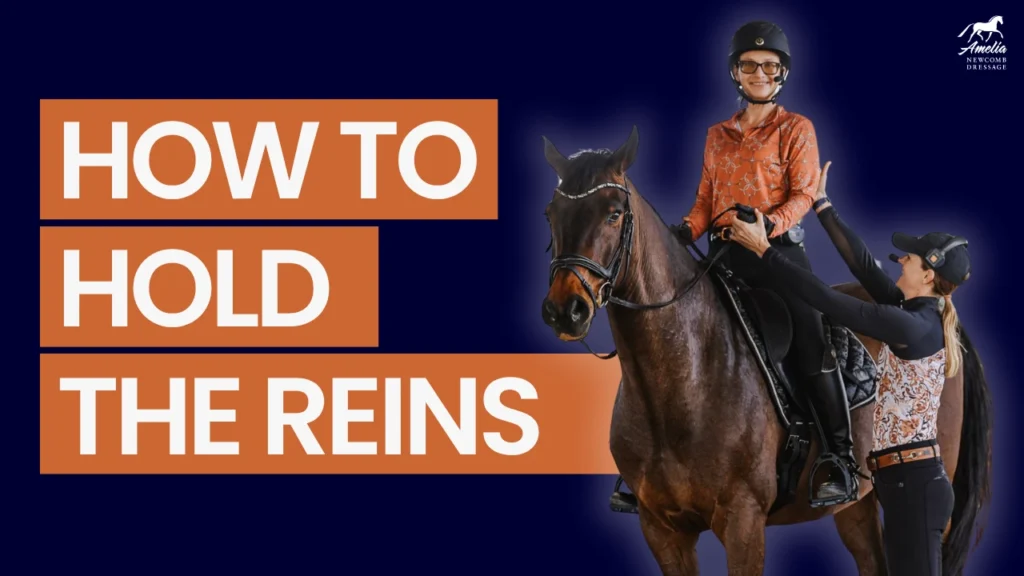
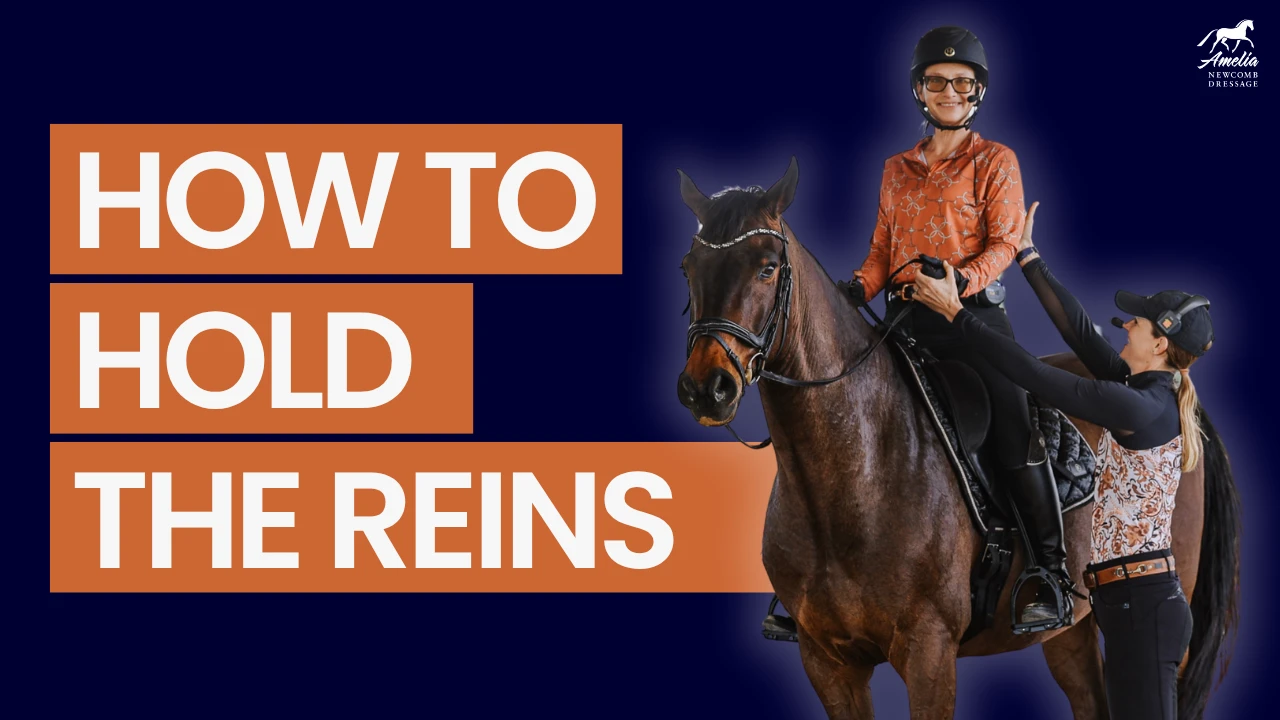
From there, you create a steady rein connection with a straight line from elbow to bit. Your elbows should softly follow your horse’s movement instead of becoming rigid or restrictive.
One of the most important concepts in Dressage training is understanding that connection comes after rhythm and suppleness. When you establish a good rhythm and create correct bend, your horse will naturally begin to soften into the contact and work correctly over their back.
Why This Horse Training Method Works
What I love about this horse training method is that it gives riders a clear system to follow instead of reacting emotionally to problems. Rather than obsessing over your horse’s headset or trying to force a frame, you simply return to the fundamentals of rhythm, suppleness, and connection.
These principles form the foundation of Dressage training and correct horse development. Having a clear system helps you stay patient, organized, and effective in your riding, even when challenges come up.
The next time you feel stuck with your horse, try not to focus only on the symptom. Instead, go back to the basics. Check the rhythm, improve the suppleness, and then create connection.
Most riding problems become much easier to solve when you follow a clear horse training method like the Dressage Training Scale, instead of chasing quick fixes.
Happy riding!
Amelia
P.S. If you want to better understand the Dressage Training Scale and improve your Dressage training step by step, make sure to check out my free training coming up on May 19th.