









Many riders—even experienced ones—hold and use their reins incorrectly. And the truth is, the way you hold your reins has a huge impact on your horse’s balance, connection, and overall rideability. If your horse feels stiff… fussy… hollow and above the bit… or curls behind the contact—it’s easy to think the problem is the horse.
But often, the root of the issue is much simpler. It’s in the rider’s hands.
I’m always surprised, when I travel and teach clinics, how many riders aren’t even holding their reins correctly. And that one small detail can change everything.
The good news? Once you understand how to hold and use your reins properly, your riding starts to feel clearer, softer, and far more consistent.
And your horse feels it immediately.
Why Holding the Reins Correctly Matters in Dressage
In dressage, your reins are one of your most important tools for communication.
The reins are important for turning, suppling your horse, and supporting the half-halt – but they only work correctly when they are supported by your seat and leg.
As humans, we’re wired to do everything with our hands. Our dexterity is one of the things that sets us apart. But as riders, we have to retrain that instinct. We must learn to lead with our seat and legs first—and that can feel very unnatural in the beginning.
Still, what you do with your hands matters immensely. You are communicating directly with your horse’s mouth, so your contact must be soft, steady, and precise.
If your reins are inconsistent, the bit becomes inconsistent in your horse’s mouth. If you hold too tightly, your horse may become tense or resistant. If your contact is too loose, your horse may fall on the forehand or feel nervous and unsupported. From classical dressage, contact is created by the horse moving into the rider’s hand—not by pulling (FEI).
Correct rein contact helps your horse:
- Stay balanced and steady
- Turn and regulate the energy
- Move into a soft, consistent connection
This is why learning how to hold and use your reins correctly is such an essential foundation for good riding.
How to Hold the Reins Correctly
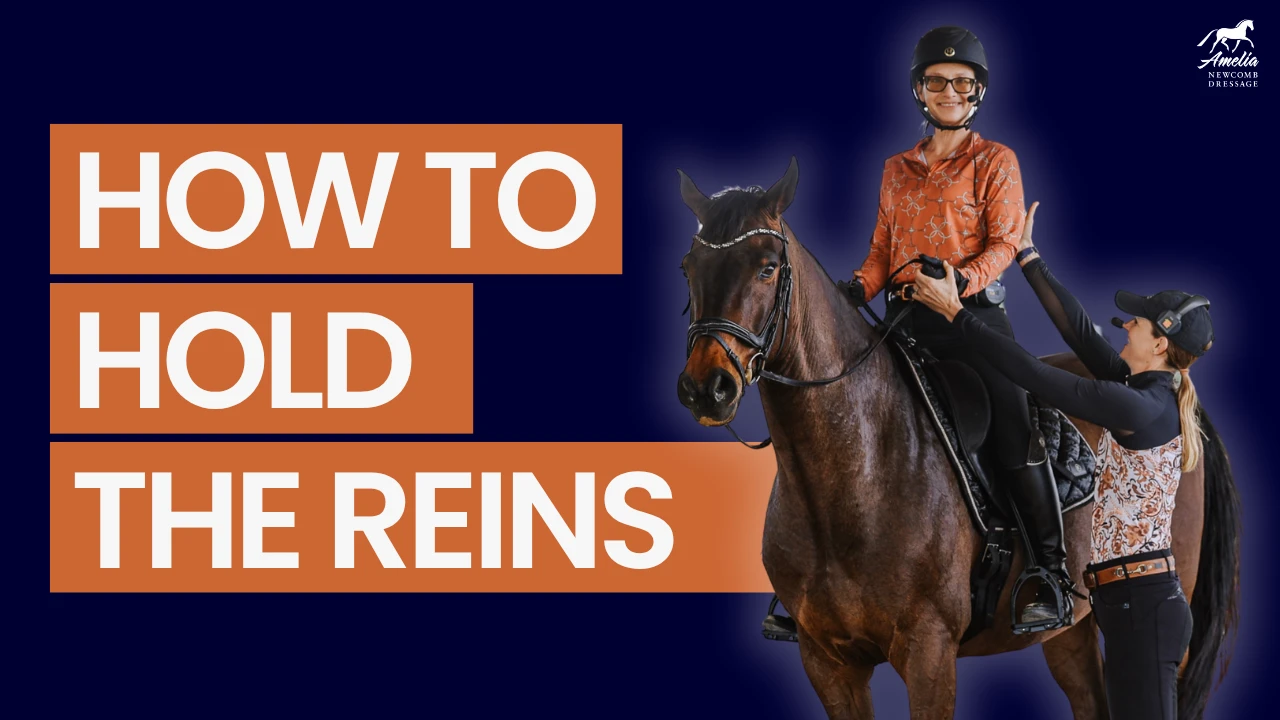
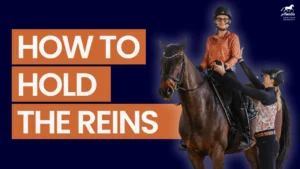
To hold the reins correctly, the reins should come into your hands from the horse’s mouth, pass between your ring finger and little finger, and come out over your index finger, with your thumb closing on top. Your thumb should form a “rooftop” shape—resting on top of the rein and gently pressing it against your index finger.
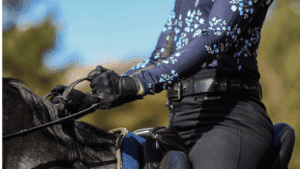
This thumb position is important for two reasons. First, it keeps the rein from slipping through your fingers.Second, it allows your fingers to stay soft and mobile, so you can communicate clearly and delicately with your horse. Ingrid Klimke agrees with this stating that “your thumb is your roof.”
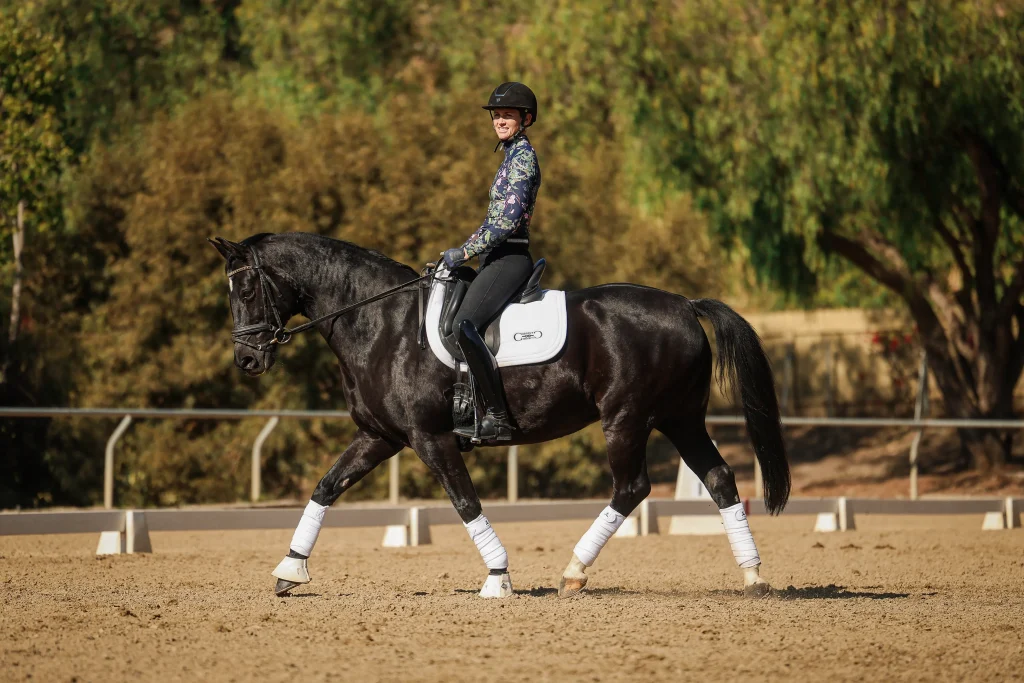
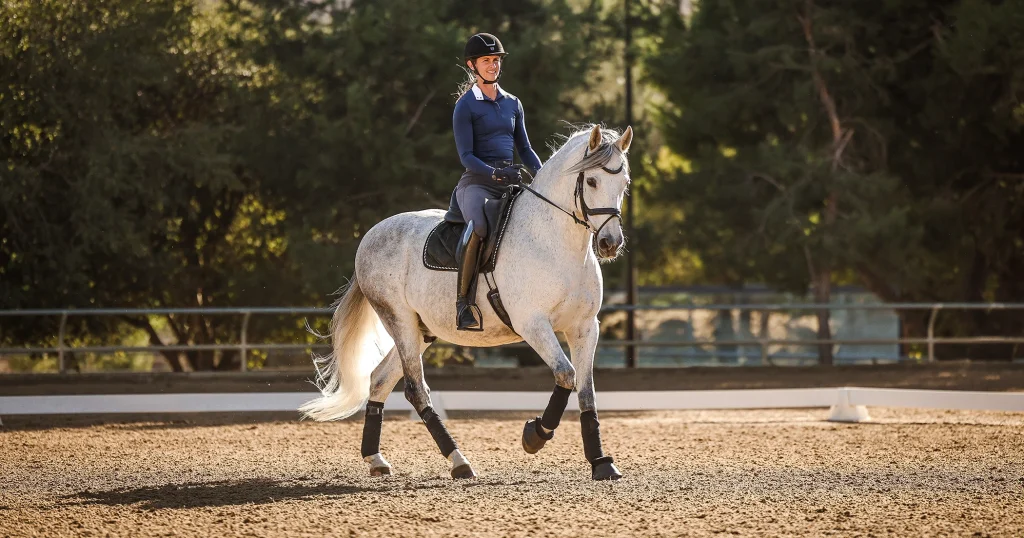
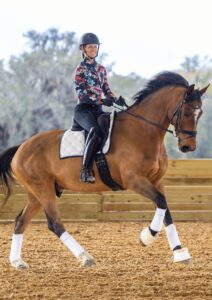
Next, check your alignment. There should be a straight line from your elbow to the horse’s mouth, with a soft bend in your elbow. This creates a steady, elastic connection. Many riders carry their hands too high or too low, which disrupts that connection and makes the contact inconsistent.
The biggest mistake riders make is gripping too tightly and “holding on” with the reins This creates tension. It makes your horse stiff, heavy, and resistant.
The goal is not to hold on. Your seat keeps you secure and connected. Your hands simply maintain a consistent, elastic contact—allowing clear, quiet communication between you and your horse.
Correct Arm Position for Holding the Reins
Once you understand how the reins sit in your hands, the next step is your overall arm position which is important so that you can establish a steady elastic contact.
Your hands should be:
- Just above and in front of the withers
- Hands should be about hip – width apart
- Thumbs up, elbows in, and palms facing each other
Your thumbs should be on top, gently closing the reins. Think of your thumbs as the “roof” that keeps the reins secure without gripping.
The most important thing is the straight line from your elbow to the horse’s mouth. It is very important that your elbow is elastic and following the nodding motion of your horse’s neck.
This allows energy to travel from your horse’s hind legs, through the body, into your hand. If this line is broken, your connection will feel inconsistent.
Common Mistakes When Learning How to Hold the Reins
One of the most common mistakes I see is riding with the reins way too long. Yes, of course, we want to be soft and we won’t want to hang on the reins, but if your reins are too long, it will be difficult to find connection with your horse and both you and your horse will be out of balance. If your trainer is constantly reminding you to shorten your reins or you find that they constantly slip longer as you ride, then click here to learn how to keep your reins short!
Short reins aren’t just about appearance or control—they are essential for effective riding. Here’s why:
- Safety First: If your reins are too long and your horse spooks, you’ll struggle to regain control. A properly shortened rein helps you manage your horse’s energy in unpredictable moments.
- Steady Contact: A rein that goes from slack to taut repeatedly is more uncomfortable for your horse than a steady, soft contact. Consistent connection creates a more comfortable and predictable feel for your horse.
- Developing Connection & Roundness: Maintaining the correct rein length is key to establishing a rounder frame and connection with your horse, allowing them to move in a balanced, engaged way.
Some other common mistakes are turning the hands flat (aka. piano hands). When you ride with piano hands, your elbows will be stiff and unable to follow the movement of the horse’s neck.
Another mistake is holding too tightly. Riders often try to control the horse through the reins and brace and stiffen against the horse instead of using the leg and seat first.
Some riders also carry their hands too low or too wide, which breaks the connection and makes it harder for the horse to stay balanced.
How Rein Contact Connects to the Rest of Your Riding
Holding the reins correctly is not just about your hands. It connects to your entire position. It is absolutely essential that you ride with an independent seat and that you do not rely on your reins to balance.
If your seat is unbalanced, your hands will compensate. If your leg is not creating forward energy, and you use too much rein, your horse will stop back up and get confused.
That is why dressage focuses on developing the whole system:
- a balanced seat
- a responsive horse in front of the leg
- a steady, elastic contact
When all of these pieces work together, your reins become lighter and more effective.
How to Develop a Soft, Steady Contact
A good rein contact should feel soft and supple, not rigid. Ideally, when riding, you should have about the weight of a soda can in each hand, and even rein contact in both hands.
Instead of pulling back, think about allowing the energy from your horse to come forward into your hands. Your job is to receive that energy, not block it.
Your fingers should stay closed, but not tight. When you go to use your reins, always start by just moving your ring finger, then bend your wrist, and lastly, bring your elbow back.
If your horse leans on the reins, the answer is not to hold tighter. It is to improve the balance and engagement from behind.
If your horse drops the contact, you may need to ride more forward and encourage the horse to seek the bit.
How to Use Your Reins To Get Your Horse Round
In Dressage, we want our horses round. When your horse is round, it is easier for them to carry your weight, and it is easier for your horse to manage their balance on circles and in transitions. While your reins do help with getting your horse round – they are just a small part of getting your horse round. One of the biggest mistakes riders make is using too much rein and trying to force the horse to come round which causes the horse to become braced and resistant!
First of all, what you do with your reins is just a small piece of getting your horse round. Roundness happens when your horse lifts their back, stretches over the topline, and connects into the bridle with lightness and ease. But here’s the key: it starts from forward, not your hands.
Here are the Three Steps to Develop Roundness.
- Ride Forward with Rhythm
Start by establishing a forward, steady trot—think “1, 2, 1, 2.” Your horse should maintain this without constant leg aids. If not, give a quick reminder and take your leg off again.
- Add Bend to Create Suppleness
Bend is the bridge to roundness and what allows roundness to happen rather than be forced.
As you ride a circle, use your inside leg to shape the bend and push your horse into the outside rein. Keep the outside rein steady, and gently use your inside fingers to ask for softening—then release.
- Change Direction to Confirm Connection
Once you’ve got bend in one direction, you need to confirm that your horse can switch sides without losing balance or connection.
Serpentines and figure eights are great exercises for this. With each change of direction, focus on getting the new inside bend and maintaining the forward rhythm.
It’s easy to get overwhelmed when your horse feels hollow, tense, or stiff. But remember—kicking and pulling doesn’t work. When you focus on rhythm, bend, and clarity, your horse begins to find that soft, elastic connection naturally.
FAQ About How to Hold the Reins
Should I hold the reins tightly?
No. Holding too tightly creates tension and blocks communication. Your seat should keep you connected in the saddle and on your horse – NOT the reins.
Where should my hands be positioned?
Your hands should be in front of you, just above the withers, hip-width apart, with a straight line from your elbow to the horse’s mouth.
Why does my horse pull on the reins?
This is often a balance issue. The rider may be pulling on or relying on the reins. The horse may be leaning instead of carrying themselves. Focus on riding forward and improving engagement from behind.
What if my horse feels too light or behind the bit?
Encourage more forward energy with your leg and allow the horse to seek the contact rather than pulling the reins shorter. Maintain a steady and soft contact with the mouth.
How can I improve my rein contact quickly?
Work on your position, ride consistent transitions, and focus on creating forward energy into a steady hand.
Learning how to hold the reins correctly is one of the most important skills in dressage. It affects your communication, your horse’s balance, and the overall feel of your ride. When your hands are steady, soft, and connected to the rest of your aids, everything starts to come together. Your horse becomes more responsive, and your riding feels more clear, calm, and effective.