



















Does your canter feel bouncy, disconnected, or a little out of control?
Maybe your seat comes out of the saddle, your upper body tips forward, and instead of feeling smooth and flowing, the canter feels stiff and unstable. If that sounds familiar, you are definitely not alone.
In this video, I’m sharing the secret to the canter seat so you can stay connected, feel more secure, and actually enjoy that beautiful, flowing motion.
By the way, if you’re looking for a step-by-step plan to improve your canter, my 30 Day Canter Challenge is starting soon. Inside, I walk you through exactly how to prepare, ask for, and sit the canter with confidence. You can check it out here.
OK, let’s dive into the tips!
Why the Canter Feels So Different
The canter feels challenging because your horse’s back moves very differently compared to the walk and trot.
In the walk and trot, the back is more level. But in the canter, your horse’s back moves like a wave—up, level, down, over and over again.
That means your body has to adapt to that motion. If you stay stiff or try to hold yourself still, you’ll end up bouncing and losing connection. The key is learning how to follow that wave.
The Secret: Still Shoulders, Swinging Hips
The biggest secret to the canter seat is this:
Keep your shoulders still, and let your hips swing.
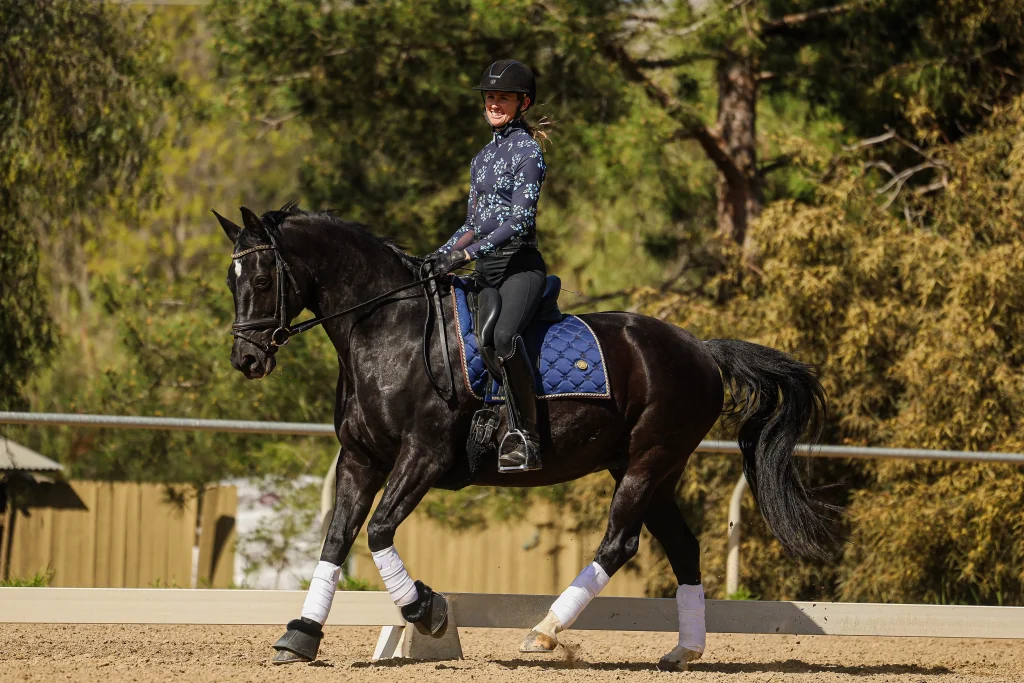
Your upper body should stay quiet and balanced, while your hips move with the motion of the canter. Think of your hips swinging from back to front with every stride. This is what allows you to stay connected to your horse instead of getting bounced out of the saddle.
What Most Riders Do (And Why It Doesn’t Work)
A very common mistake is that riders lean forward and stiffen their back when they pick up canter.
When that happens, your seat pops out of the saddle, and you start bouncing. You lose the swing, and your horse loses balance too.
In the video, you can see how this affects the horse—it can even cause them to lose rhythm or change leads behind because the rider is no longer moving with them. Not only does this feel unstable, but it also makes it harder for your horse to stay relaxed and balanced.
What to Do Instead
As you ask for canter, think:
- Shoulders back
- Hands down
- Stay connected through your seat
Then allow your hips to move freely with the motion.
Let your belly soften. Let your hips swing. Keep your shoulders quiet.
This creates a much more secure and effective position, both for you and your horse.
Why This Matters for Confidence
When you’re disconnected in the canter, it can feel scary.
If your upper body is forward and your seat is bouncing, you’re in a position where you don’t feel in control. Any sudden movement from your horse can feel overwhelming.
But when you sit back and follow the motion, everything changes. You feel more stable, more balanced, and more confident.
And your horse feels that too.
The canter really is a magical gait once you find the movement.
Instead of fighting it, focus on following it. Keep your shoulders quiet, let your hips swing, and allow your body to move with your horse.
I hope this helps inspire you to continue improving your canter and helps you ride with more confidence. It takes practice, but once it clicks, the canter becomes one of the most enjoyable parts of riding.
Happy Riding!
Amelia
P.S. If you want a clear, step-by-step plan to improve your canter seat, transitions, and confidence, check out my 30 Day Canter Challenge. It’s designed to help you build the skills you need to ride a smooth, balanced, and confident canter. Learn more and join here.