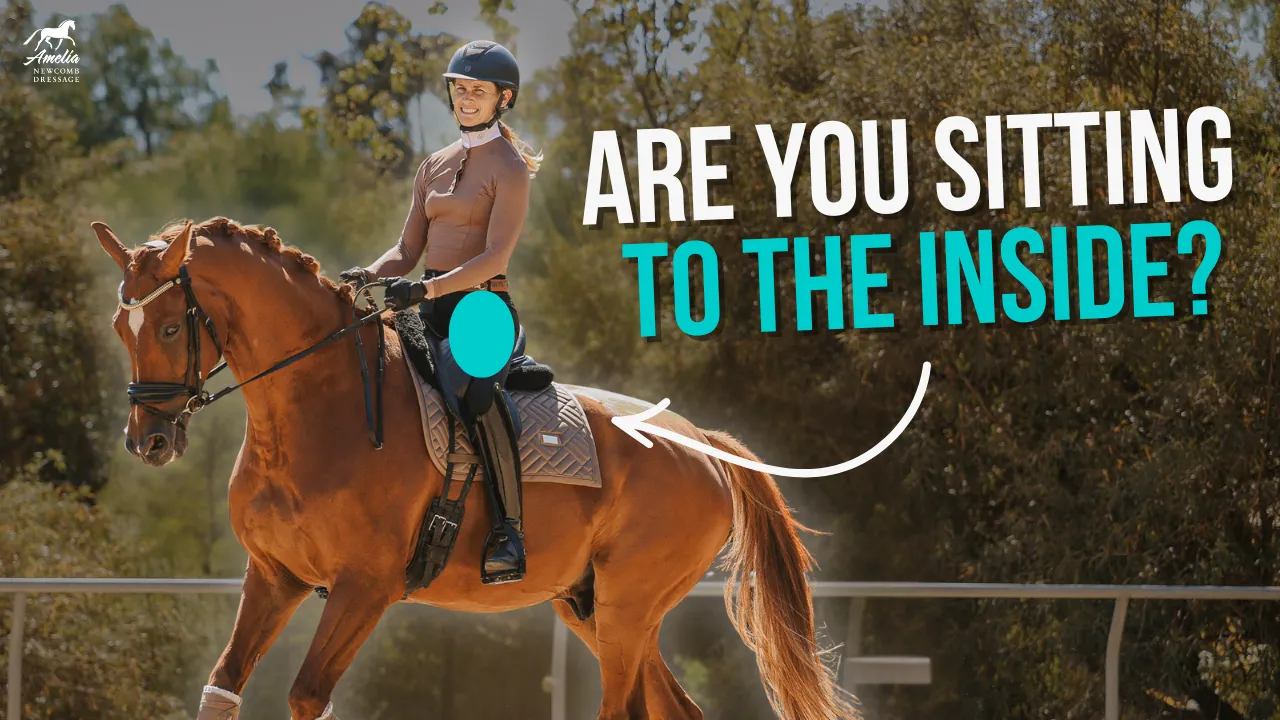












Have you ever heard someone tell you “sit to the inside seat bone?”
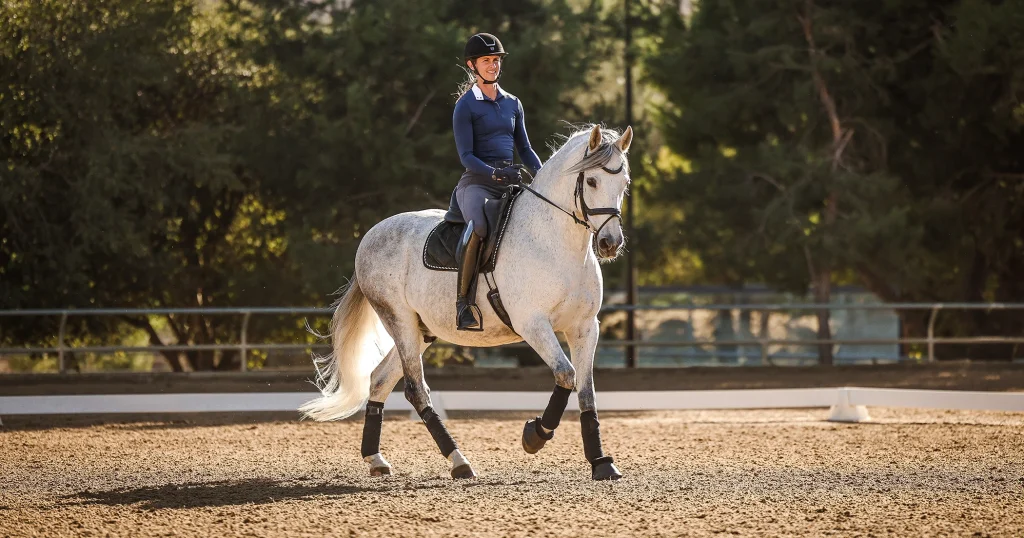
In this video, I’m riding Mercurio and explaining why sitting to the inside on that interior seat bone is such a critical part of staying balanced and supporting your horse through movements. This one simple adjustment can completely change how your horse moves underneath you—and make their job so much easier.
Why Sitting on the Inside Seat Bone Is So Important
When you sit off to the outside—especially during movements like the canter, haunches-in, or pirouettes—you throw your horse out of balance. It makes it harder for them to bend, strains their back, and makes it more difficult for them to manage your weight.
Sitting to the outside happens more than you’d think—especially on the stiff side or when using strong outside aids. And it’s not your fault! Centrifugal force naturally pulls you outward during circles and turns, which means you have to consciously shift your weight to the inside to stay in balance.
Here are Some Common Places Riders Sit to the Outside Seat Bone
- Right Lead Canter Many horses are stiff to the right, which makes them fall in. As a rider, it’s easy to collapse and follow that movement, ending up off balance to the outside. This creates a vicious cycle: the more you lean out, the more your horse falls in.
- Haunches-In You need your outside leg to bring the haunches in—but using that aid often causes your body to lean out. If you fall to the outside, your horse can’t stay round or maintain the correct bend.
- Walk & Canter Pirouettes Because you’re using strong outside aids to guide the pirouette, it’s easy to sit off to the outside without realizing it. But when your weight isn’t centered over your inside seat bone, your horse struggles to carry you through the turn.
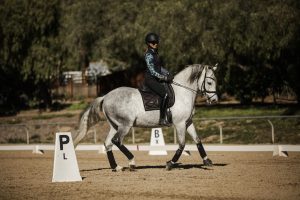
How to Fix It and sit on your Inside Seat Bone
Step one: become aware of your seat. Think about where your weight is and visualize shifting just a little more over to the inside. Not a dramatic lean—but just 55% of your weight into your inside seat bone. It’s subtle but powerful.
Try this simple tip: Say you’re picking up the right lead canter. Before you ask, scoot your butt slightly to the right. Sit tall, stay centered, and use your right leg to cue. Keep thinking, sit right, move off right leg.
What Muscles Help You Stay Balanced on your Inside Seat Bone
This isn’t just about awareness—it’s also about strength. The muscles that help you stay on your inside seat bone are your:
- Glute medius (side glute)
- Obliques (side abdominals)
If you tend to collapse or get pushed around by your horse’s movement, these muscles are likely weak. The stronger they are, the easier it is to stay balanced in the saddle.
You can even activate your glute medius during your ride! Try taking your foot out of the stirrup and pressing outward slightly with your leg—you’ll feel that muscle light up.
Final Words about Your Inside Seat Bone
Sitting to the inside makes everything easier—for you and your horse. Whether you’re schooling pirouettes or just trying to keep your canter balanced, check your seat, strengthen your position, and stay aware of where your weight is landing. Keep in mind, though, that when riding straight lines, you do want to have even weight on your seatbones.
Hopefully, this gives you a clearer understanding of how our weight affects our horse and how you can use your seat to help your horse find better balance!
Happy Riding!
Amelia
P.S. Want help aligning your seat, strengthening your support muscles, and staying balanced in the saddle? Download my free Rider Position PDF. It’s packed with simple tips to help you sit straighter, ride better, and support your horse more clearly.
Updated 06/05/2026