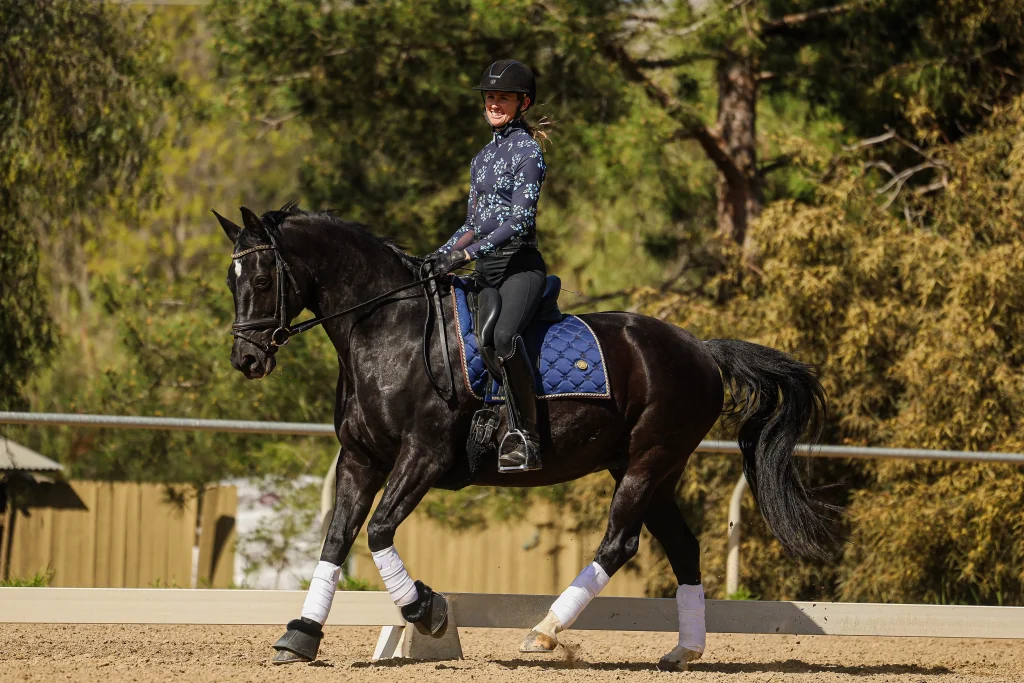


















Does this sound familiar? You’re trotting along, and everything is going well…until you ask for canter!
Your body tenses, you tip forward, and the transition is rushed, unbalanced—maybe your horse even picks up the incorrect lead.
If this is you, don’t worry, you’re not alone. The trot-canter transition is one of the trickiest moments in riding. In this video, I’m breaking it down step by step so you understand exactly how to ask for canter, when to ask, and how to help you ride a smooth, balanced transition.
And if you want extra help, my 30 Day Canter Challenge is starting in two days! This course is designed to guide you through the process of preparing for and improving your canter with a clear plan. Learn more and join here.
Why the Trot to Canter Transition Feels So Hard
The main reason this transition is tricky is because you’re going from a two-beat gait (trot) into a three-beat gait (canter).
On top of that, canter has a left lead and a right lead, so your timing and aids need to be clear. If something is off, your horse might:
- Pick up the wrong lead
- Rush or run into canter
- Throw their head up
- Lose their balance
That’s why getting the transition right is so important—because a good transition leads to a good canter.
Step 1: Understand the Timing
One of the most important (and often overlooked) pieces is timing.
You want to ask your horse to canter when the outside hind leg is on the ground. This allows your horse to push off correctly into the canter and pick up the correct lead.
A simple way to start feeling the correct timing for the canter transition is by getting in rhythm with your trot. Notice the moment when the outside hind is landing (this is also when the inside front is landing). That’s your moment to ask for the canter.
Getting the timing right can make the transition feel almost effortless.
Step 2: Use the Correct Canter Aid
The basic aid for canter is:
- Inside leg at the girth
- Outside leg slightly behind the girth
It’s a subtle change, not a big movement. Your outside leg slides just slightly back to signal the transition.
Step 3: Keep Your Upper Body Stable
As you apply your aids, your upper body should stay quiet and balanced.
A very common mistake is leaning forward or lifting your hands when asking for canter. This throws you out of balance and can make the transition more difficult for your horse.
Instead, think about staying tall and centered, allowing your legs to give the aid without changing your upper body position.
This creates a much clearer and more supportive cue for your horse.
Step 4: Stay in Rhythm Before You Ask
Before you ask for canter, make sure your horse is calmly trotting and waiting for you.
If your horse starts anticipating—like breaking into canter before you ask—the best thing you can do is simply keep trotting.
Wait until your horse is relaxed and listening, then give the aid.
This helps reinforce that you are in control of the transition, not your horse.
Why Feel and Rhythm Matter
As you practice, focus on feeling the difference between the trot and canter rhythms.
Trot is a two-beat rhythm: 1, 2… 1, 2
Canter is a three-beat rhythm: 1, 2, 3… 1, 2, 3
The more you tune into that rhythm, the easier it becomes to time your aids and stay balanced through the transition.
This is where everything starts to click.
Your job is to stay consistent, pay attention to how your horse responds, and adjust your aids so they become clearer and more effective over time. Focus on your timing, keep your aids clear and simple, and stay relaxed in your body. With practice, your transitions will become smoother, more balanced, and much more confident.
Happy Riding!
Amelia
P.S. If you want a step-by-step plan to improve your canter transitions, check out my 30 Day Canter Challenge. It includes the top exercises you need to improve your canter, tips for rider position in canter, and training plans to help you build confidence and consistency in your canter work. Check it out here.