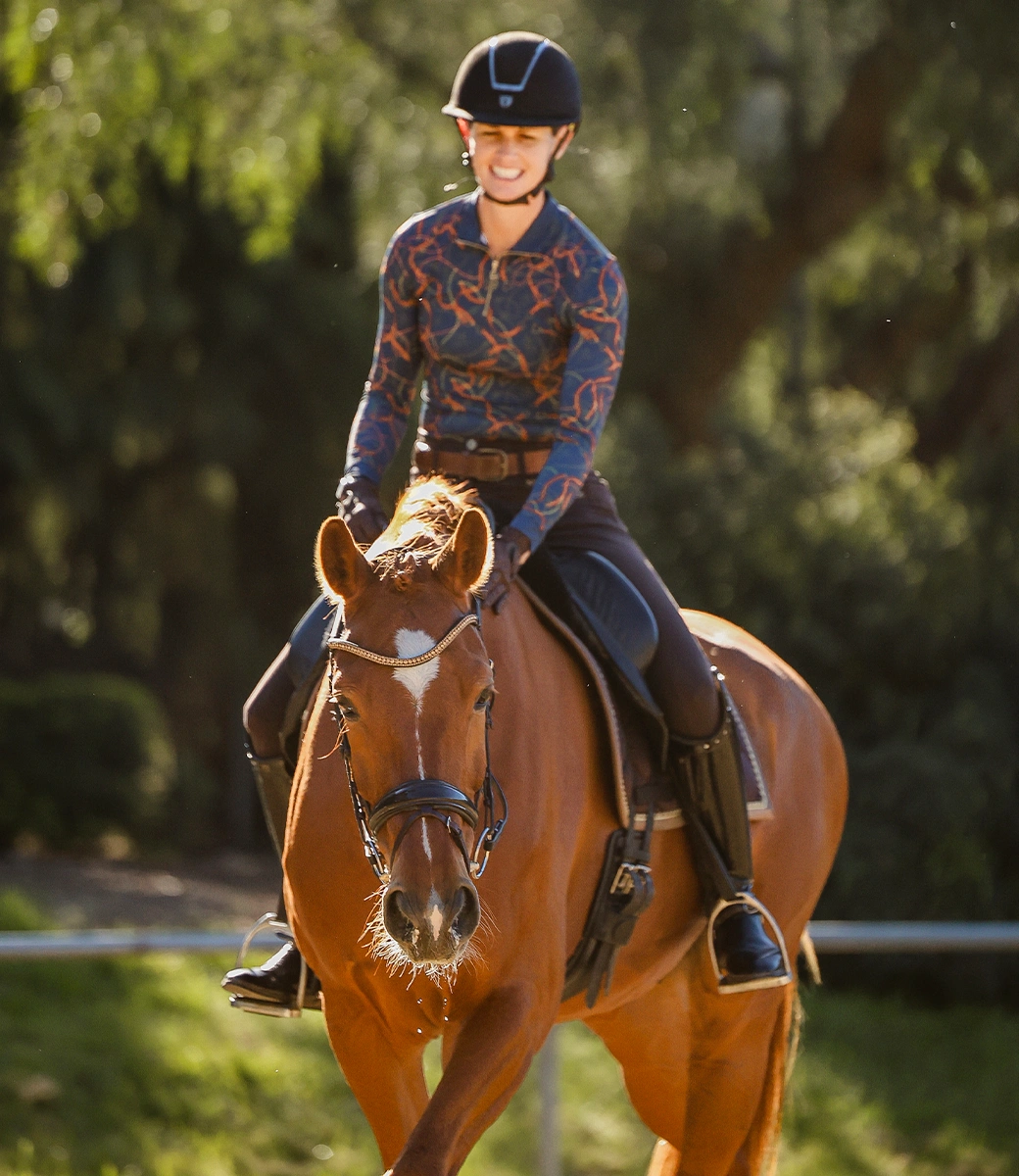





Finding the right dressage trainer is essential for your horse’s growth and your partnership together.
If you are searching for a dressage trainer, you are likely looking for guidance, support, and a clear path forward in your riding. Finding the right trainer can make a huge difference in your confidence, your horse’s development, and how much you enjoy the process.
The challenge is finding a good trainer. One who can take the time to build your confidence and help you learn the correct foundation of dressage. You want to find a trainer who is positive and kind and who makes things clear and simple. Dressage should not be confusing or overwhelming. It’s a challenging sport for sure – but at the end of the day, we do this for fun!
The right trainer will help you understand your horse, improve your position, and give you a step-by-step system so you can make consistent progress.
The Role of a Dressage Trainer
A good dressage trainer helps both horse and rider improve through clear, correct basics. They teach you how to ride and become a thinking rider, not just tell you what to do. They focus on balance, rhythm, connection, and correct development while helping you feel more confident and capable in the saddle. A good trainer is able to adapt and adjust to you and your horse’s needs so that every ride builds a positive experience.
Key Qualities to Look for in a Dressage Trainer
Dressage trainers do more than just train the rider. Their job is to help develop both the horse and the rider in a systematic, correct way. Dressage is a sport that requires time, commitment, and consistency. It takes a long time to train a dressage horse up through the levels, and every horse’s journey is a little different.
A good dressage trainer will:
- improve your rider position and effectiveness
- help your horse become more balanced and responsive
- give you exercises that build on each other
- explain the “why” behind what you are doing
- Adapt and adjust the exercises based on your horses level and temperament
Dressage is not about quick fixes. It is about building a strong foundation. A good trainer keeps you focused on the basics so you and your horse can improve over time.
The Impact: What Benefits to Expect When You Find the Right Trainer
Finding the right dressage trainer can completely change your experience with your horse.
Many riders struggle with feeling stuck, frustrated, or unsure of what to do next. Often, this is not because they are doing something wrong. It is because they do not have a clear system or consistent guidance.
A good trainer gives you that system.
They help you understand how to:
- design and plan your rides
- create forward energy without tension
- improve your horse’s balance and straightness
- ride better transitions
- develop a consistent connection
Here’s an article to help you understand a bit more about what to expect in your dressage lessons.
The Importance of Trainer Philosophy and Style
Choosing the right trainer is not just about finding someone experienced. It is about finding someone who teaches in a way that works for you and your horse. For many riders, it can be difficult to find a qualified dressage trainer near you. If this is the case, online dressage training is a great alternative.
Look for a Dressage Trainer Who Focuses on Basics
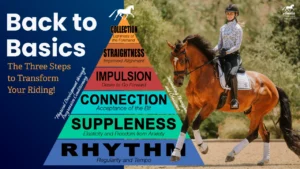
A good dressage trainer will always focus on the basics with the training scale as the foundation to guide every single session. Rhythm, suppleness, and connection are the base of the training scale and are essential for a productive session.
If a trainer pushes advanced movements before the basics are solid, it often leads to confusion and frustration for both the horse and the rider. Dressage is a slow sport. It takes time and many, many years to develop a horse and move up the levels. Remember to enjoy the process. Enjoy every ride. Smile and have fun – because riding is really hard.
It is also important to have riding friends and a supportive online riding community to give you advice and encouragement.
Look for Clear Communication
A good dressage trainer should be able to explain things in a way that makes sense to you. You should leave your lesson knowing what to work on and how to do it. Dressage is complicated, but when you break it down into smaller sequential steps, it all starts to come together.
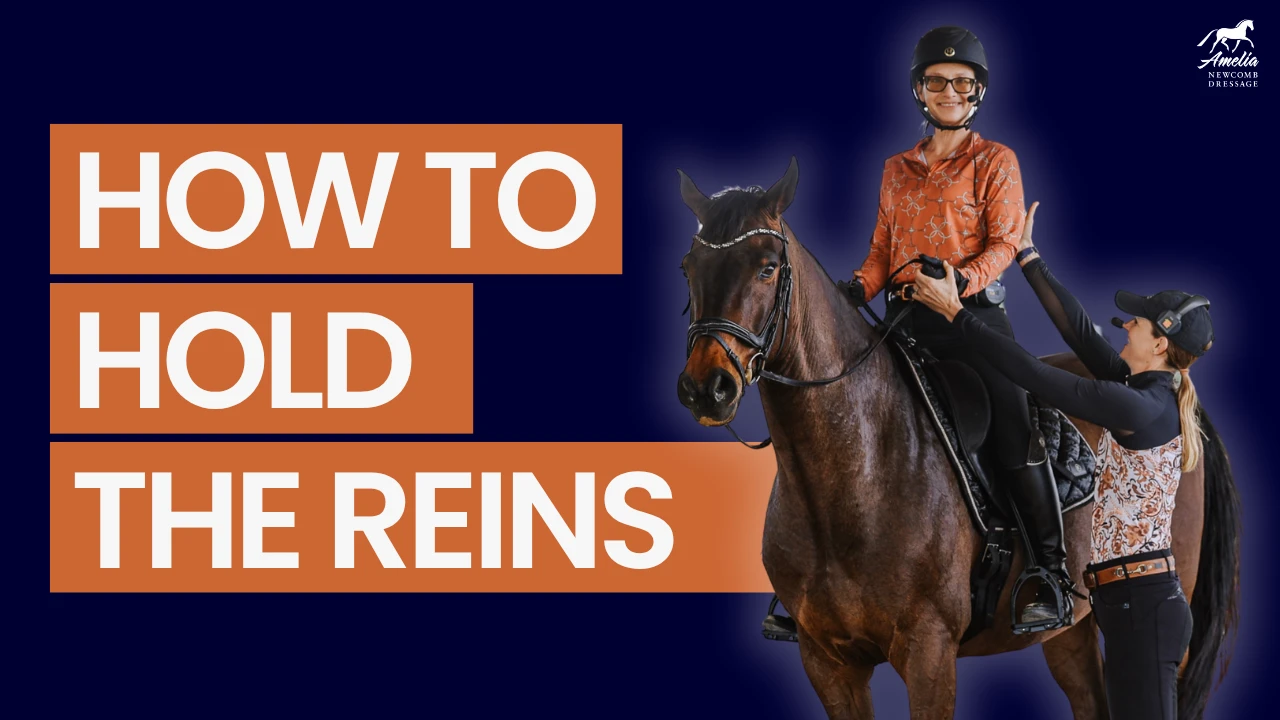
The art of teaching dressage, and what a good trainer should do, is to first of all, help you prioritize the most important thing to focus on and to fix first with your horse. Then the job of the trainer is to figure out the best way to explain to you how to fix it. If you’re not grasping the concept, a good trainer will pivot – find a new exercise, or even offer to get on your horse and show you how to do it!
Look for a Horse-First Approach
Your trainer should prioritize the horse’s welfare and long-term development. That means no shortcuts, no forcing, and no quick fixes. Horses are incredibly kind and generous creatures. If they understand what you’re asking and are physically able to do it, they will do what you’re asking.
Look for Progress Over Time
Dressage training takes consistency and patience. Even with an experienced trainer, it takes 5-6 years to develop a young horse up to the Grand Prix level! Sometimes, it might feel like you’re not making any progress, or maybe that you’re even getting worse! In the day to day, this may be true, but when you look back over months and years, you should see the improvement. With consistent training, your horse should become more balanced, more responsive, and easier to ride over time.
In-Person vs Online Dressage Horse Trainers
Today, riders have more options than ever when it comes to learning dressage. It seems crazy – but you can learn to ride Dressage online, in fact I’ve helped tens of thousands of students learn to ride through my online training platform.
In some ways online training can even be better than in-person lessons.
So what are the benefits of online training?
First, accessibility. No matter where you live, you can access high-quality training without hauling your horse or driving long distances. You can learn on your own schedule from the comfort of your home and revisit lessons anytime.
Second, your brain learns visually. When you watch someone ride with intention, your brain activates the same patterns as if you were doing it yourself. This helps you improve your understanding and feel, even before you get in the saddle.
Third, responsibility. Online training puts you in the driver’s seat. You learn to identify issues, apply exercises, and take ownership of your progress. That leads to deeper, more lasting improvement. Plus, if you’re planning on competing, you can’t have a trainer in the show ring, so you might as well learn how to be a thinking, feeling rider on your own!
Fourth, community. Having support makes a big difference. Amelia’s Dressage Club Facebook group gives you a place to ask questions, share progress, and stay motivated.
Fifth, theory. In the saddle it’s important to focus on your horse and to react in the moment. Online training gives you the time to really understand the theory of training and how horses learn, which makes everything you do more effective.
And finally, video. When you train online, you’re more likely to film your rides. Watching yourself is one of the most powerful tools for improvement because it shows you what you can’t feel.
There is clear proof that riders can improve through online training. With the right structure and support, you can make real progress and build a ride you truly enjoy.
In-Person Trainers
In-person training is essential, especially if you have a young horse or a horse with training issues. Working with a professional who can ride and train your horse for you before you get on is essential. In person lessons give you immediate feedback and hands-on guidance.
Online Dressage Trainers
Online training has become a powerful option, especially for riders who do not have access to quality local instruction.
With a structured program, you can:
- follow a clear step-by-step system
- revisit lessons as often as needed
- learn at your own pace
- understand the theory and the system of dressage training
Amelia Newcomb’s online training programs are designed to provide this kind of structured support, helping riders build confidence and clarity even if they ride alone.
Researching Potential Trainers to Match Your Goals and Needs
Many riders choose a trainer based on convenience or reputation alone. Before you sign up with a trainer, gather as much information as possible. The more information that you can get before you commit the better. Here are some of the common mistakes when it comes to choosing a trainer:
Prioritizing Convenience Over Qualifications Choosing a trainer simply because they’re nearby or affordable, without checking their credentials, competition record, or teaching experience.
Not Watching Them Teach First Many riders skip auditing a lesson before committing. Seeing how a trainer interacts with other students, especially those at your level, is really telling.
Focusing Only on the Trainer’s Riding Ability A brilliant competitive rider isn’t automatically a brilliant teacher. The two skills are separate.
Not Considering Their Experience With Your Horse’s Level A trainer who excels with Grand Prix horses may not be the right fit for a green horse or a nervous beginner.
Skipping References Not asking past or current students about their experience, turnover rate among a trainer’s students can be very revealing.
Overlooking Communication Style If a trainer’s feedback style doesn’t click with how you learn (some riders need encouragement, others prefer direct critique), progress stalls.
Assuming One Trainer Fits All Goals Your goals may evolve. A trainer great for basics might not be able to take you further down the road.
How Dressage Horse Trainers Help Build Confidence
Confidence is one of the biggest challenges for many riders (and horses too).
A good dressage trainer helps build confidence by giving you clear steps and helping you feel in control of your horse.
As your horse becomes more responsive and balanced, you begin to feel more secure. You understand what to do and how to fix problems when they come up.
This is one of the biggest benefits of working with the right trainer.
What to Expect in a Good Dressage Lesson
A good dressage lesson should feel structured and purposeful.
You should start with a warm-up that focuses on relaxation and forward movement. From there, your trainer should guide you through exercises that improve the basics.
You might work on:
- rider position
- maintaining rhythm
- transitions between gaits
- developing better contact
- improving straightness
A good dressage lesson should have a clear progression of exercises that are appropriate for you and your horse’s level of training.
Making the Final Decision: Most Common Questions About Choosing the Right Trainer
How often should I work with a dressage trainer?
Regular lessons are helpful, but consistency in your own riding is just as important. Even occasional lessons can make a big difference if you apply what you learn. If you have a young horse or are a beginner rider, daily lessons are essential to build the correct foundation.
Do I need an advanced trainer as a beginner?
Not necessarily. The most important thing is finding a trainer who teaches the basics well, is positive and encouraging, and explains things clearly.
Can online dressage training really work?
Yes. With a structured program and clear instruction, online training can be very effective, especially when combined with video feedback.
What if I do not have access to a local trainer?
Online programs and virtual coaching can provide structure and guidance, helping you continue to improve even without local support.
How do I know if my trainer is helping?
You should see gradual improvement in your horse’s balance, responsiveness, and rideability. You should also feel more confident and clear in your riding.
Dressage horse trainers play a key role in helping you and your horse improve. The right trainer will not just tell you what to do. They will help you understand how to ride, build your confidence, and give you a clear path forward. When you focus on correct basics and consistent training, you create a partnership that feels balanced, responsive, and enjoyable to ride.