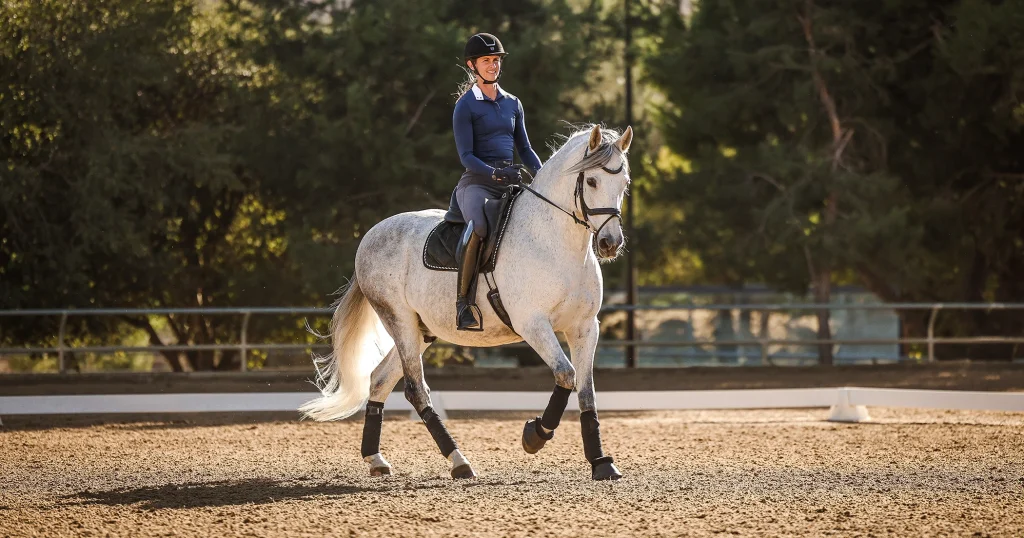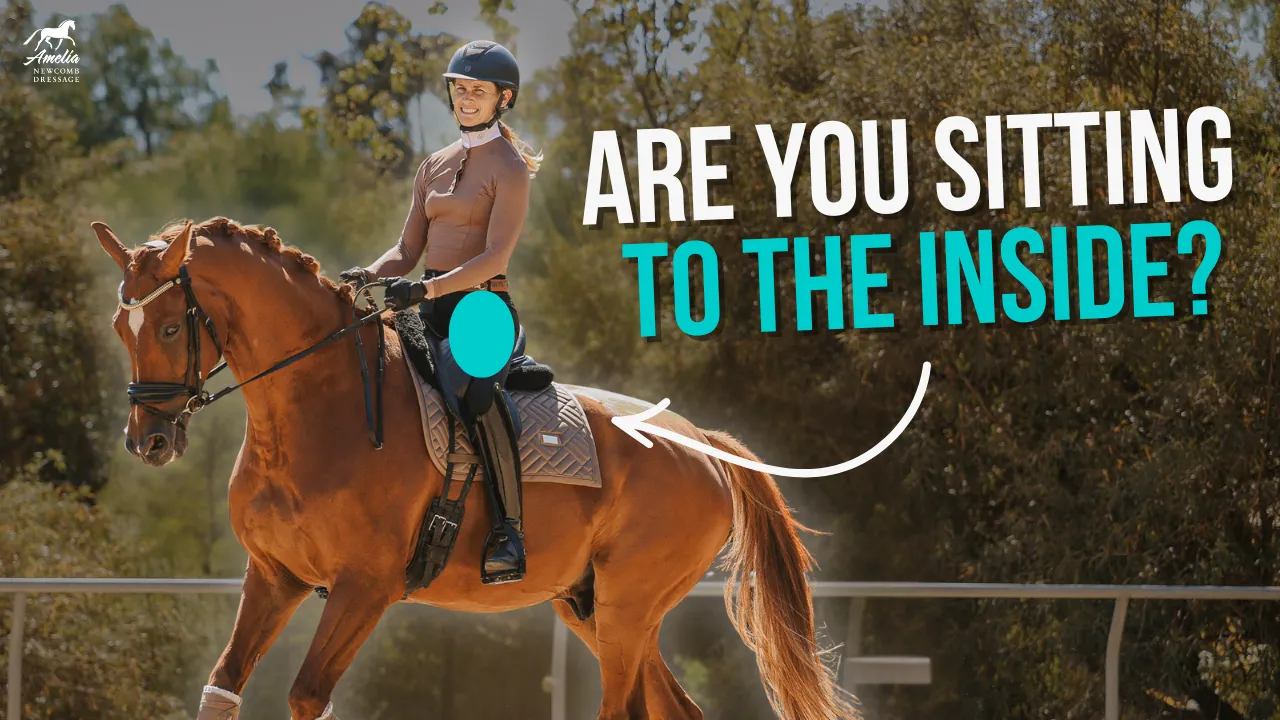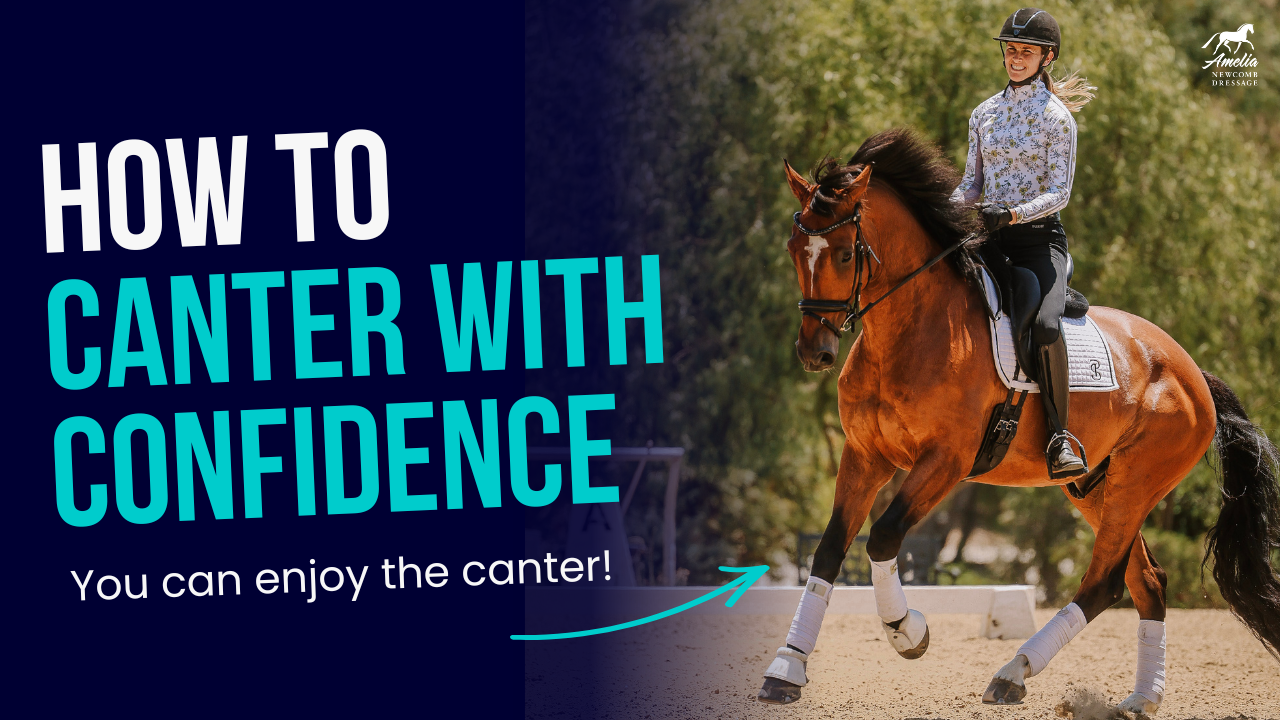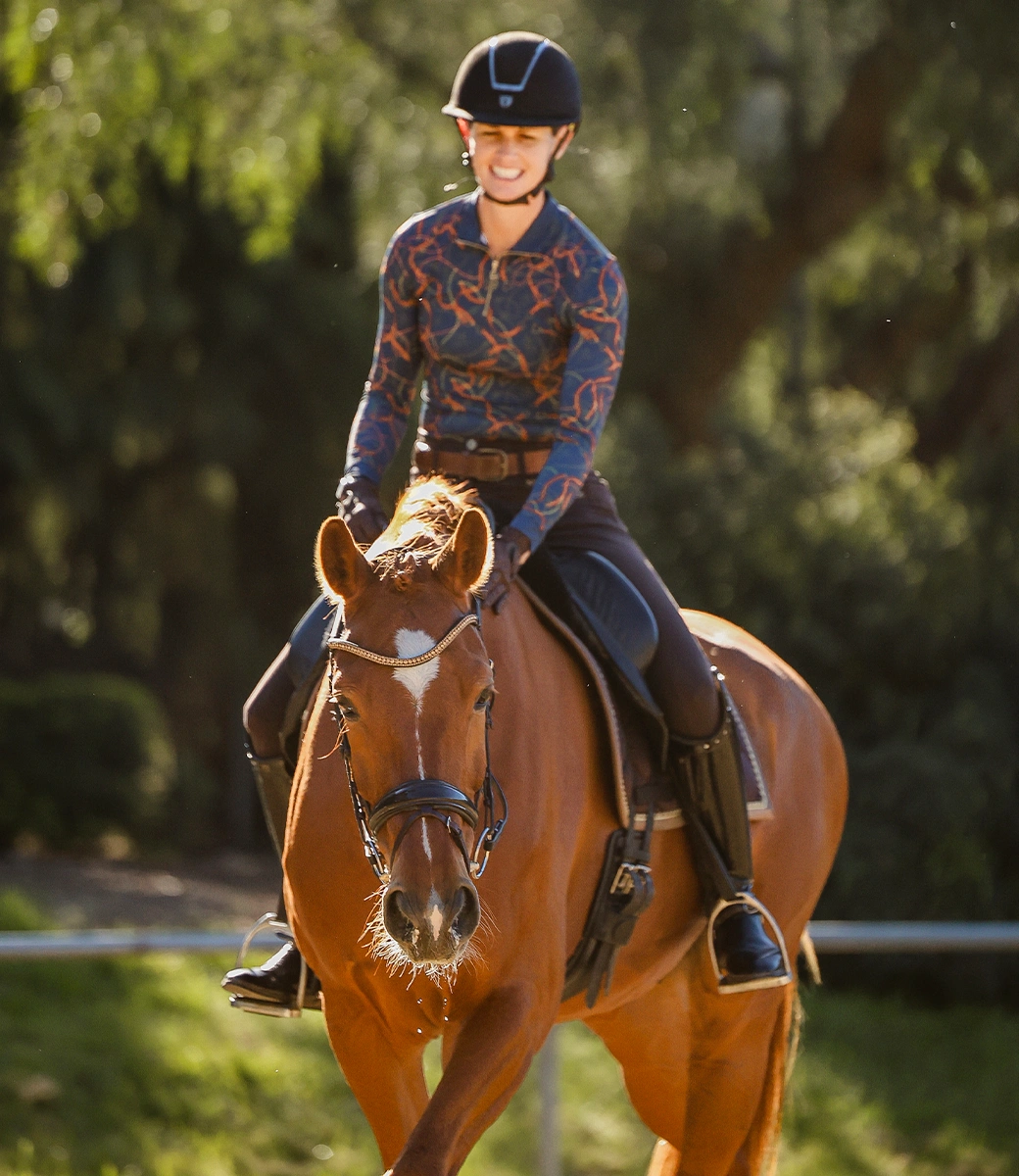



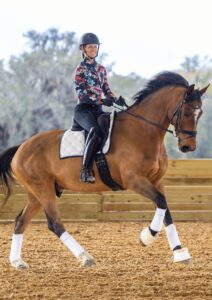


I just got back from an incredible masterclass with Carl Hester, and I wanted to share ten of my favorite rider position tips from the event. Rider position is the foundation of everything. When we sit correctly, we make our aids clearer, our horses more comfortable, and our riding more effective.
Before we get into Carl’s tips, if you want a little extra support with your Dressage vocabulary, be sure to download my free PDF with 10 Dressage terms every rider should know. Understanding concepts like half-halt, roundness, and connection will help you apply these tips with more clarity. Click here to download your copy of this free resource.
Ok, let’s dive into the tips from Carl!
1. Lengthen the Front, Shorten the Back
Carl used this beautiful visual:
“Think about lengthening the front of your body and shortening the back of your body.”
This encourages lift in the chest, strength in the core, and openness in the front of the body—all of which help you follow your horse’s movement and avoid leaning forward when you use the reins.
2. A Magnet in Your Helmet
Another great image: imagine a magnet pulling the top of your helmet gently up toward the sky. This helps prevent the common habit of looking down and encourages a tall, open posture that supports balance, stretch through the leg, and deeper heels.
3. Row the Boat in the Walk
I loved this analogy. At the walk, imagine a gentle rowing motion through your elbows—forward, forward, forward with every step. This allows your horse to move through their body and neck and helps you establish a steady contact. If you stop “rowing,” your horse will brace, slow down, or lose rhythm.
4. No “Handbag” Wrists
Carl reminded riders not to curl their wrists inward, flatten them outward or turn them down like you’re holding a handbag. Instead, imagine holding a glass of lemonade with your thumbs on top and palms facing in. This creates a soft, elastic contact and keeps your hands aligned with the horse’s mouth.
5. Passive Seat Upward, Active Seat Downward
For upward transitions—like trot to canter—focus on a passive seat that allows the horse to lift and move through you.
For downward transitions, engage your core and apply a more active seat to help rebalance the horse back.
It’s a great reminder that the seat must change with the gait.
6. Posting Is Perfectly Acceptable
Carl shared that he rarely sits the trot unless he’s showing. Posting keeps the horse loose, warm, and forward. Sitting trot is only productive if the horse is already balanced and supple.
7. Take Your Legs Off
Many riders keep their legs on all the time, and then wonder why the horse eventually ignores them. Carl emphasized the importance of removing the leg once the horse responds—ask, get the reaction, then release.
8. Talk to the Hind Legs
Think of your heels speaking to your horse’s hind legs. When your heel applies an aid, the hind leg should step forward. This idea applies not just to flying changes, but to transitions, lateral work, and overall engagement.
9. Straightness Comes from the Legs
Don’t try to straighten your horse with your hands. If you pull the reins to keep the horse straight, you’ll block the body and lose balance. True straightness comes from leg-to-rein connection, not rein-to-leg.
10. Every Body Type Can Sit Balanced
My favorite message from Carl:
Regardless of your body type, shape, or size, you can sit balanced, centered, and effective on your horse.
This speaks so deeply to what I believe—Dressage is accessible to everyone, and good riding comes from knowledge and feel, not the shape of your body.
I hope these tips inspire you as much as they inspired me. Rider position is something we never stop developing, and sometimes one simple visual can create a huge shift in how we feel and how our horses respond.
Happy Riding!
Amelia
P.S. Don’t forget to download your free 10 Terms PDF to build even more clarity and confidence in your riding. Click here to get your copy.