






Last updated: 9th June 2026
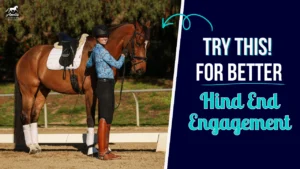
Is your horse on the forehand, behind the leg, or not truly connected? Walk trot transitions are one of the best exercises to improve your horse’s balance, rhythm, responsiveness, and engagement. They may seem simple, but when ridden correctly, they help your horse listen to your aids, step under from behind, and stay more connected through the body.
Transitions are a test of your communication with your horse. They show you whether your horse is truly in front of your leg, steady in the contact, and balanced enough to move smoothly from one gait to another. In this video, I walk you through one of my favorite transition exercises: trot-walk-trot transitions on a circle.
Why Walk Trot Transitions Improve Balance and Connection
Walk trot transitions are especially helpful for young or green horses because they teach your horse to respond to your aids without rushing, bracing, or falling onto the forehand. When done well, they build strength and engagement in the hind end while helping your horse stay soft and steady in the contact.
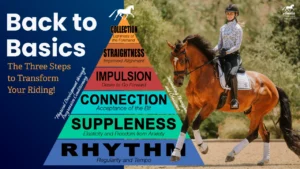
This exercise also connects directly to the first three elements of the Training Scale: rhythm, suppleness, and connection. First, establish a clear rhythm. Then use the circle to create bend and suppleness. Finally, use the transition to test and improve the connection.
How to Ride Walk Trot Transitions
Begin in trot on a circle and find a steady tempo. Think “1, 2, 1, 2” and make sure your horse is rhythmical, balanced, and maintaining consistent contact before you ask for the transition.
As you prepare for the walk, use the open side of the circle to gently yield your horse away from your inside leg. This helps encourage bend through the body and asks the inside hind leg to step more underneath your horse.
When you ask for the downward transition, use your seat and leg to support the walk. Keep your hands soft and steady so your horse does not brace, hollow, or drop behind the contact.
After a few walk steps, close your leg and ask your horse to trot again. If your horse does not respond to your calf, use a small bump with your heel to create a clearer reaction. The goal is for your horse to stay forward-thinking and responsive without rushing.
Repeat the exercise in both directions. Working on both reins helps strengthen both hind legs and improves your horse’s straightness, balance, and overall symmetry.
Common Mistakes in Walk Trot Transitions
One of the most common mistakes riders make in downward transitions is pulling on the reins. When you pull, your horse may brace, drop the hind end, or fall onto the forehand. Instead, think about using your seat, leg, and a small leg-yield feeling to keep the inside hind stepping under through the transition.
Another mistake is asking for the transition before the gait quality is good. A good transition starts with a good walk or trot. Before you ask, check that your horse has a clear rhythm, correct bend, and a steady connection.
Use Transitions to Improve Every Ride
Walk trot transitions are simple, but they are incredibly effective when you ride them with intention. They help your horse become more responsive to your aids, more balanced in the body, and more connected from back to front.
Practice this exercise regularly, and pay attention to the quality of each transition. The goal is not just to walk or trot. The goal is to keep your horse balanced, supple, and connected before, during, and after every transition.
Happy Riding,
Amelia