













Last updated: 19th May 2026
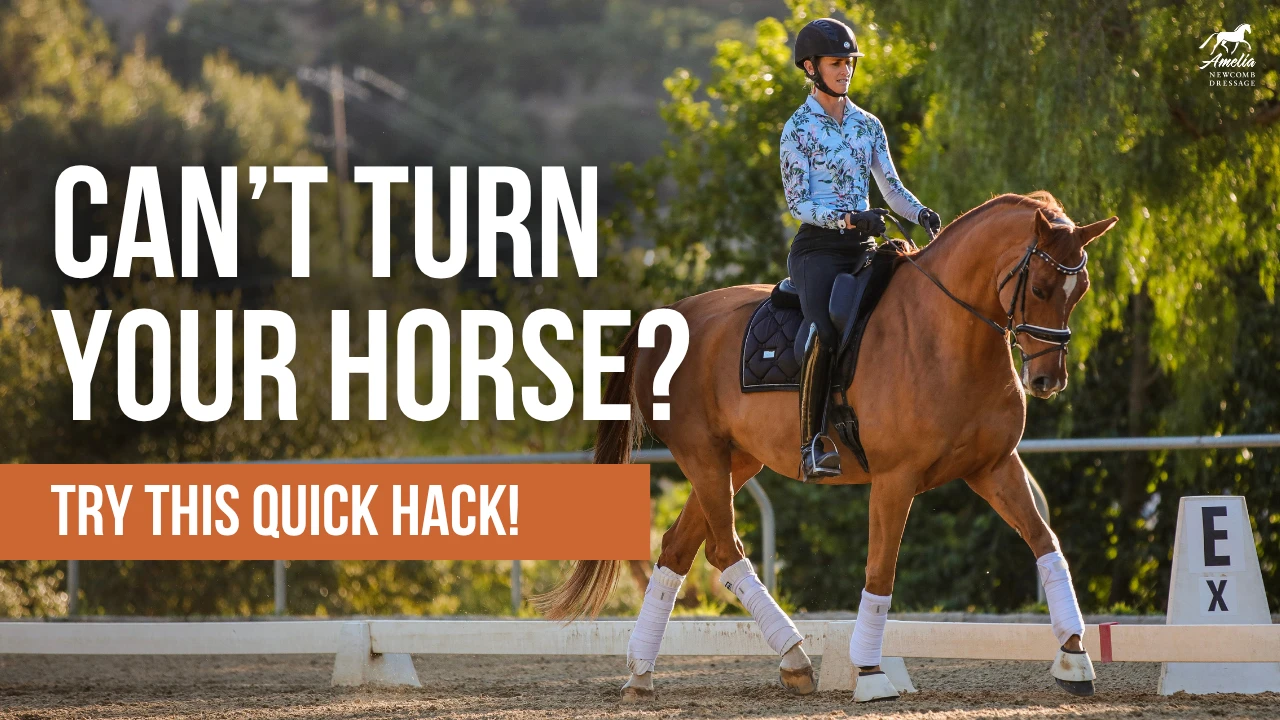
Are you struggling with getting your horse to bend correctly? Is your horse overbending their neck or drifting out through their shoulder?
Ideally, we want our horses to have equal bend throughout their bodies so they can stay balanced when riding movements such as circles or serpentines. Correct bend helps your horse stay supple, balanced, and connected to your aids. All horses naturally have a stiff side and a hollow side, which can make it difficult for them to bend evenly in both directions. On top of this, using incorrect aids can create false bend or too much flexion in the neck instead of true bend through the body.
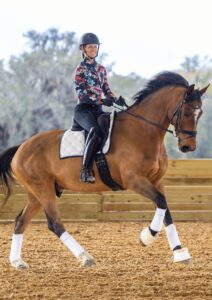
In this week’s video, I will be demonstrating incorrect bend and going over the correct aids to create a proper bend throughout your horse’s body. In the video, you will see how incorrect aids influence Leo’s body and then how the correct aids help him become balanced, evenly bent, supple, and focused. When correctly bent, your horse is supple, which means you are in control of both his body and mind.
There are three simple steps that can help teach your horse to bend correctly. Often, we resort to using the inside rein to create bend, but this only creates an overbent neck and causes your horse to fall out through the outside shoulder. As humans, it’s natural to go straight to our hands, but really, our leg is the dominant aid that helps create bend in our horse.
Step 1: Use Your Inside Leg
Put your inside leg on at the girth and push your horse over into the outside rein to start your bend. Your inside leg encourages the horse to soften around your leg and bend through the ribcage rather than just the neck.
Step 2: Support with the Outside Aids
Position your outside leg slightly behind the girth and keep steady contact with the outside rein. Use the outside aids to “catch” your horse’s body and prevent him from drifting out through the shoulder or losing balance.
Step 3: Soften with the Inside Rein
Lastly, use your inside rein to supple your horse and get him looking in the direction of your bend. The inside rein should stay soft and should never pull the horse into position.
It is important to remember to change your leg position each time you change the direction of bend. Your legs are the primary aid that creates bend in your horse and indicate which direction you want your horse to bend. Practicing the correct aids for bend will help your horse become more supple, balanced, and connected to you over time.
Hope you enjoy this video!
Happy Riding,
Amelia