



















Have you ever wondered how much your saddle affects your position… and your horse’s way of going?
In this video, I’m riding the same horse in three different saddles—a Dressage saddle, a western saddle, and a jumping/all-purpose saddle—so you can actually see what changes. And before we dive in, I want you to remember:
The best saddle is the one you have, as long as you and your horse are comfortable, you do not need to race out and purchase a new saddle!
That said, it’s still really helpful to understand why saddles are designed the way they are, what each one encourages in your body, and what challenges (or benefits) it might create for your riding.
Why Saddle Type Matters (But Doesn’t Have to Limit You)
I welcome riders in all different tack in my programs, because good riding is good riding. The basics still matter, no matter what saddle you ride in
But different saddles absolutely do influence how you sit, how your leg hangs, how secure you feel, and how your horse experiences your aids. Sometimes a saddle makes it easier to sit deep and connected. Sometimes it makes it easier to get out of the tack and ride in two-point. Sometimes it gives you more stability when you’re on a young or unpredictable horse.
To compare apples to apples, I ride the same exercise in each saddle: The Snowman (one of my all-time favorite patterns for suppleness and connection). If you’ve done The Snowman with me before, you know it’s a great “truth-teller” exercise—because it shows you what’s really happening with your balance, your bend, and your ability to stay steady through changes.
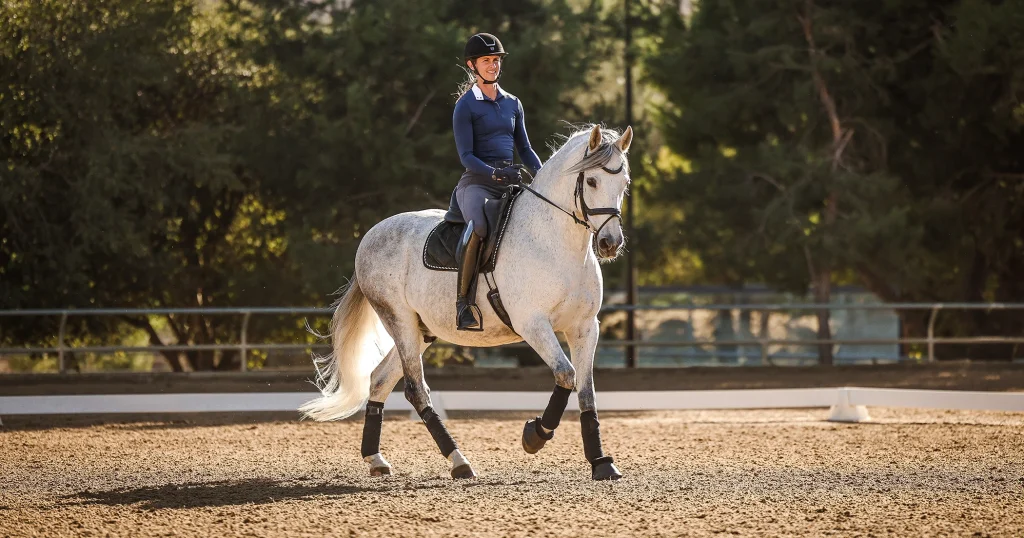
Saddle #1: The Dressage Saddle
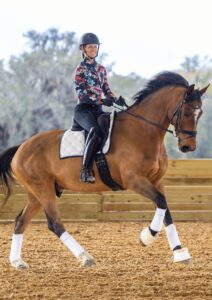
First up is the Dressage saddle—this is what I ride in the most, and what Mercurio is most used to.
A Dressage saddle is designed to support a deep seat and encourage that classic alignment we’re always aiming for: ear–shoulder–hip–heel. The goal in Dressage is to sit into the saddle with a connected seat so you can follow the movement and influence collection over time.
Here’s what I notice right away:
- The seat naturally helps me sit deeper and stay connected
- My leg is long, with the thigh at about a 45-degree angle
- The longer stirrups make sitting the trot feel more natural
- It’s easier to make small adjustments and still feel stable
When I ride The Snowman in the Dressage saddle, I feel like I can sit the trot comfortably, change the bend, and pick up the canter without my position getting thrown around. It feels “normal,” not only because of the design, but because it’s what both Mercurio and I are used to.
Saddle #2: The Western Saddle
Next, I switch into my western saddle, which was actually my high school graduation present, and the type of saddle I use to start all my young horses.
Western saddles have some big advantages, especially for young horses and long days in the saddle. They tend to distribute weight more on the horse’s back, and there’s simply more to hold onto—whether that’s the horn, the front of the saddle, or a night latch (which I love for young horses).
A few things I like about a western saddle:
- More stability and “security” for starting young horses
- More places to hold onto without pulling on your horse’s mouth
- Big stirrups and comfort for long trail rides or long hours of riding
But the biggest difference I feel immediately is my leg position. In the western saddle, my leg feels looser and less supported. I don’t have the same thigh blocks or structure helping keep my upper thigh engaged, so when I ride The Snowman:
- Sitting the trot feels harder
- My leg feels “sloppier” and less stable
- My seat feels different, which can make my aids feel different to my horse
- Posting the trot feels easier than sitting
It also feels bouncier—partly because of how the saddle sits and partly because Dressage saddles often have flocking and design elements that absorb shock differently. And one important reminder here: if you switch saddles, it’s not just different for you—it’s different for your horse, too. Give both of you time to adjust.
Saddle #3: The Jumping/All-Purpose Saddle
Finally, I switch into a jumping/all-purpose saddle. The first thing you notice (and feel) is the shorter stirrups and more “folded” leg. The seat isn’t as deep, and the saddle naturally encourages a slightly more forward balance—which makes perfect sense, because it’s designed for jumping.
In this saddle, I notice:
- My leg is more bent and shorter
- I have to work harder to sit back and in
- It’s easier to get into two-point and get out of the tack
- My legs feel less supported in a Dressage-style position
At the same time, there are parts I actually like. I feel closer to my horse in a different way—more “close contact.” It’s easier to move and adjust, and I can still sit the trot and ride in a more Dressage-style seat… it just takes more effort.
It’s the kind of saddle that really tests your balance and uses different muscles—especially if you primarily ride Dressage.
So… Which Saddle Is Best?
Here’s the honest answer: it depends on your goals, your horse, and what you’re doing.
If you’re focusing on Dressage, sitting trot, connection through the seat, and developing collection over time, a Dressage saddle is designed to support that. If you’re starting young horses or want maximum security and comfort for long rides, western saddles have real advantages. If you want to jump, ride in two-point, or get out of the tack easily, a jumping saddle makes that much simpler.
But what I really want you to take away from this video is this:
Good riding is good riding.
The tack matters, yes—but your fundamentals matter more. And honestly, riding in different saddles can be a great way to challenge your body, improve your balance, and become a more adaptable rider.
Happy Riding!
Amelia
P.S. Struggling to ride the canter? Check out this Free PDF Assessment that will give you my top five exercises to prepare for success in the canter! Download the Free Guide here.