









Last Updated: 5/4/2026
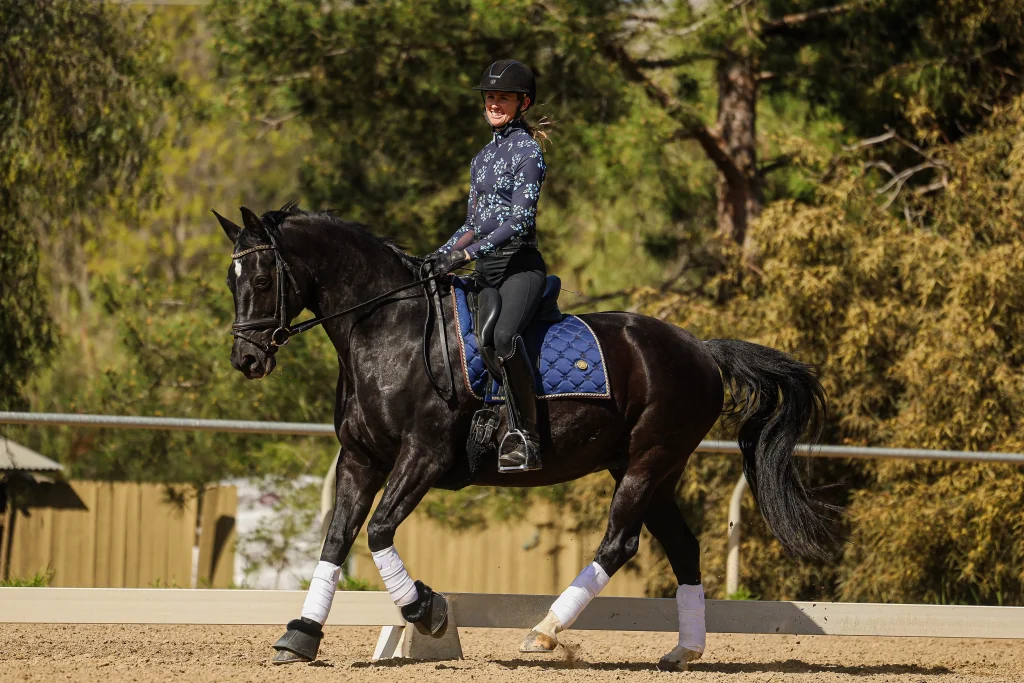
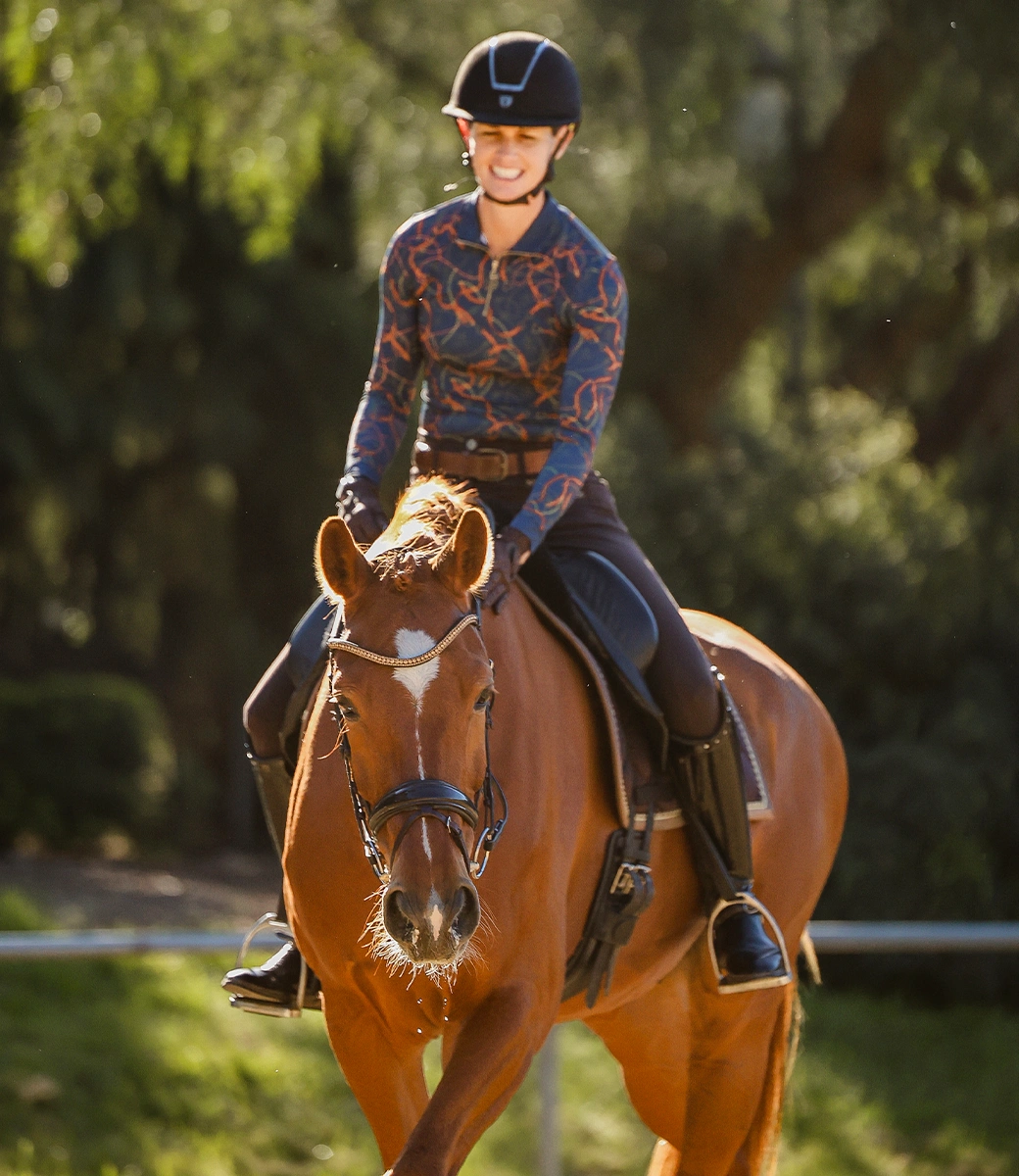
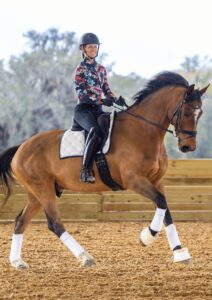
The horse’s canter should feel balanced, relaxed, and forward, not stiff, rushed, or hollow. It is a three-beat gait with a moment of suspension. Unlike the trot, where the horse’s back moves more up and down, the canter has a rolling, rocking motion, almost like a wave or a swing. Because this movement is so different, many riders initially struggle to find their seat and follow the motion comfortably.
What Is the Canter?
The canter is a 3-beat gait with a moment of suspension. As the only asymmetric gait, it has a distinct left and right lead. The lead refers to which front leg reaches forward the furthest in the three-beat stride. In a left lead canter, the left front leg leads and the horse is slightly bent to the left; in a right lead canter, the right front leg leads with a slight right bend. Picking up the correct lead helps your horse stay balanced and organized, especially on turns. Some horses will prefer one lead over the other, so it’s important to teach your horse to pick up the correct lead for balance.
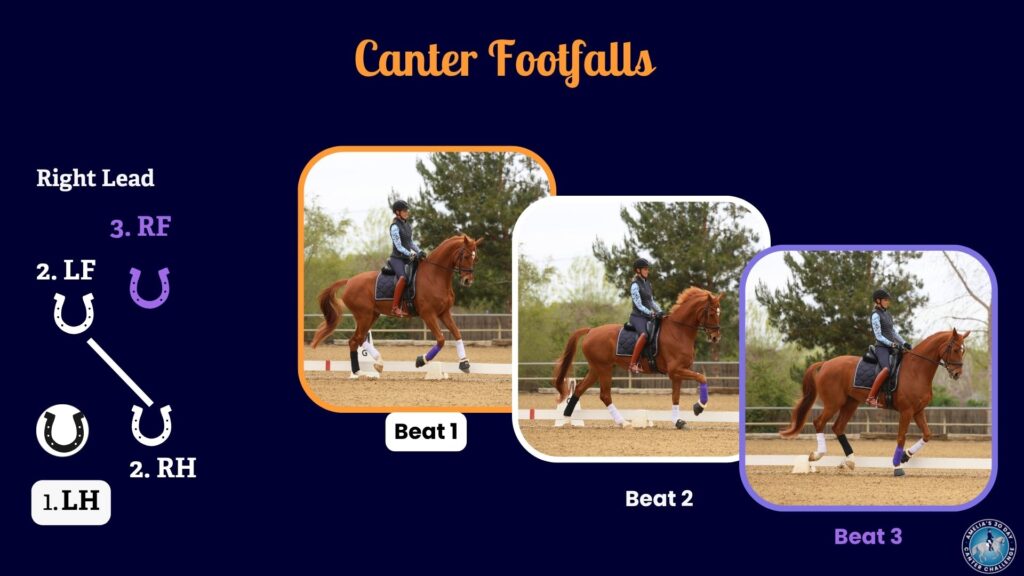
A good canter should not feel scary or out of control. It does not feel like your horse is running, pulling, or out of control. A good canter feels active, and jumping, but also controlled. It should feel rolling, organized, and adjustable. In a good canter, your horse stays in front of your leg, connected to the bridle, and balanced enough that you can influence the stride without a fight.
If you are riding a horse whose canter feels flat, hurried, or tense, do not give up. Developing a smooth and balanced canter takes time and practice, but it is something that can be developed in a horse.
What a Good Canter Should Feel Like
One of the first things to notice in a good canter is the rhythm. The canter has a clear three-beat pattern, and learning to feel or even count that rhythm can help you stay organized as a rider. When the rhythm is consistent, the canter starts to feel more predictable and easier to ride. Try counting out loud 1-2-3, 1-2-3, when you are cantering. Counting will help you feel the rhythm and help you breathe.
Connection is equally important. Your horse should feel steady from your leg into your hand, without disappearing behind the contact or lifting the neck and bracing. When a horse hollows in the canter, they become much harder to steer, balance, and influence.
Finally, the canter should feel rideable. You should be able to ride a circle, come back, go a little more forward, or ride a downward transition without tension or drama. Rideability is what allows both you and your horse to stay relaxed and confident in the gait.
How Do You Improve Your Horse’s Canter?
Improving the canter starts before you ask for the canter. The quality of your trot directly affects the quality of your canter. If your horse is not forward, supple, and connected in the trot, those same issues will show up, often more dramatically, once you ask for canter.
Before asking, make sure your horse is in front of your leg, bending around your inside leg, and connected to your outside rein. The trot should feel adjustable and organized, as though your horse could step into the canter at any moment without needing to rush.
When you do ask, think about organizing rather than pushing. Stay tall in your position, keep your hands quiet, and use clear aids. Your outside leg moves slightly behind the girth to cue the canter, while your inside leg stays at the girth to maintain bend and energy. Then allow the transition to happen.
If the canter becomes tense, rushed, or hollow, resist the temptation to keep cantering and hope it improves. Instead, come back to the trot, reestablish balance and connection, and then ask again. A better canter always comes from better preparation.
Here are 5 exercises that you should perfect before asking for the canter.
How to Ask for Canter From Your Horse Without Tension
The secret to a good canter is in the preparation and the aid itself. If the trot is rushing, the canter usually is rushed. If the horse is behind your leg, the canter often feels delayed or sticky. If the horse is crooked or stiff, the transition will often come with tension, a wrong lead, or a loss of balance.
Before you ask for canter, make sure the trot feels perfect – in front of your leg and soft in your hand. There should be a little inside flexion, but not too much neck bend. Your horse should feel like they could canter at any moment without needing to speed up.
When you ask, think of organizing rather than throwing your horse into the canter. Stay tall. Keep your hands down and quiet. The canter aid comes from your outside leg behind the girth to cue the canter lead, while your inside leg stays at the girth to maintain bend and energy. Your seat should follow the motion, sit tall, stay centered, and allow your hips to swing from the back to the front of the saddle. The key is to ask quietly and clearly, then allow, so the horse can strike off without tension or resistance.
A lot of riders accidentally create tension by tipping forward or pulling on the rein in the upward transition. That is often the exact moment the horse loses confidence and lifts the neck. If you can stay more upright, deeper in the saddle, with forward hands in the contact, the transition often improves. The canter transition can be tricky for both the horse and rider. You can check out my full-article on this for 3 Simple Steps to Break Down and Improve Your Transition.
Rider Position in the Canter
Your position plays a huge role in the quality of the canter. If you cannot follow the motion, your horse will respond to your position and become tighter as well.
One of the most common mistakes is leaning forward in the transition. When you tip forward, your weight shifts onto your horse’s forehand, your seat comes out of the saddle, and you lose stability. This not only makes the canter harder to sit, but it can also make your horse feel less balanced and more reactive. Sitting tall and staying centered allows your horse to lift through the canter instead of falling forward.
Your leg should remain long and quiet. Gripping with your knee or inner thigh tends to lock your hip, which makes it harder to follow the motion. This often creates a cycle where the rider becomes stiff, the horse becomes tense, and the canter feels increasingly difficult.
To follow the canter well, your seat needs to stay supple. The motion should feel like a gentle swing through your hips. When you allow that movement, the canter becomes much smoother and more comfortable for both you and your horse.
Here is a great video that will help you understand How to Sit the Canter.
How to Improve Balance in Your Horse’s Canter
If your horse’s canter feels rushed, flat, or heavy, the root issue is usually balance.
Balance improves through thoughtful exercises rather than simply cantering more. Transitions are one of the most effective tools. Moving between trot and canter helps your horse stay attentive and begin to carry more weight behind. As your horse develops, transitions within the canter can further improve adjustability.
Circles are also incredibly helpful. Riding a 20-meter circle allows you to feel whether your horse stays bent, connected, and balanced. Exercises like spiraling in and out can help your horse learn to rebalance without losing rhythm. If your horse’s canter feels rushed, flat, or heavy, the issue is balance.
A 20-meter circle helps you feel whether your horse stays bent, balanced, and connected. The Spiral in and Out Exercise is also a great exercise that can help to improve balance in the canter.
Straightness and Why It Matters
Because the canter is asymmetrical (left lead and right lead), crookedness becomes much more obvious. Most horses tend to canter with the haunches to the inside or drift through the shoulder or overbend in the neck.
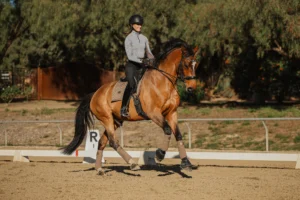
When a horse is not straight, they struggle to stay balanced in the canter, are difficult to maneuver and you will never be able to collect the canter.
Improving straightness through exercises like shoulder-fore, introducing the counter canter, and attention to your own position can make a dramatic difference. Often, when straightness improves, the canter improves almost immediately.
The canter is the most difficult gait to improve the straightness – so if you’re struggling with straightening your horse in the canter, go back to the trot and fix it first at the trot.
Common Canter Problems and How to Fix Them
Does Your Horse Get Stiff and Lift Their Head Up in the Transition?
This usually means the horse isn’t through enough and accepting the contact and the balance changed before or during the transition. Go back and improve the quality of the walk-trot and trot-walk transitions first. Make sure you can ride your horse round and supple in the trot-walk-trot transition before starting the canter. If your horse hollows in the trot-walk-trot transition, they will almost certainly hollow in the canter transition..
Focus on keeping the frame steady, the neck soft, and the contact consistent as you ask for more energy. Then ask for canter from an organized trot.
Does Your Horse Rush?
Rushing is often a balance and suppleness problem. This is very common in green and young horses that are just learning to balance the rider. You want to teach your horse to carry more weight behind and soften in their body and this will keep them from rushing. Transitions (trot-canter-trot, and later on walk-canter-walk) as well as suppleness exercises with circles and bending lines are the best way to keep your horse from rushing.
Does Your Horse Pick Up the Wrong Lead?
Usually this comes from crookedness, stiffness, poor preparation, or unclear aids. Some horses, especially if they haven’t been trained correctly or are particularly stiff in one direction will have a strong preference to pick up one lead over the other. Teaching your horse to bend reliably and pick up both leads is an important part of their training and development.
Work on getting your horse even and supple in both directions. Correct bending and shoulder control is important to help your horse pick up the correct lead. Here is a great video to help you understand how to pick up the correct lead.
Do You Feel Nervous Cantering?
This is very common. Set yourself and your horse up for success. The better your trot, the better your canter will be. Make sure your horse is forward, round, and adjustable in the trot before you even think about cantering.
It’s also helpful to feel confident cantering your horse during groundwork or on the lunge line before starting under saddle. That allows you to evaluate the trot-canter-trot transitions. If both you and your horse are green, don’t hesitate to ask for help from a professional.
When you begin, start your canter on a circle and focus on preparation and position rather than trying to “get it done.”
Exercises That Help You and Your Horse
Transitions are one of the most effective tools you have to improve your horse’s canter. Clean, balanced trot–walk–trot transitions improve your canter transitions by teaching both you and your horse to stay organized and connected as the gait changes.
Circle work is equally valuable. Riding a balanced circle helps you feel whether your horse is truly in front of your leg, bending through the body, and maintaining a steady tempo.
Exercises that ask your horse to rebalance are also very helpful. Simple patterns that combine trot and canter can teach your horse to stay round, attentive, and adjustable instead of anticipating and running. One of my favorite exercises to improve the trot-canter-trot transition is The Snowman.
Another great exercise is using a leg-yield to set up for the canter transition. The leg yield gets your horse connected from the inside leg to the outside rein, which is the perfect set up for the canter transition.
When practicing your transitions, some will be better than others. That’s ok. Just reward your horse and end on a good note. Always remember to focus on the quality of the gait between your transitions and if your horse becomes tense or starts anticipating, back off and do less frequent transitions.
If you want help creating a step-by-step plan to work through these exercises, check out my Canter Challenge.
Canter Questions Riders Frequently Ask
Why does my horse’s canter feel harder than the trot?
Because the canter is faster and more powerful, it requires greater balance and carrying strength. If your horse is even slightly crooked, on the forehand, or behind your leg, the canter will expose those weaknesses more clearly than the trot.
How do I make my horse’s canter more balanced?
Improve the quality of the trot before the transition, then ride shorter, more organized canter efforts. Use circles and transitions to help your horse rebalance, rather than trying to fix it by holding more with your hands.
Why does my horse throw their head up when I ask for canter?
Usually, it’s because the horse loses balance, the contact changes, or the rider tips forward and pulls during the transition. Go back and improve the setup before asking for the canter.
Should I canter longer to improve the canter?
Usually, no. Longer is not always better. Short, balanced efforts with good preparation are far more effective than continuing to canter when the quality is declining. You want to release your horse when the canter is quality canter.
Conclusion
The canter is one of the most enjoyable and useful gaits for both horse and rider, but it can feel challenging at first. If you want to improve your horse’s canter, focus on solid basics and thoughtful preparation. The transition into the canter is key, when it is balanced and organized, the gait itself becomes much easier to ride.
As you and your horse develop better balance, coordination, and confidence, the canter will begin to feel more natural, more controlled, and ultimately more fun.
Ready to Improve Your Canter?
If you want a clear, simple plan to improve your horse’s canter, I’m running a Canter Challenge starting next month.
I’ll guide you step by step through the exercises, transitions, and rider position work so you can build a more balanced, confident, and rideable canter.
If your canter feels rushed, flat, tense, or just inconsistent, this will help you understand what to do and how to improve it in your daily rides.