Teaching the Piaffe In Hand

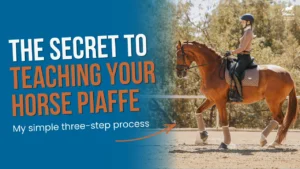
You might say that the piaffe is the pinnacle of Dressage. When you get it right, it really does feel like dancing on the spot; a powerful combination of collection and impulsion – a prancing unicorn. It can be tempting to just rush your horse into the piaffe, but this can create a lot of confusion, and may even cause your horse to rear, bolt, or spin. In reality, it takes years of practicing simple exercises to teach your horses the concepts they need to piaffe confidently.

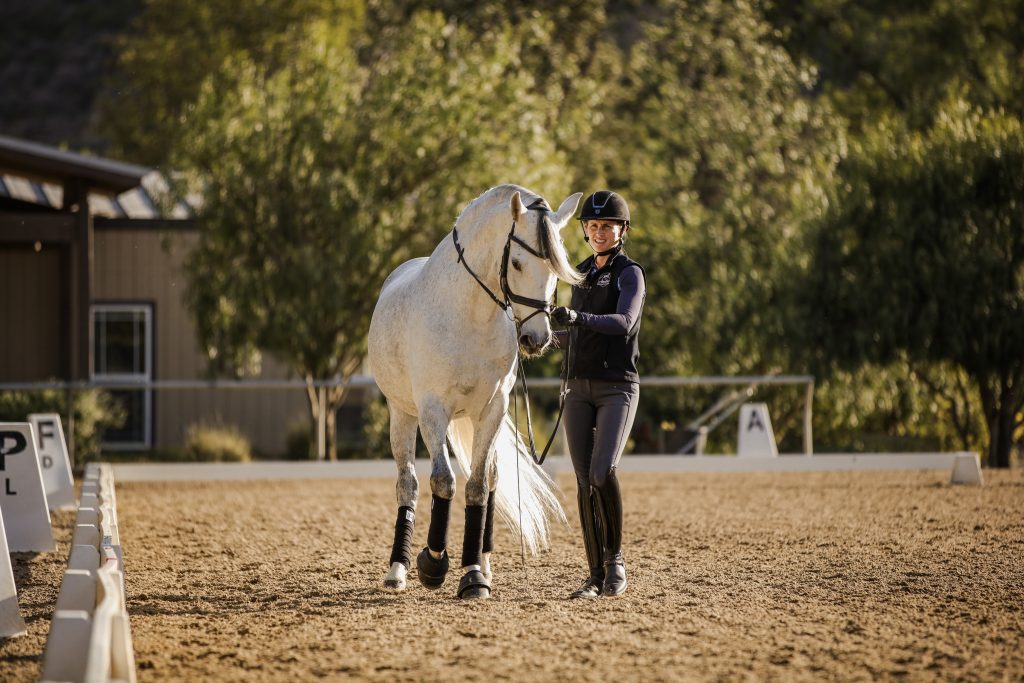
So, in this week’s video, I wanted to show how I begin to teach my horses the piaffe on the ground. Introducing the piaffe on the ground is a great way to help set your horse up for success.

Psst… in case you missed it, be sure you check out my Free Piaffe Webinar for more tips on teaching your horse the piaffe! Watch the replay here.

Here is how I teach my horses to piaffe in hand:

·       Go-stop-back up – The first thing that I teach my horses is to walk forward, stop, and back up on the ground. I call this “centering” as it really helps to balance out the forward and back buttons on your horse. For this exercise, your goal is to have your horse mirror your body language as you walk forward, stop, and back up. You should be able to do this without the slack coming out of your lead rope!

·       Teach Leg Lifts – Next, you can begin teaching your horse to do leg lifts. This helps your horse understand what they should do with their hind legs in the piaffe. To teach the leg lifts, slide your whip down the hind leg and tap below the hock. When your horse lifts their leg, release the pressure. Your goal is to teach your horse to lift and hold both hind legs when they feel the tap of the whip below their hock.

·       Accept the Contact on the Ground – After you have taught your horse the leg lifts, the next step is to teach your horse to accept the contact from the ground. Put the reins over your horse’s head, and take ahold of the inside and outside reins just like you would if you were riding. Practice asking your horse to walk forward into the contact and stopping with you to help get them comfortable with this idea on the ground.

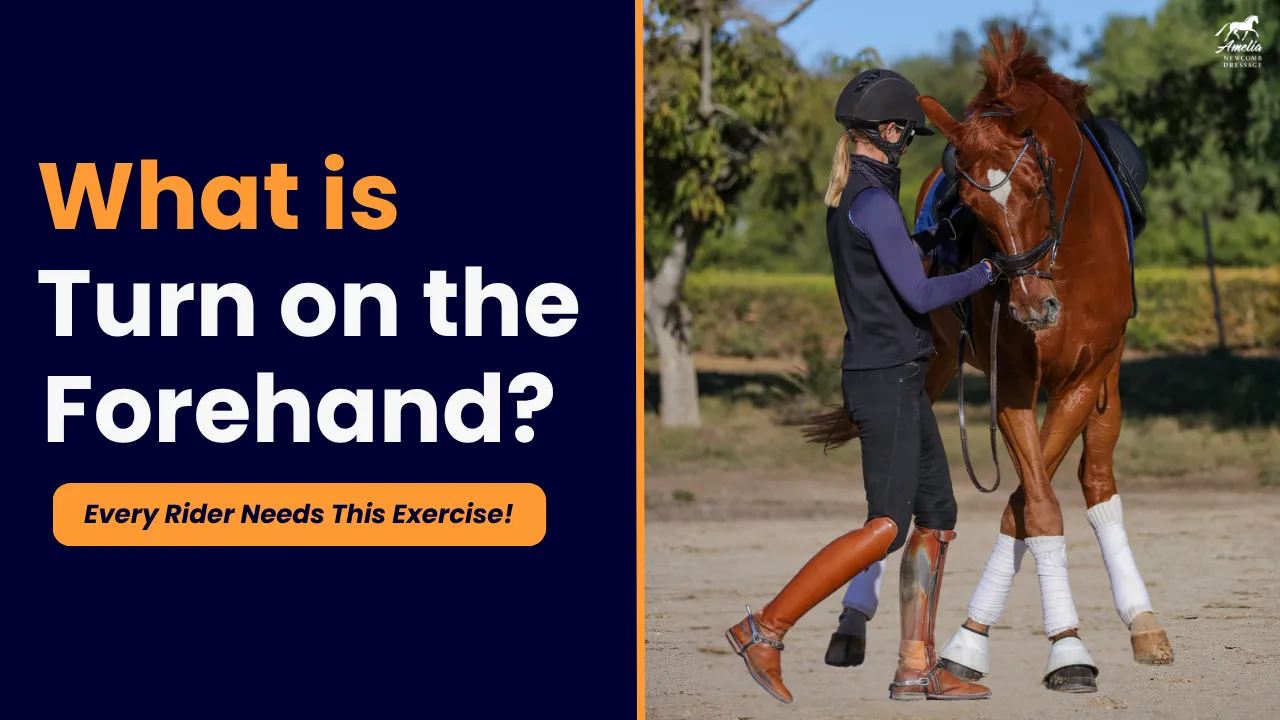
·       Teach Lateral Work from the Ground – Once your horse accepts the contact from the ground, the next step is to teach them to move laterally on the ground. Teach your horse movements like the leg-yield and the turn on the forehand to help them learn this concept and begin engaging their hind end.

·       Put it all Together – Once you and your horse have mastered all these exercises, then you can put it all together! Take contact on the reins and ask your horse to move forward a little while giving little taps on the hind leg. Viola! Now you have the piaffe in hand!

This may seem easy, but as I mentioned before, it takes a long time to teach your horse the piaffe. Before we begin working on the piaffe, we have to have rhythm, suppleness, and connection, and it takes years to build the strength and all the pieces that we need for the piaffe. For example, I have been working on simple groundwork exercises with my horse Kensington since he was five, and he is now eight and just starting to really get the piaffe under saddle. So begin teaching your horse these basic concepts now, and pretty soon you will have a beautiful piaffe in hand!

Happy Riding!

Amelia

P.S. Want more help teaching your horse the piaffe and other movements like half pass, shoulder-in, and passage? Check out my Dressage Groundwork Masterclass!*

*Sorry! You’ve missed this course enrollment. Don’t worry thought! Click the link and put your name on the list to be notified the next time the course opens again. We would love to have you.

ABOUT YOUR INSTRUCTOR
A smiling woman wearing a helmet and riding gear stands beside a chestnut horse with a black bridle and white saddle pad, holding its reins outdoors in a sunlit, green setting.
Hey there.
I'm Amelia Newcomb
At Amelia Newcomb Dressage, I work to develop a trusting and confident relationship between horse and rider. I draw on theories from both natural horsemanship and classical dressage, creating a holistic training approach that adapts to the unique needs of each horse and rider.
Facebook
Twitter
Pinterest
WhatsApp
RELATED POSTS
Like this article & video?

There are hundreds more! View the entire library here.

A person in equestrian gear teaches a white horse how to do a leg yield from the ground. Perfect for a round of fitness training over 30 days.
FEATURED COURSE
Groundwork Essentials
Establish trust and communication with your horse with Groundwork Essentials. Learn to read body language and redirect attention in as little as 5 minutes per day. Simple, practical, and effective exercises to get any horse relaxed and focused.
A person wearing a helmet and blue patterned shirt stands outdoors holding the reins of two brown horses, one on each side, with trees and bushes in the background—like a perfect image for a Sales Page Template.
Amelia Newcomb
LATEST POSTS
LATEST YOUTUBE VIDEO
Rated 5 out of 5
NEWSLETTER

Sign Up Now To Get Free Training & Tips In Your Inbox!

🔥 HOT RIGHT NOW 🔥
Explore More with Our Featured Courses and Workshops

We’ve curated a selection of courses, workshops, and masterclasses designed to help you refine your skills and achieve your riding goals. Whether you’re just starting out or looking to advance, these offerings are here to support your growth. Explore and take your riding education to the next level!

Establish trust and communication with your horse with Groundwork Essentials. Learn to read body language and redirect attention in as little as 5 minutes per day. Simple, practical, and effective exercises to get any horse relaxed and focused.
Lateral work is hard for both you and your horse but essential for a supple and connected horse. Inside this workshop you'll learn the theory behind lateral work and get the best exercises to start and improve your lateral work. Continue your training with confidence and fun!
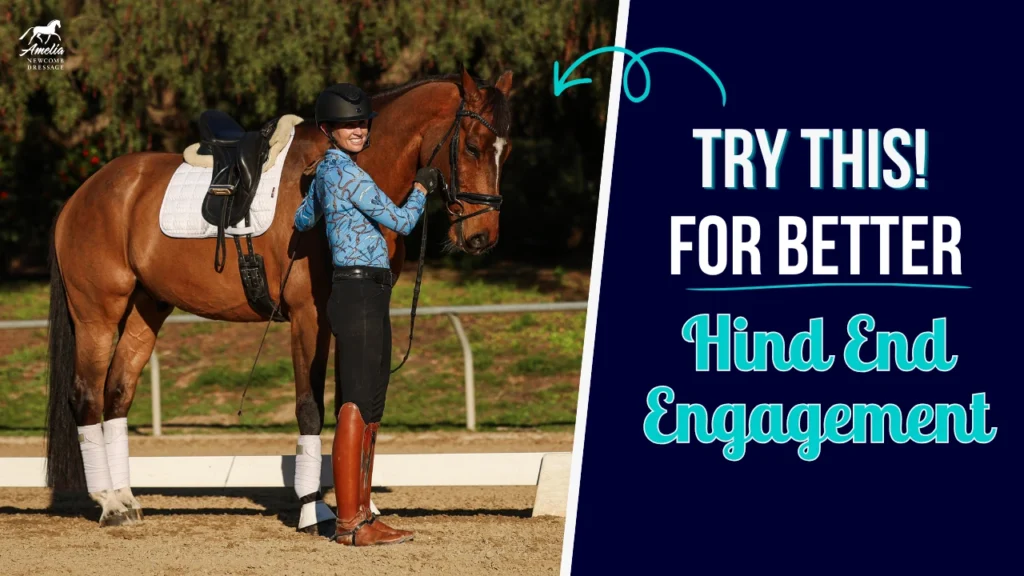
When your horse engages their hind end, they rotate their pelvis under a little, their whole back lifts, and their abdominals engage. This is what this workshop on engagement is all about so your horse can take more weight behind and connect back to front. When our horses engage their hind end, they can carry themselves better and perform what you ask with ease.

Enjoyed this article? 

Saddle Up and Search for Your Next Read!
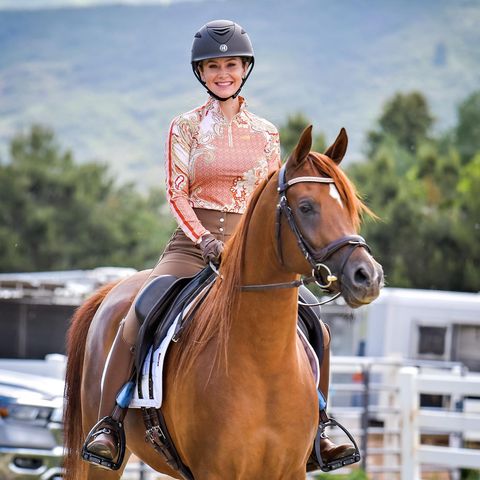
A person wearing a helmet and patterned shirt smiles while riding a brown horse outdoors on a sunny day, with green trees in the blurred background.
Free Resources
Unlock Your Potential as a Dressage Rider with Our Free Resources!

Are you passionate about dressage and eager to enhance your skills? Our Free Resources section is here to support your journey, offering a wide range of courses, guides, and tools designed to help you become the rider you’ve always wanted to be.

Access Now!
A simple white envelope icon on a light background, outlined with bold lines to represent a closed envelope.
Free Training & Tips In Your Inbox!

Say goodbye to the fluff and hello to real value. Our newsletter delivers actionable insights, expert tips, and the kind of motivation that pushes you to the next level in your dressage journey. Ready to make strides in your riding? Let’s do this—straight to your inbox. You in?

Join the community

Get weekly training to your Inbox

Enter your name and email below and you’ll be added to my list to get weekly training videos each week. You’ll also be the first to hear about all my news, courses and offers! You can unsubscribe at any time!

PS-Good things are coming. Please be patient with this form, it sometimes takes a moment to submit your details!

Free Training scale webinar

Tuesday, May 19th, 4pm PT

Please be patient with this form, it sometimes takes a moment to submit your details!