Perfecting the Walk-Canter Transition

Today’s video is about perfecting the walk-canter transition.

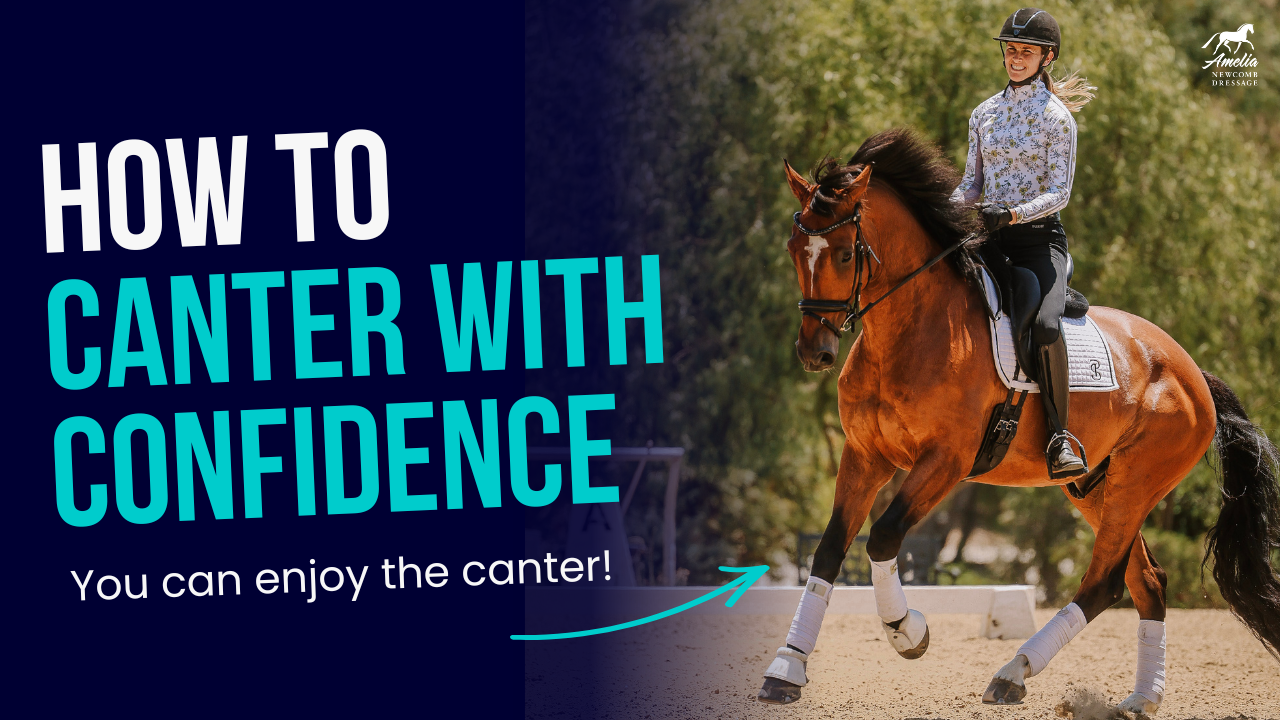
First off, when perfecting the walk-to-canter transition, I want to have a nice walk with his poll at the highest point, a little flexion, making sure he’s bending slightly. Then when I ask for the canter, I want him to start with his hind leg and keep his neck exactly the same. I close my leg, ask for the transition, and I want to really feel that the first stride is a clear canter stride. I want to feel his inside hind leg come forward underneath my seat, and I don’t want his head or frame to change.

This is important because the walk-canter transition is the preparation for your flying change. It’s the same aid as the flying change.

Don’t forget that when you’re practicing your transitions, you have to keep the canter good between your transitions.

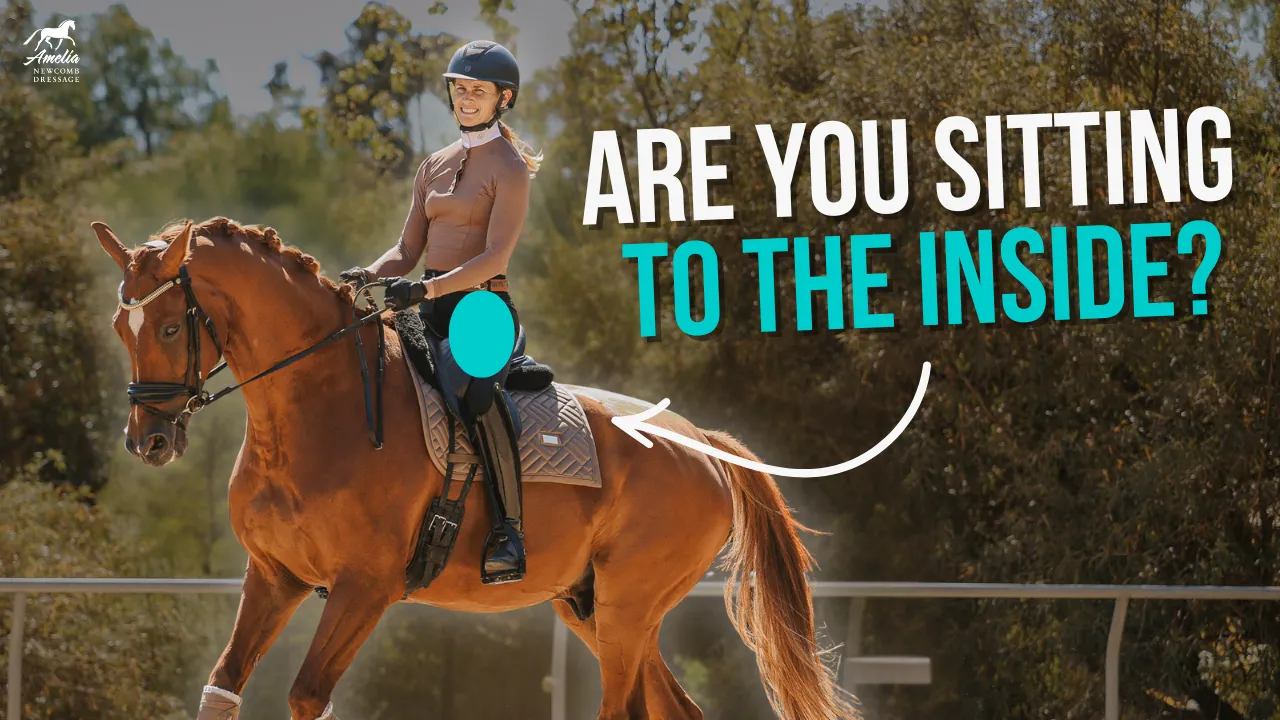
One of the most common mistakes I see people make in these walk-canter transitions is that their horse doesn’t react, so they lean forward. For example, if I close my leg and he doesn’t react, I see people lean forward to try to get their horse to canter.

To get him to properly canter, I’m not going to change my upper body at all. I’m just going to close my calf, and what I want to feel is that the hind leg comes through and nothing changes in my hand or in his frame.

If you are having trouble with your flying changes, it’s really good to go back and work on your simple changes, your canter-walk-canter transitions. Really perfect these so that they’re right on your seat and that you don’t have to use your reins all the time in the transition.

Happy Riding!

Amelia


ABOUT YOUR INSTRUCTOR
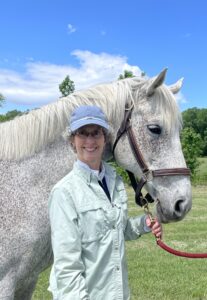
A smiling woman wearing a helmet and riding gear stands beside a chestnut horse with a black bridle and white saddle pad, holding its reins outdoors in a sunlit, green setting.
Hey there.
I'm Amelia Newcomb
At Amelia Newcomb Dressage, I work to develop a trusting and confident relationship between horse and rider. I draw on theories from both natural horsemanship and classical dressage, creating a holistic training approach that adapts to the unique needs of each horse and rider.
Facebook
Twitter
Pinterest
WhatsApp
RELATED POSTS
Like this article & video?

There are hundreds more! View the entire library here.

A person in equestrian gear teaches a white horse how to do a leg yield from the ground. Perfect for a round of fitness training over 30 days.
FEATURED COURSE
Groundwork Essentials
Establish trust and communication with your horse with Groundwork Essentials. Learn to read body language and redirect attention in as little as 5 minutes per day. Simple, practical, and effective exercises to get any horse relaxed and focused.
A person wearing a helmet and blue patterned shirt stands outdoors holding the reins of two brown horses, one on each side, with trees and bushes in the background—like a perfect image for a Sales Page Template.
Amelia Newcomb
LATEST POSTS
LATEST YOUTUBE VIDEO
Rated 5 out of 5
NEWSLETTER

Sign Up Now To Get Free Training & Tips In Your Inbox!

🔥 HOT RIGHT NOW 🔥
Explore More with Our Featured Courses and Workshops

We’ve curated a selection of courses, workshops, and masterclasses designed to help you refine your skills and achieve your riding goals. Whether you’re just starting out or looking to advance, these offerings are here to support your growth. Explore and take your riding education to the next level!

Establish trust and communication with your horse with Groundwork Essentials. Learn to read body language and redirect attention in as little as 5 minutes per day. Simple, practical, and effective exercises to get any horse relaxed and focused.
Everyone knows the phrase- but do you know how to use it to take your riding to the next level? Learn the theory and exercises to utilize 'Inside Leg and into the Outside Rein' to make your horse more ridable with this workshop. When you get your horse connected from inside leg to outside rein it will improve their focus & attention, suppleness, engagement of the hind end, and more!
Learn to ride fluid and smooth transitions with this workshop. Transitions are a test of your communication and connection with your horse. They are also a test of your horse’s balance and suppleness. Learn the theory and a number of new exercises to improve your transitions!

Enjoyed this article? 

Saddle Up and Search for Your Next Read!
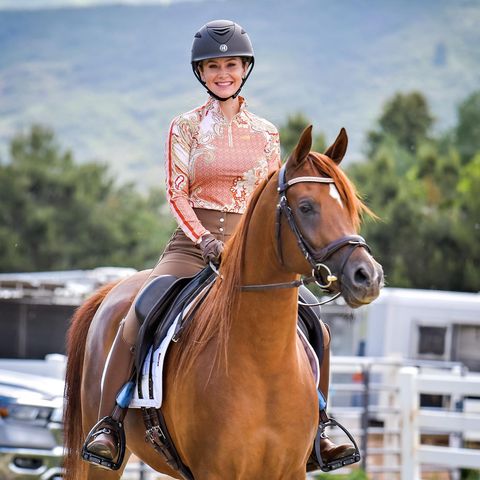
A person wearing a helmet and patterned shirt smiles while riding a brown horse outdoors on a sunny day, with green trees in the blurred background.
Free Resources
Unlock Your Potential as a Dressage Rider with Our Free Resources!

Are you passionate about dressage and eager to enhance your skills? Our Free Resources section is here to support your journey, offering a wide range of courses, guides, and tools designed to help you become the rider you’ve always wanted to be.

Access Now!
A simple white envelope icon on a light background, outlined with bold lines to represent a closed envelope.
Free Training & Tips In Your Inbox!

Say goodbye to the fluff and hello to real value. Our newsletter delivers actionable insights, expert tips, and the kind of motivation that pushes you to the next level in your dressage journey. Ready to make strides in your riding? Let’s do this—straight to your inbox. You in?

Join the community

Get weekly training to your Inbox

Enter your name and email below and you’ll be added to my list to get weekly training videos each week. You’ll also be the first to hear about all my news, courses and offers! You can unsubscribe at any time!

PS-Good things are coming. Please be patient with this form, it sometimes takes a moment to submit your details!

Free Training scale webinar

Tuesday, May 19th, 4pm PT

Please be patient with this form, it sometimes takes a moment to submit your details!