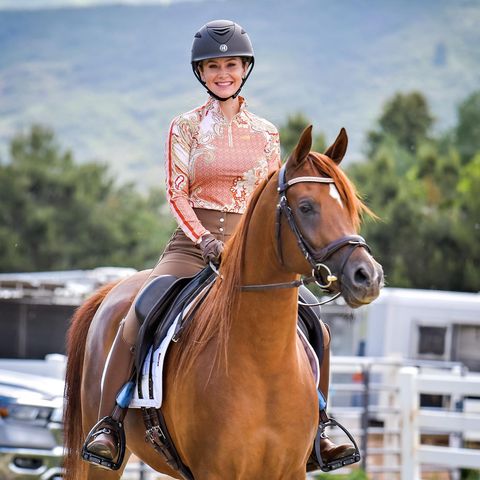










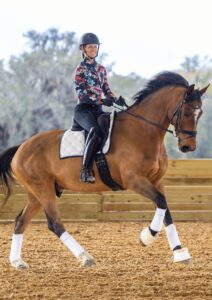






Are you new to Dressage or just need a refresher? Then this five-minute crash course is for you. In this video, I break down the basics of Dressage—what it is, how the tests work, what judges are looking for, and how the levels progress. Whether you’re a total beginner or already competing, this will give you the clarity and foundation you need to enjoy the journey of Dressage.
Before we get into the tips, I wanted to let you know that my NEW program, 30 Days to Dressage: Foundations with Amelia, is now open for enrollment! If you feel like you’re needing more help understanding the language and system of Dressage, this program is for you. Inside, I guide you step by step through the basics so you can build confidence, clarity, and correct fundamentals from the start. Learn more about the course here.
Ok, now onto the tips!
What Is Dressage?
The word “Dressage” comes from the French word dresser, which means training. And at its core, that’s exactly what Dressage is: training that develops communication, partnership, and harmony between horse and rider.
Dressage isn’t just for warmbloods or show riders—it benefits every horse and rider, regardless of discipline, breed, or age. Whether you trail ride, jump, or compete in endurance, the principles of Dressage can help improve your horse’s balance, responsiveness, and overall performance.
The Dressage Arena
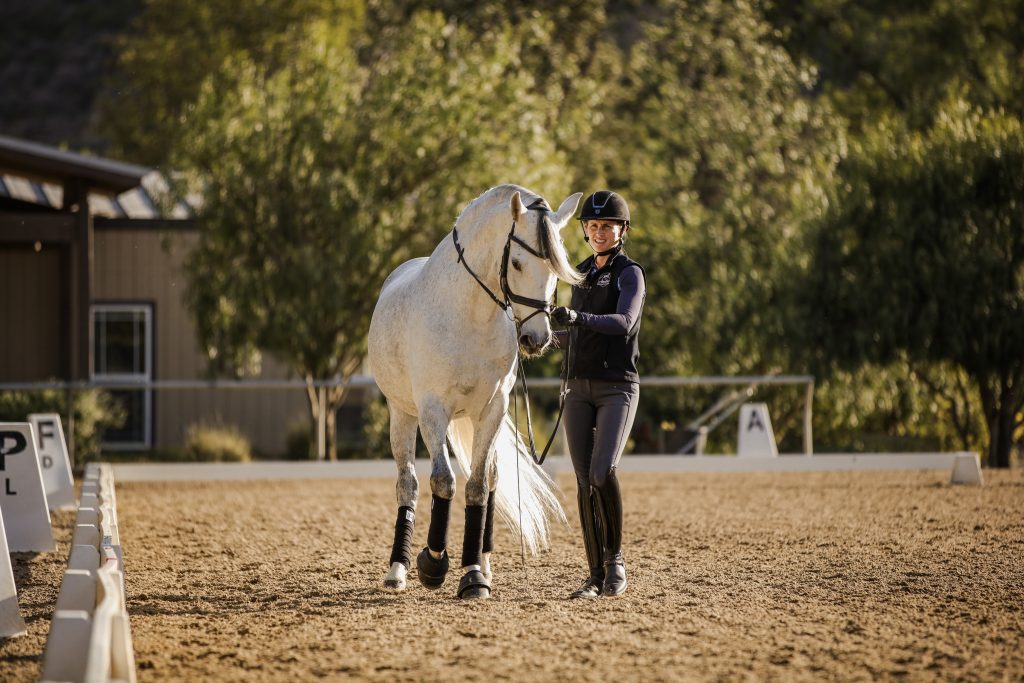
Dressage is performed in a standard arena that’s 20 meters wide and 60 meters long. Letters are placed around the arena to guide where specific movements should happen. The letter is X, located at the center of the arena—this is where most tests begin and end, with a halt and salute.
These letter markers serve as important visual cues for both riders and judges, and help structure the test movements with precision.
Understanding the Tests
Every Dressage test is a pattern of movements performed at specific letters in the arena. Most tests are about five minutes long and include transitions, figures like circles or serpentines, and changes in gait or tempo.
All tests begin the same way: ride down the center line, halt at X, salute, and proceed. From there, the difficulty increases depending on the level of the test.
How Dressage Is Scored
Tests are scored by a judge sitting at letter C. Each movement is given a score from 0 to 10:
0 = Not performed
1 = Very Bad
2 = Bad
3 = Fairly Bad
4 = Insufficient
5 = Marginal
6 = Satisfactory
7 = Fairly Good
8 = Good
9 = Very Good
10 = Excellent
Most scores fall between 6 and 8. A 7 means you’re doing well. At the end of the test, you also receive collective marks for overall impression, such as the quality of the horse’s gaits and the harmony between horse and rider.
These scores are totaled, then divided by the maximum possible points to give you a final percentage. A score above 60% is considered solid. Above 65% is great. And if you’re hitting 70% or higher—amazing!
The Dressage Levels
Dressage is a progressive training system with both national and international levels.
National levels (U.S.):
- Intro
- Training
- First
- Second
- Third
- Fourth
These levels gradually introduce new movements and expect more engagement, balance, and precision from the horse.
FEI (international) levels:
- Prix St. Georges
- Intermediaire I
- Intermediaire II
- Grand Prix
Grand Prix is the highest level, featuring advanced movements like piaffe, passage, pirouettes, and tempi changes. It takes years—often five to six of consistent, correct training—to bring a horse to this level.
Why Dressage Is Worth It?
Dressage is one of the most challenging equestrian sports. But it’s also one of the most beautiful. There’s nothing like the feeling of harmony when you and your horse perform difficult movements effortlessly together.
I started out riding western, but I came back to Dressage because I love the mental and physical challenge. I love the process of developing communication, trust, and finesse. And I love that Dressage makes every horse better, no matter their background.
I hope this crash course has inspired you to get started—or recommit to your Dressage journey!
Happy Riding,
Amelia
P.S. If you’re ready to go deeper and build strong, correct foundations, don’t forget to check out 30 Days to Dressage: Foundations with Amelia. It’s designed to help you understand the system, apply it in your riding, and progress with confidence—one clear step at a time. Hurry! Class is starting on March 1st, 2026! Learn more and join here.